


Two-Stage Pressure Regulators
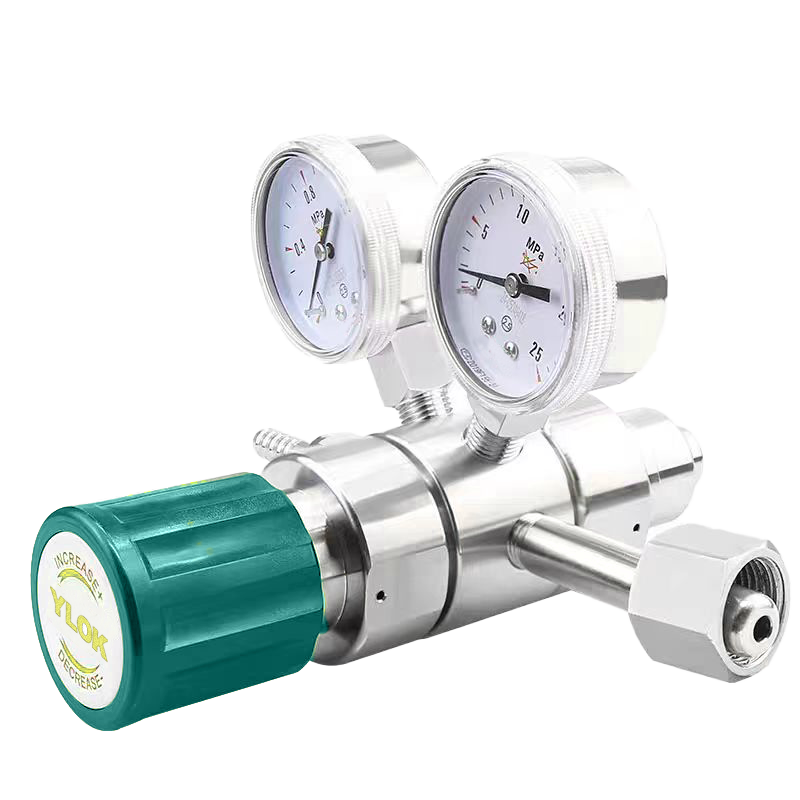
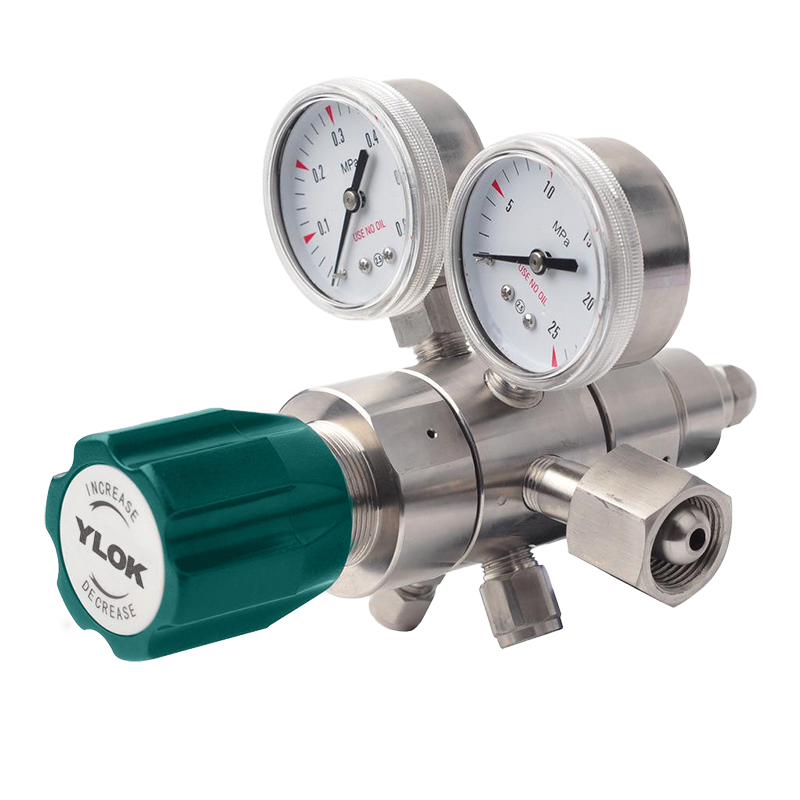
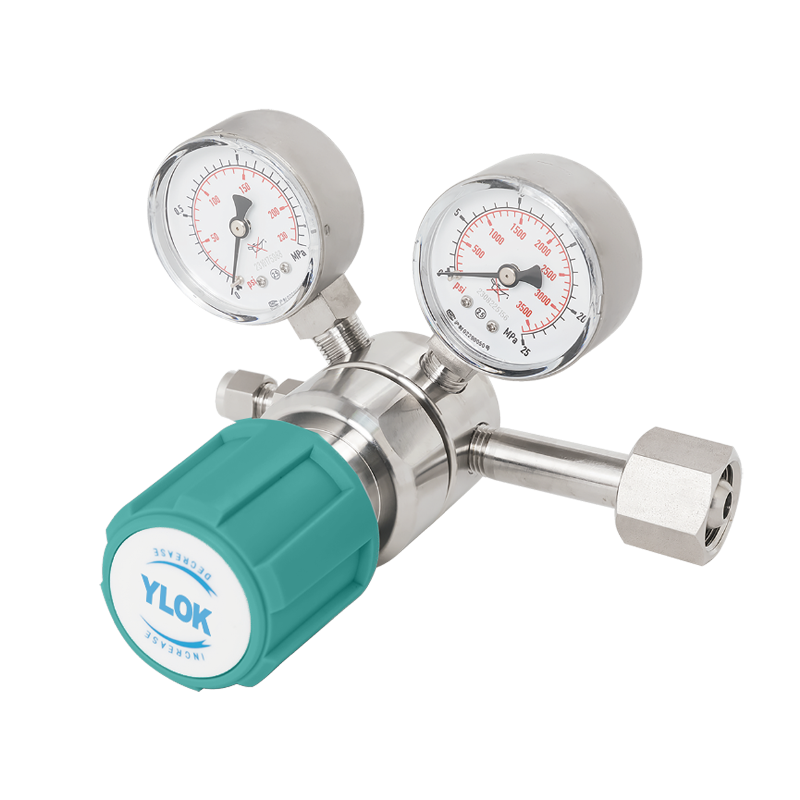
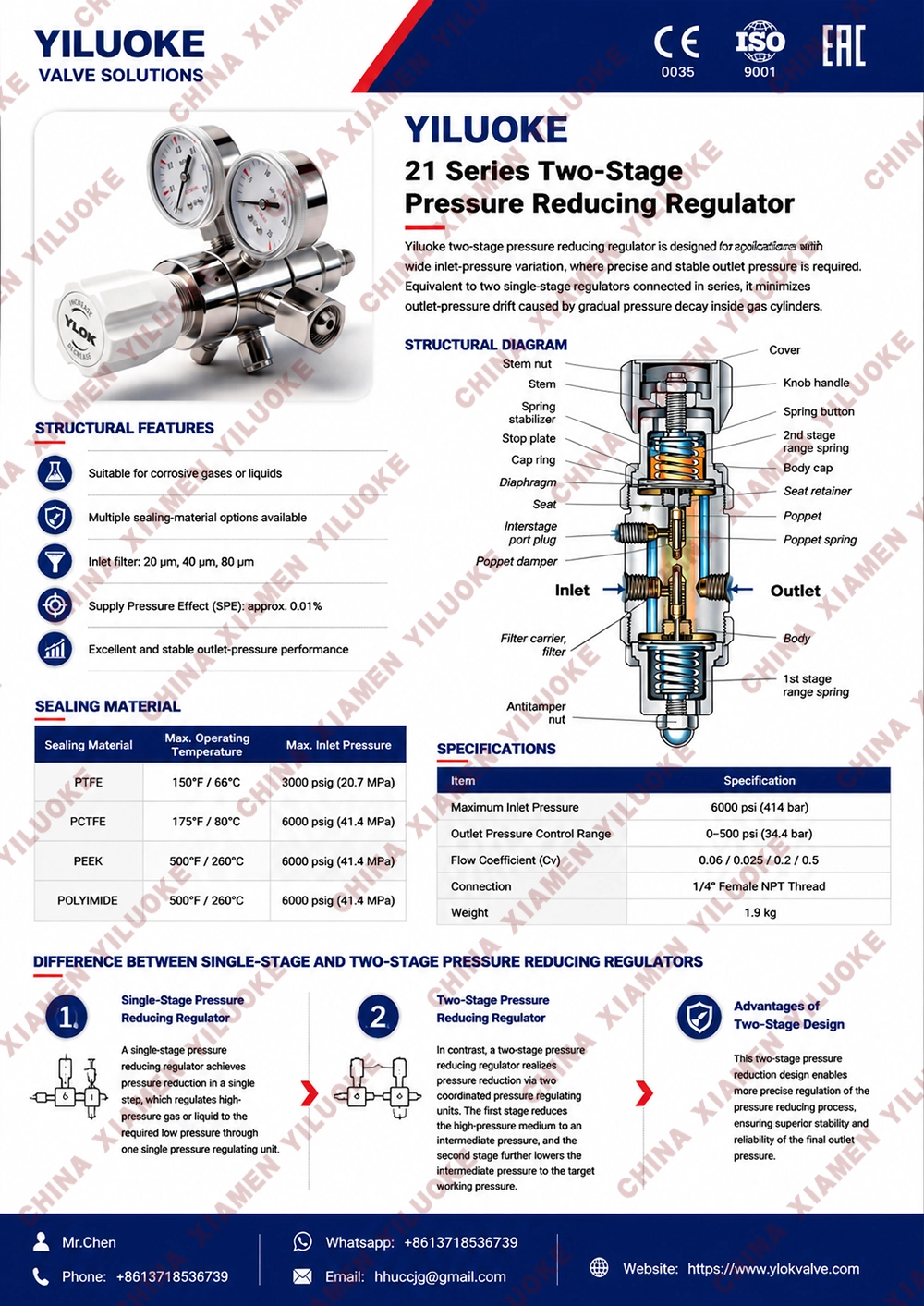
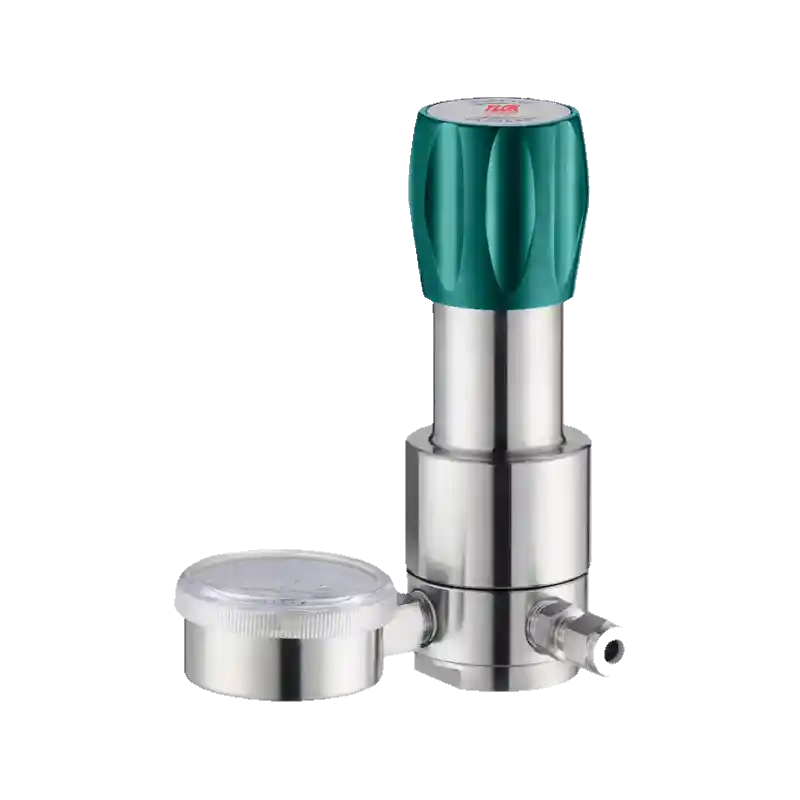
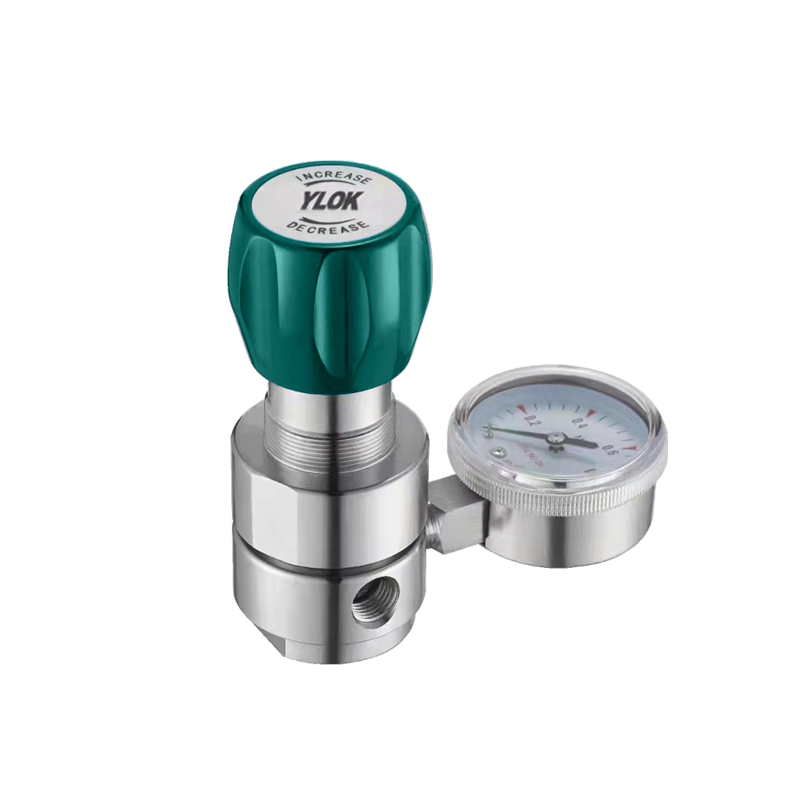
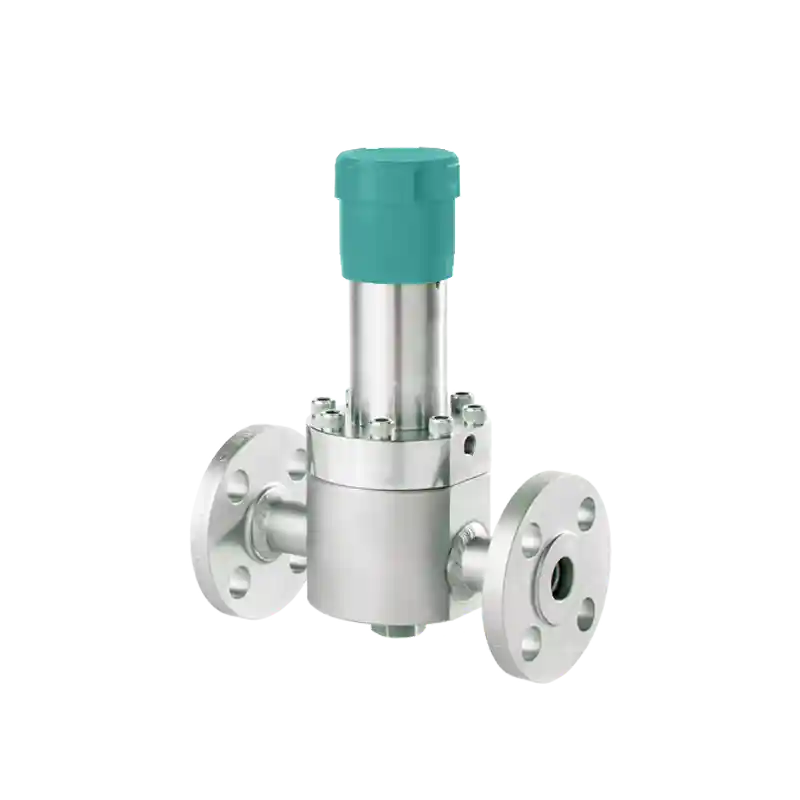
The two‑stage pressure regulator is mainly used in scenarios where the inlet pressure varies over a wide range while precise and stable outlet pressure is required. This type of two‑stage pressure regulating valve is equivalent to two single‑stage pressure regulators connected in series, which minimizes the impact of continuous consumption and reduction of inlet pressure on the outlet pressure.
Product Features
Compact structure with two‑stage pressure reduction design.
Metal seal is used between the diaphragm and the valve body.
Minimal impact of inlet pressure changes on the outlet pressure.
Stable and precise outlet pressure.
Panel mounting option available.
Scope of Application
Laboratories, analytical instruments, general‑purpose industrial gases, plant‑site equipment
Structural Features
Two‑stage pressure regulating structure delivers higher accuracy and more stable output pressure.
Metal filter fitted at inlet port.
Equipped with 1.6KL accuracy pressure gauge.
Technical Parameters
| Item | Specification |
| Maximum Inlet Pressure | 3500 psig |
| Controllable Outlet Pressure | 0‑15 / 24 / 35 / 60 / 90 / 150 / 240 / 350 psig |
| Operating Temperature | -10℃ ~ +60℃ |
| Body Thread | 1/4" NPTF |
Material of Construction
| Part | Material |
| Body, Poppet Stem, Poppet Seat | Stainless Steel |
| Poppet Seal | NBR / EPDM |
| Diaphragm | NBR / EPDM |
Differences Between Two‑Stage and Single‑Stage Pressure Regulators
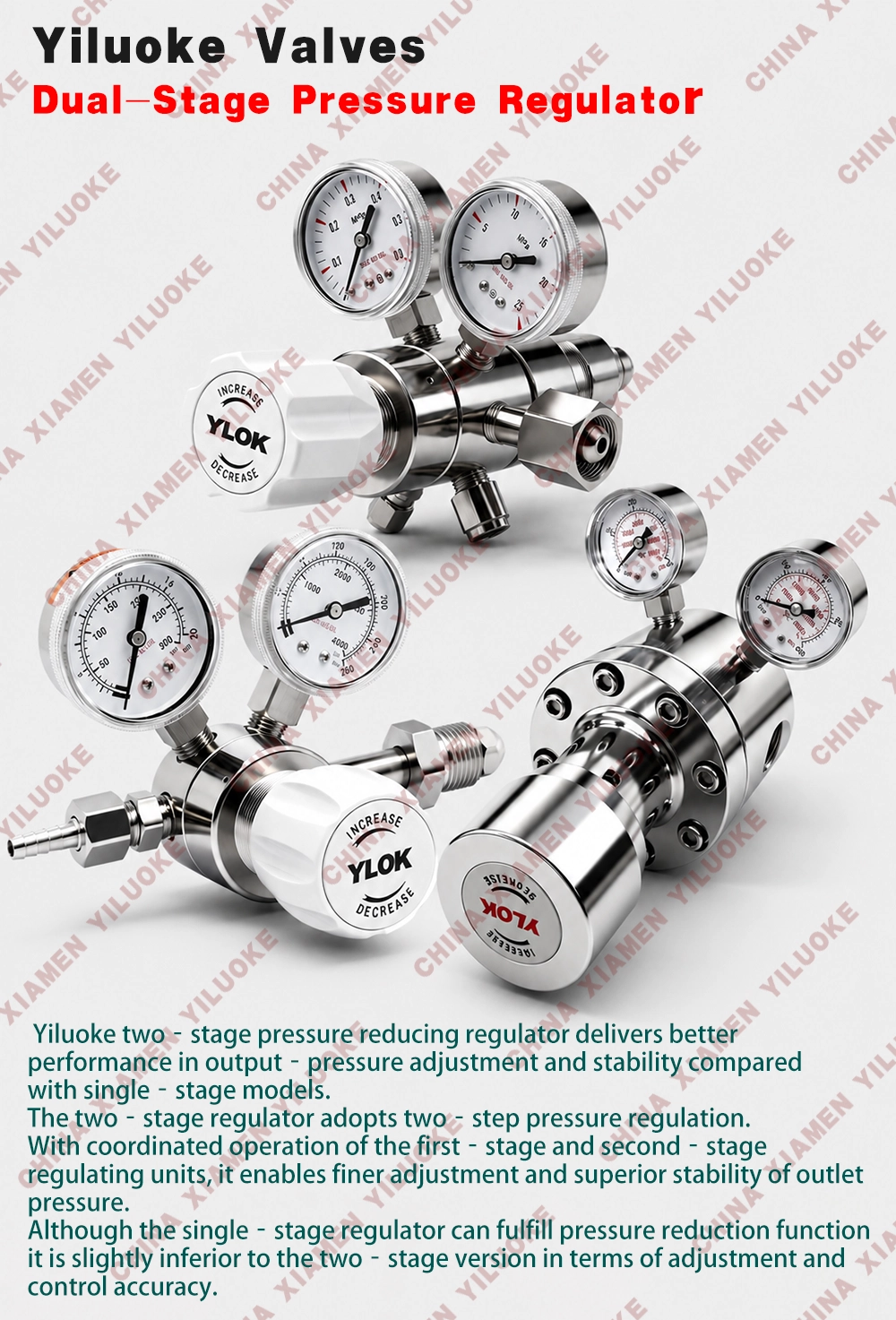
Compared with single‑stage pressure regulators, two‑stage pressure regulators have better performance in regulating and stabilizing the outlet pressure. The two‑stage pressure regulator adopts two‑stage pressure regulation: through the collaborative work of the first and second stage pressure regulators, it can adjust the outlet pressure more precisely and maintain greater stability.
Although single‑stage pressure regulators can also achieve the pressure reduction function, their performance in regulation and control accuracy is slightly inferior to that of two‑stage ones.
In addition, due to the two‑stage regulation design, the two‑stage pressure regulator can reduce pressure fluctuations and impacts during the pressure reduction process, providing a better buffering effect. In contrast, the single‑stage pressure regulator only has one pressure reduction stage, which may cause relatively large pressure fluctuations and exert adverse effects on pipelines and equipment.
Yiluoke‑21 Series Pressure Regulator Ordering Code
| No. | Item | Code Description |
| 1 | Body Material | A = 316L Stainless Steel B = Hastelloy‑C Alloy C = Monel Alloy |
| 2 | Seat Seal | 1 = PTFE 2 = PCTFE 3 = PEEK 4 = POLYIMIDE 5 = VITON |
| 3 | Orifice Configuration | Refer to page 72 |
| 4 | Process Connection | 1 = 1/4in FNPT. Consult factory for other connection sizes. |
| 5 | Outlet Pressure Control Range | C = 0‑10 psi (0‑0.69 bar) D = 0‑25 psi (0‑1.7 bar) E = 0‑50 psi (0‑3.4 bar) F = 0‑100 psi (0‑6.8 bar) G = 0‑250 psi (0‑17.2 bar) J = 0‑500 psi (0‑34.4 bar) |
| 6 | 1st Stage Flow Coefficient (Cv) | 1 = 0.06 (Standard) 2 = 0.025 3 = 0.2 4 = 0.5 |
| 7 | 2nd Stage Flow Coefficient (Cv) | 1 = 0.06 (Standard) 2 = 0.025 3 = 0.2 4 = 0.5 |
| 8 | Diaphragm Material | A = Stainless Steel Diaphragm B = Stainless Steel Diaphragm with Self‑Vent C = PTFE/VITON F = With Safety Relief Valve |
| 9 | Handle & Mounting | 1 = Standard Handle 2 = 1st Stage Panel Mount 3 = 2nd Stage Panel Mount 4 = 1st / 2nd Stage Panel Mount |
| 10 | Pressure Gauge | 0 = No Gauge 1 = BVF Gauge 2 = Neutral Gauge |
Ordering code format example: Yiluoke‑21 — A 1 A 1 E 1 1 A 1 1
Leave Your Message
Products categories
-
High Pressure Regulator
-
Ammonia Gas Pressure Regulator
-
Micro-Pressure Back-Pressure Regulators
-
Stainless Steel Back-Pressure Regulators
-
Low-Pressure Back-Pressure Regulators
-
Hydrogen Back-Pressure Regulators
-
Gas Back-Pressure Regulators
-
Liquid backpressure regulators
-
High-Flow Backpressure Valves