


Mechanical Steam Traps:Classification and Principles
Classification and Principles of Mechanical Steam Traps
Core Principles and Classification of Mechanical Steam Traps
Steam traps separate steam and condensate based on three core principles:
Density difference
Temperature difference
Phase change
Corresponding to these principles, three types of steam traps are developed: mechanical, thermostatic, and thermodynamic.

I. Mechanical Steam Traps
Also called float-type traps, they utilize the density difference between condensate and steam. The float rises/falls with condensate level changes to drive the valve disc open/closed, achieving steam retention and condensate drainage.
Key Performance Advantages
Small subcooling degree
Unaffected by operating pressure/temperature fluctuations
Immediate drainage (no water accumulation in heating equipment)
Optimal heat exchange efficiency
Maximum back pressure rate: 80%
High operational reliability (ideal for process heating equipment)
Common Types & Specifications
1. Free Float Type Steam Trap
Structure: Single precision-ground stainless steel hollow float (serves as both float and opening/closing element; no wearing parts)
Key Features:
Equipped with Y-series automatic air vent (high sensitivity, energy-saving with zero steam leakage)
Minimum operating pressure: 0.01 MPa (stable performance from 0.01 MPa to max operating pressure)
Minimum subcooling degree: 0°C (drains saturated-temperature condensate)
Back pressure rate: >85% (continuous drainage)
Operation Process:
Startup: Air is discharged via automatic air vent; low-temperature condensate enters, lifting the float to open the valve.
Normal operation: Float rises/falls with condensate level to maintain steam retention and drainage.
2. Semi-Free Float Type Steam Trap
Structure: Single semi-float bucket (opening downward; serves as opening/closing and sealing element)
Key Features:
Resistant to water hammer; no wearing parts; zero steam leakage
Back pressure rate: >80%; minimum subcooling degree: 0°C
Suitable for saturated-temperature condensate drainage
Operation Process:
Startup: Bimetallic air release element flicks the bucket open to discharge air/condensate.
Steam entry: Buoyancy lifts the bucket; bimetallic element contracts to close the valve.
Condensation: Bucket loses buoyancy, sinks, and reopens the valve (cyclic intermittent/continuous operation).
3. Lever Float Type Steam Trap
Structure: Float connected to a lever driving the valve core
Key Features:
Dual valve seat design for high displacement (compact size with large capacity)
Maximum condensate flow: 100 tons/hour
Same basic advantages as free float type
Application: Ideal for large-scale heating equipment
4. Inverted Bucket Type Steam Trap
Structure: Inverted bucket (opening downward) connected to a lever driving the valve core
Key Features:
Air-discharging capability; water hammer resistance; good anti-fouling performance
Minimum subcooling degree; steam leakage rate: <3%; maximum back pressure rate: 75%
Not suitable for operating pressure difference < 0.1 MPa
Operation Process:
Startup: Bucket falls due to weight; valve opens to discharge air/condensate.
Steam entry: Buoyancy lifts the bucket to close the valve.
Condensation: Steam escapes through a small hole; bucket sinks to reopen the valve (cyclic intermittent drainage).
5. Combined Superheated Steam Trap
Structure: Advanced dual-chamber design (upper main valve chamber + lower auxiliary valve chamber)
Key Specifications:
Maximum allowable temperature: 600°C
Valve body: Full stainless steel; valve seat: Hard alloy steel (long service life)
National patent-certified (fills domestic gap for superheated steam applications)
Operation Process:
Condensate entry: Float in auxiliary valve seals the steam inlet; condensate rises to main valve chamber.
Drainage: Inverted bucket sinks to open the main valve.
Steam entry: Auxiliary valve opens; steam lifts the bucket to close the main valve (cyclic intermittent operation).
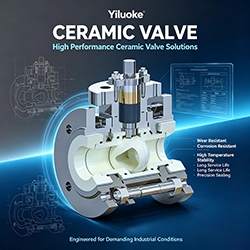 What Are Creamic Lined Valves?
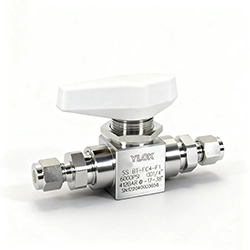 How to Select High‑Pressure Ball Valves
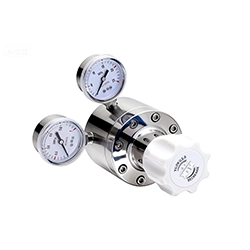 Gas Pressure Regulator Installation and Operation Instructions
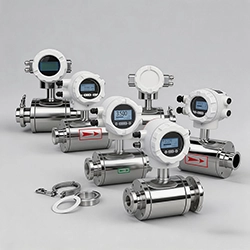 What is a Flowmeter?