


How does a Pneumatic Control Valve Works?
Working Principle of Pneumatic Control Valve
Overview
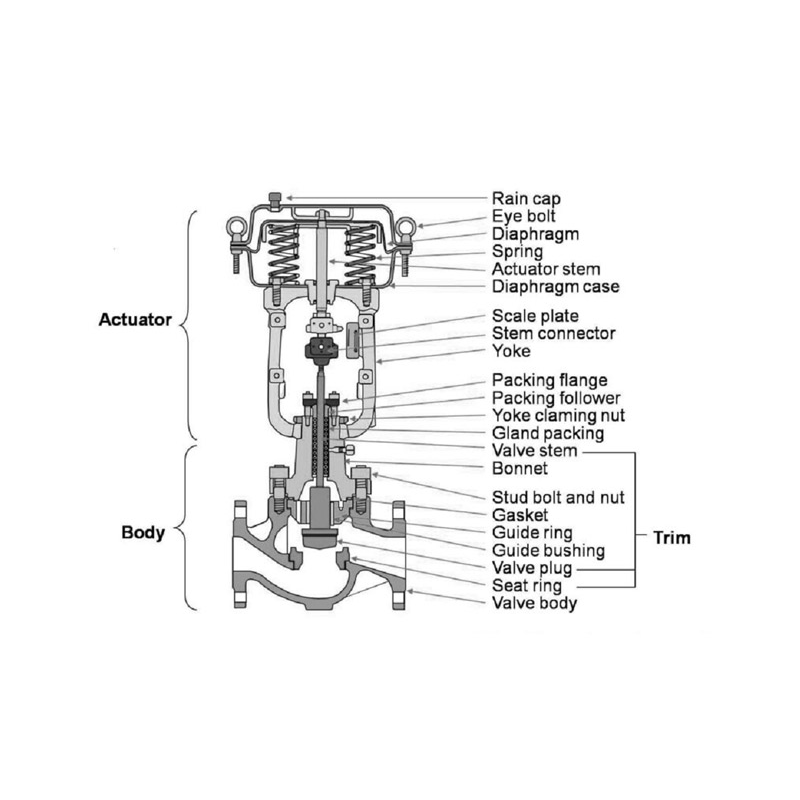
The pneumatic control valve is mainly composed of three parts: a pneumatic actuator, a valve body, and accessories. The actuator uses clean compressed air as power, receives a 4~20mA electrical signal or 20~100KPa air signal, and drives the valve body to move, changing the flow area between the valve core and the valve seat to achieve the function of flow regulation. To improve the linearity of the valve, overcome the friction of the valve stem and the influence caused by changes in the working conditions (temperature, pressure) of the regulated medium, a valve positioner is used with the control valve, so that the valve position can be accurately positioned according to the control signal.
For the safe operation of the unit, some important valves are designed with accessories such as solenoid valves, position-retaining valves, and quick pressure relief valves to ensure that the control valve realizes quick opening (closing) or position-retaining function (three-interruption self-locking protection function) in the case of power failure, signal loss or air loss, meeting the requirements of safe operation of the process system.
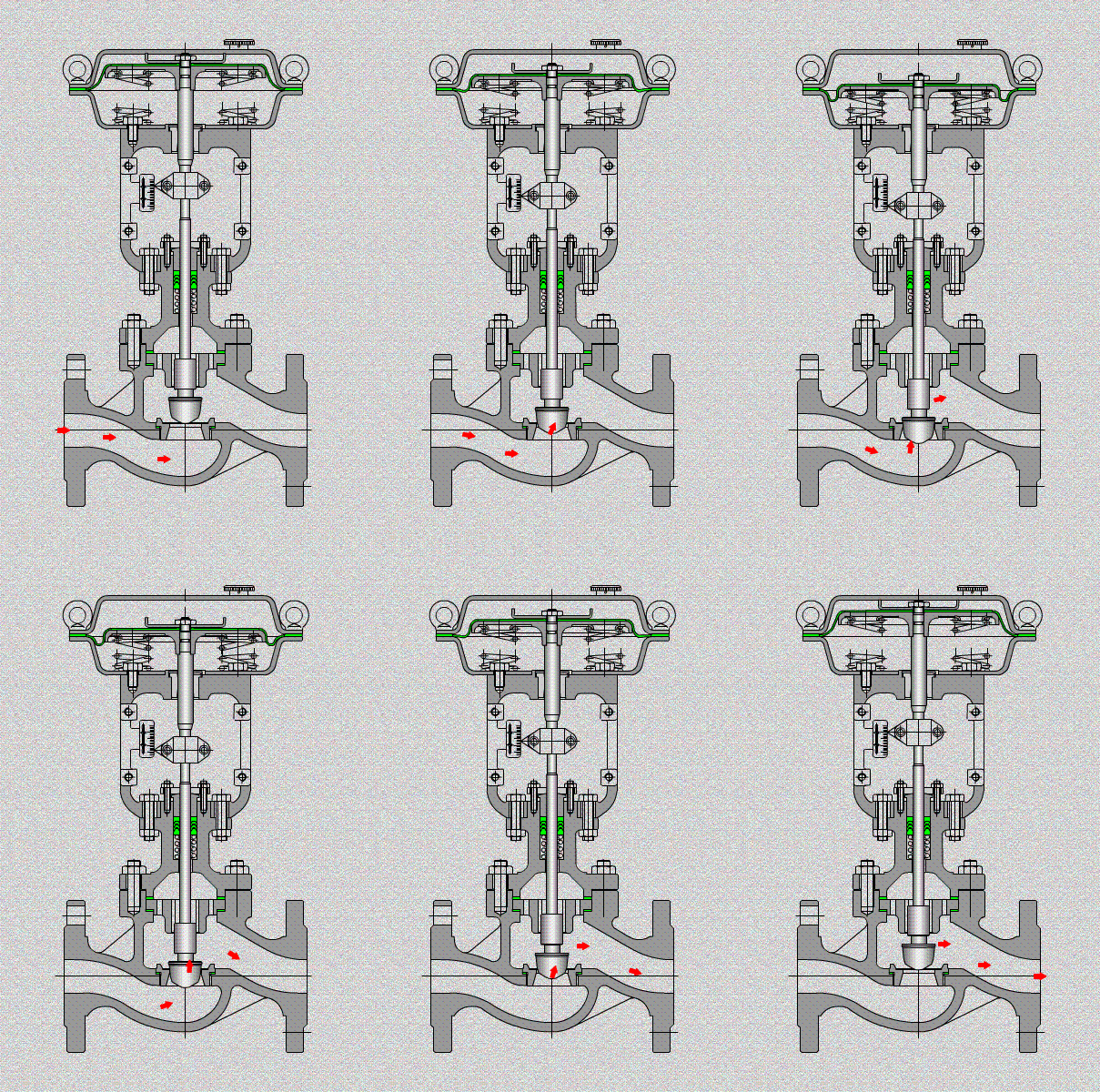
The pneumatic actuator uses clean compressed air as power, and drives the valve body to move by pushing the movement of the diaphragm or piston, controlling the valve opening to achieve the control purpose. It has the characteristics of simple structure, stable performance, convenient maintenance, reliable action and sensitive regulation, so it is widely used.
Classification of Pneumatic Actuators
By Function: Two-position type, Regulating type
By Cylinder Structure: Diaphragm type, Piston type
By Valve Stem Movement Mode: Linear stroke, Angular stroke
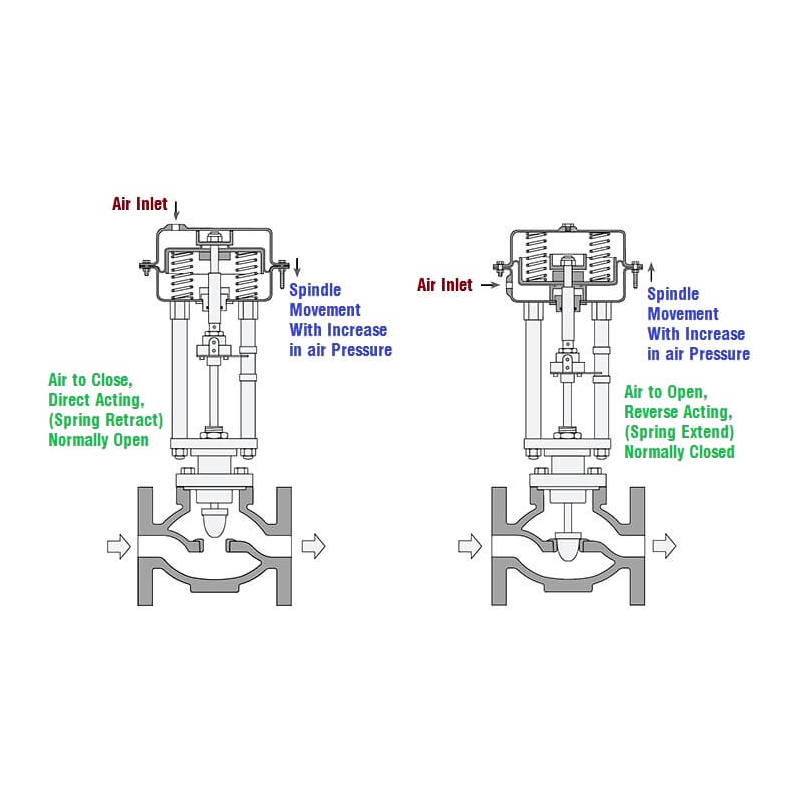
By Valve Stem Movement Direction: Direct action, Reverse action
By Action Mode: Single-acting, Double-acting
By Pneumatic Failure Mode: Fail-open (air-closed), Fail-closed (air-open)
Three-Interruption Protection of Control Valves
The three-interruption protection of control valves refers to: air source interruption protection, power interruption protection, and signal source interruption protection. It is an important guarantee for the safe operation of the process system. It is used in combination with accessories such as solenoid valves, position-retaining valves, and quick pressure relief valves.
Internal Structure of Pneumatic Control Valves
Diaphragm or Piston: The diaphragm/piston is the pressure-bearing component of the actuator. Its function is to form a closed pressure chamber inside the actuator, providing a driving force for the valve stem to drive the valve stem to move up or down.
Spring: The spring is an important part of the actuator. The spring force is the driving force of the valve. When compressed air is lost, the valve is opened/closed by the spring force. When compressed air is introduced, the air pressure compresses or stretches the spring, overcoming the spring force to open/close the valve.
Handwheel: The handwheel mechanism is an auxiliary device used with the control valve.
Pneumatic Rod
Coupling
Main Accessories of Pneumatic Control Valves
Solenoid Valve: Controls valve action according to the system logic protection relationship
Pressure Reducing Valve: Ensures the supply air pressure
Filter: Purifies the air source from the air compressor
Current/Pneumatic Converter (I/P): Adapts the electrical signal at the control point to the pneumatic actuator
Positioner: Improves the static and dynamic characteristics of the control valve
Flow Amplifier: Increases the air flow into the valve diaphragm air chamber
 What Are Creamic Lined Valves?
 How to Select High‑Pressure Ball Valves
 Gas Pressure Regulator Installation and Operation Instructions
 What is a Flowmeter?