


Difference Between Pilot Operated and Direct-Acting Self-operated Control Valve
1. General Introduction of Self-operated Control Valve
A self-operated control valve, also known as a self-operated regulating valve, takes the pressure and temperature of the flowing medium inside the valve as its power source. The feedback signals (pressure, differential pressure, temperature) from the valve outlet are transmitted to the actuator through the signal pipe, driving the valve plug to change the valve opening, so as to realize automatic regulation of system pressure, flow rate and temperature.
Self-operated control valves are mainly divided into two types: direct-acting self-operated control valve and pilot operated self-operated control valve. They differ greatly in working principle, control accuracy, pressure regulation ratio and application scenarios.
2. Working Principle of Two Types of Valves
2.1 Direct-Acting Self-operated Control Valve
Also known as the spring-loaded regulating valve. It adopts the balance principle of elastic force and medium feedback signal. The valve opening is controlled by comparing the downstream pressure with the spring force, or comparing the pressure difference between the front and rear of the valve. Built-in elastic components such as springs, bellows and bellow-type temperature bulbs are used to directly sense pressure changes and drive the valve plug for adjustment.
2.2 Pilot Operated Self-operated Control Valve
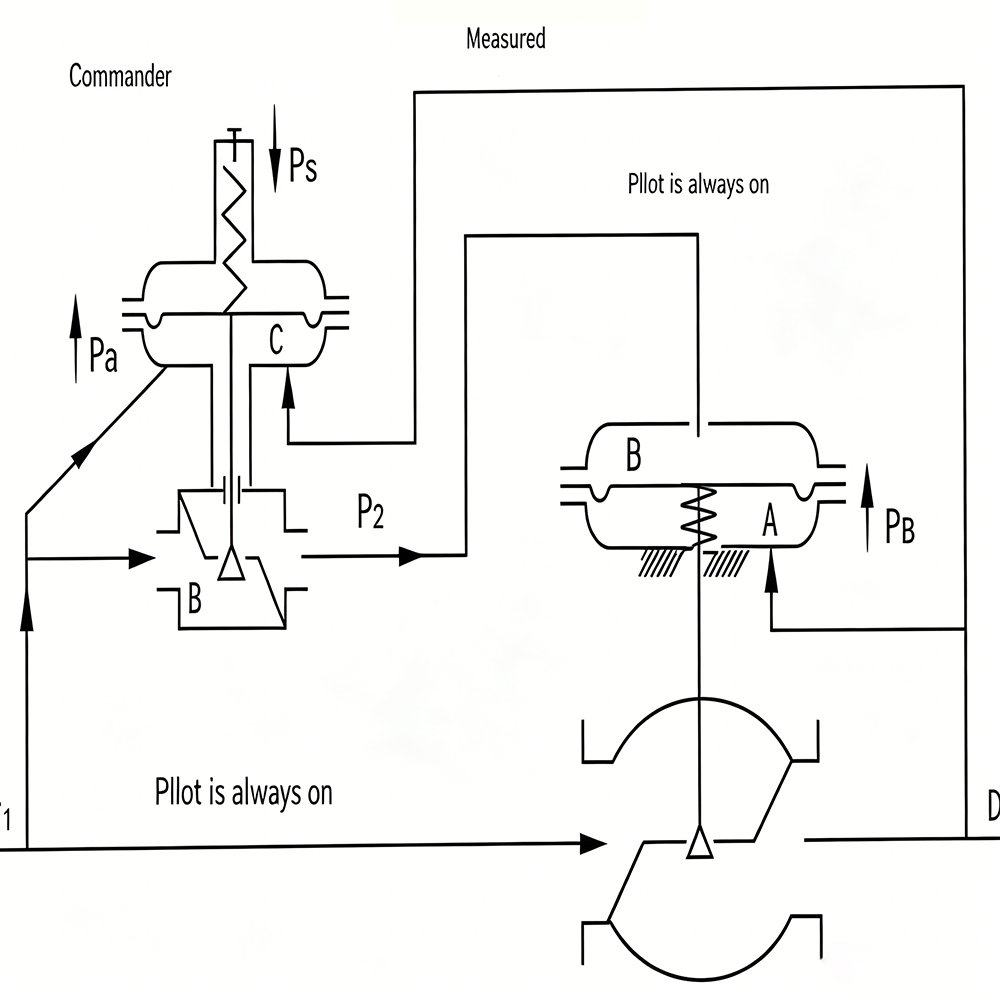
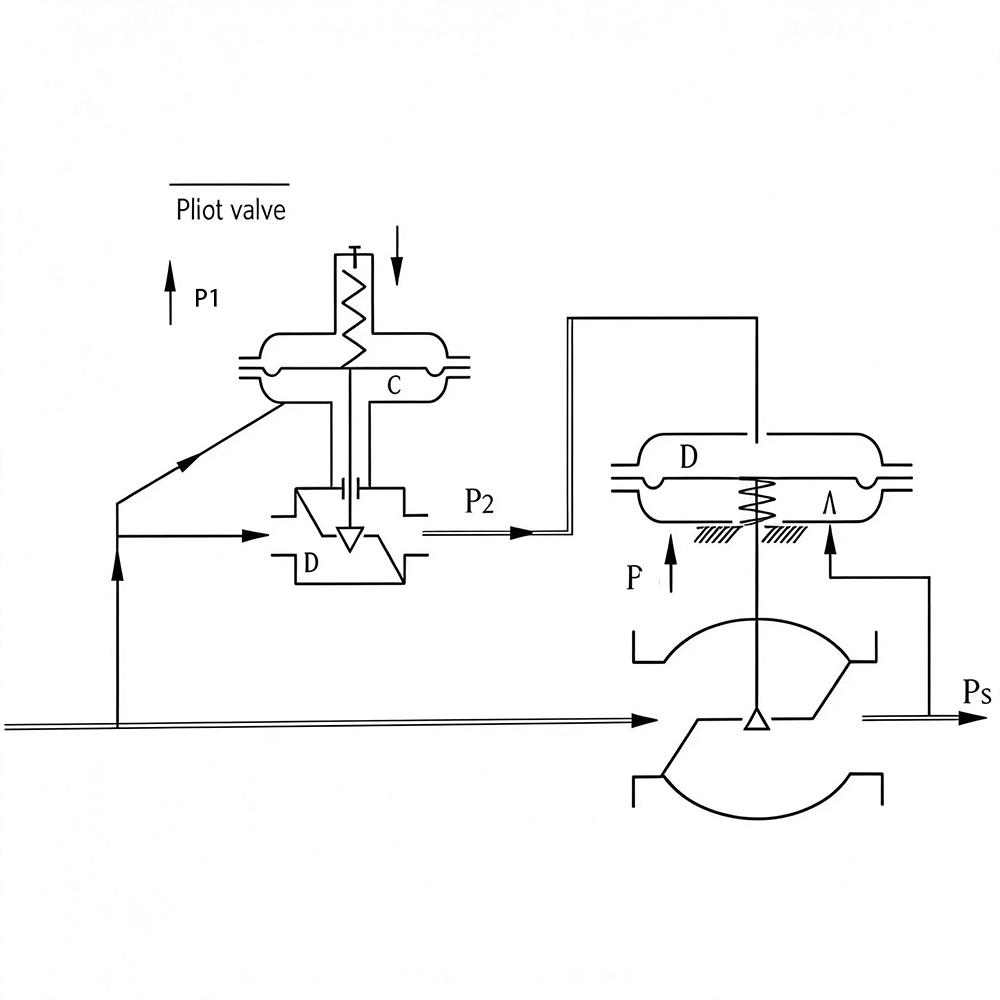
On the basis of the direct-acting structure, a pilot valve (pilot) is added to amplify the tiny feedback signal. The amplified signal acts on the main actuator to drive the main valve plug to adjust the opening.
Signal acquisition methods for different regulating types:
Pressure regulating valve: The outlet pressure signal is introduced into the actuator through the signal pipe.
Flow regulating valve: A orifice plate or other resistance device is installed at the outlet, and the differential pressure signal from both ends of the orifice plate is adopted for control.
Temperature regulating valve: Equipped with temperature sensor or temperature bulb, the thermal expansion and contraction of the internal medium drives the actuator to realize temperature regulation.
3. Core Differences & Performance Comparison
Control Accuracy: The direct-acting type has low control precision; the pilot operated type doubles the control accuracy, suitable for high-precision working conditions.
Pressure Regulation Ratio: The pilot operated valve has an ultra-large pressure reduction ratio. For example, the inlet pressure is 0.8MPa while the outlet pressure can be as low as 0.001MPa, realizing ultra-large differential pressure regulation.
Signal Sensitivity: The direct-acting type is insensitive to tiny pressure changes; the pilot operated type can sense extremely small pressure fluctuations (such as 50mm water column pressure) with ultra-sensitive response.
Flow Capacity: The pilot operated self-operated control valve has larger flow capacity, applicable for large-flow working conditions.
Adjustment Range: The pilot operated type features a wider pressure regulation range than conventional direct-acting self-operated valves of the same specification.
4. Application Scenarios
4.1 Direct-Acting Self-operated Control Valve
Suitable for conventional working conditions with low precision requirements, ordinary pressure regulation, stable medium pressure and no strict demand for micro-pressure control. Widely used in general industrial pipelines for conventional pressure stabilization and regulation.
4.2 Pilot Operated Self-operated Control Valve
Specially applicable to micro-pressure gas regulation, high-precision pressure stabilization, large flow rate and ultra-large pressure difference working conditions. It is the preferred choice for steam, weakly corrosive gas, low-viscosity liquid and precision industrial pipeline systems requiring stable pressure control.
Related Products:Direct-acting self-operated control valve Pilot operated self-operated control valve
 What Are Creamic Lined Valves?
 How to Select High‑Pressure Ball Valves
 Gas Pressure Regulator Installation and Operation Instructions
 What is a Flowmeter?