


Maintenance and Troubleshooting of Solenoid Valves
Maintenance and Troubleshooting of Solenoid Valves
Regular maintenance of solenoid valves and understanding of basic troubleshooting methods are crucial. They ensure the long-term reliable operation of solenoid valves.
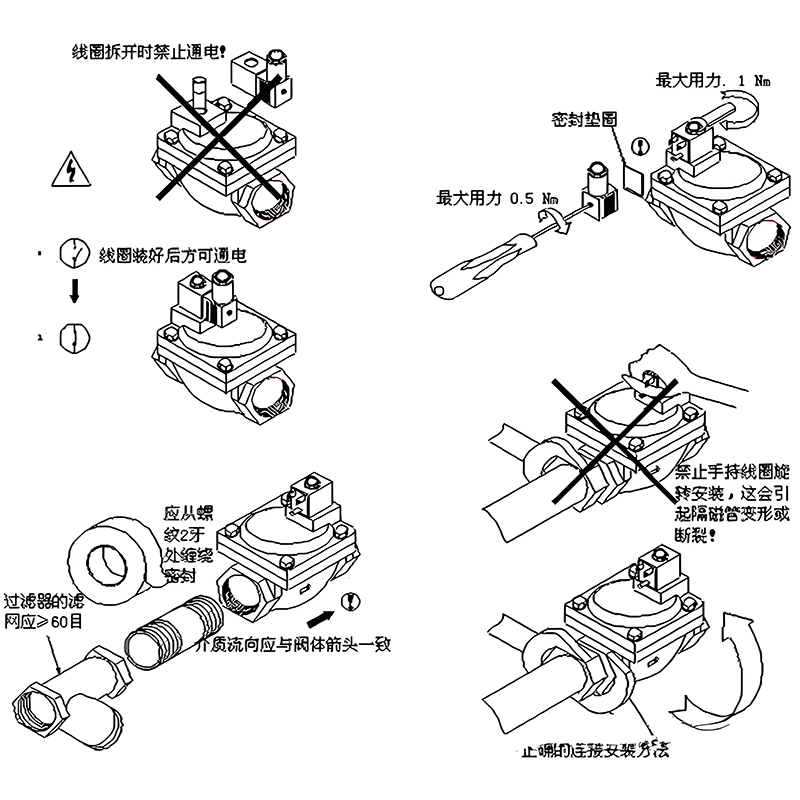
1.1 Basic Maintenance
Regularly inspect the exterior of the valve and keep it clean.
Check if electrical connections are secure and if pipe connections have leaks.
Special Note: If there are contaminants in the fluid, a filter must be installed before the valve and cleaned regularly. This prevents contaminants from abrading internal components and shortening their service life—contaminants act like sandpaper on internal parts.
1.2 Common Issues and Inspection Items
Valve fails to operate (most straightforward issue):
First, check if the valve has a power supply and the correct voltage. If the power supply is normal, the problem may stem from a burnt coil, broken internal wires, or a jammed plunger (caused by aging or internal contaminants).
Valve fails to fully close (leakage):
This usually occurs due to inadequate sealing at the valve port. Common causes: Contaminants stuck at the opening, worn/damaged seals, or a weak spring (which also leads to incomplete closure).
Valve fails to fully open (low flow rate):
Beyond power-related issues, possible causes include:
Clogged filter at the inlet (especially for pilot-type valves);
Blockage of the main flow path by internal debris;
Insufficient pressure difference (for pilot-type valves).
Unusual noise or vibration:
May be related to fluid pressure fluctuations, pipe wobble, or loose/slightly jammed internal valve components.
1.3 Safety Tips and Expert Assistance
Before inspecting or repairing any part, the power supply must be turned off and pipe pressure must be relieved.
For complex or uncertain issues, it is strongly recommended to contact professional solenoid valve suppliers for technical support.
Choosing the right product and obtaining professional assistance after purchase helps prevent and resolve these issues effectively.
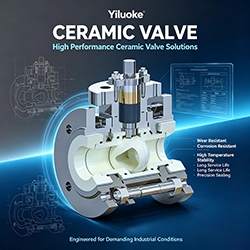 What Are Creamic Lined Valves?
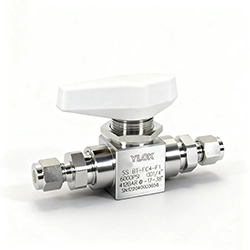 How to Select High‑Pressure Ball Valves
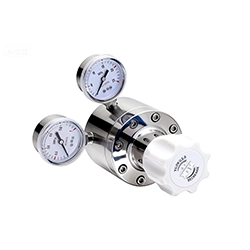 Gas Pressure Regulator Installation and Operation Instructions
 What is a Flowmeter?