


Deep Cryogenic Treatment for Valve
Cryogenic Valves: Deep Cryogenic Treatment Principle & Effects
Cryogenic valves refer to valves mainly used in ethylene and liquefied natural gas (LNG) plants, natural gas LPG/LNG storage tanks, receiving terminals and satellite stations, air separation equipment, petrochemical tail gas separation equipment, cryogenic storage tanks and tankers for liquid oxygen, liquid nitrogen, liquid argon, and carbon dioxide, pressure swing adsorption oxygen generation devices, and other installations. They operate at temperatures as low as -196℃ and are used to control the output of liquid cryogenic media such as ethylene, liquid oxygen, liquid hydrogen, liquefied natural gas, and liquefied petroleum products. Cryogenic valves need to undergo cryogenic deep treatment.
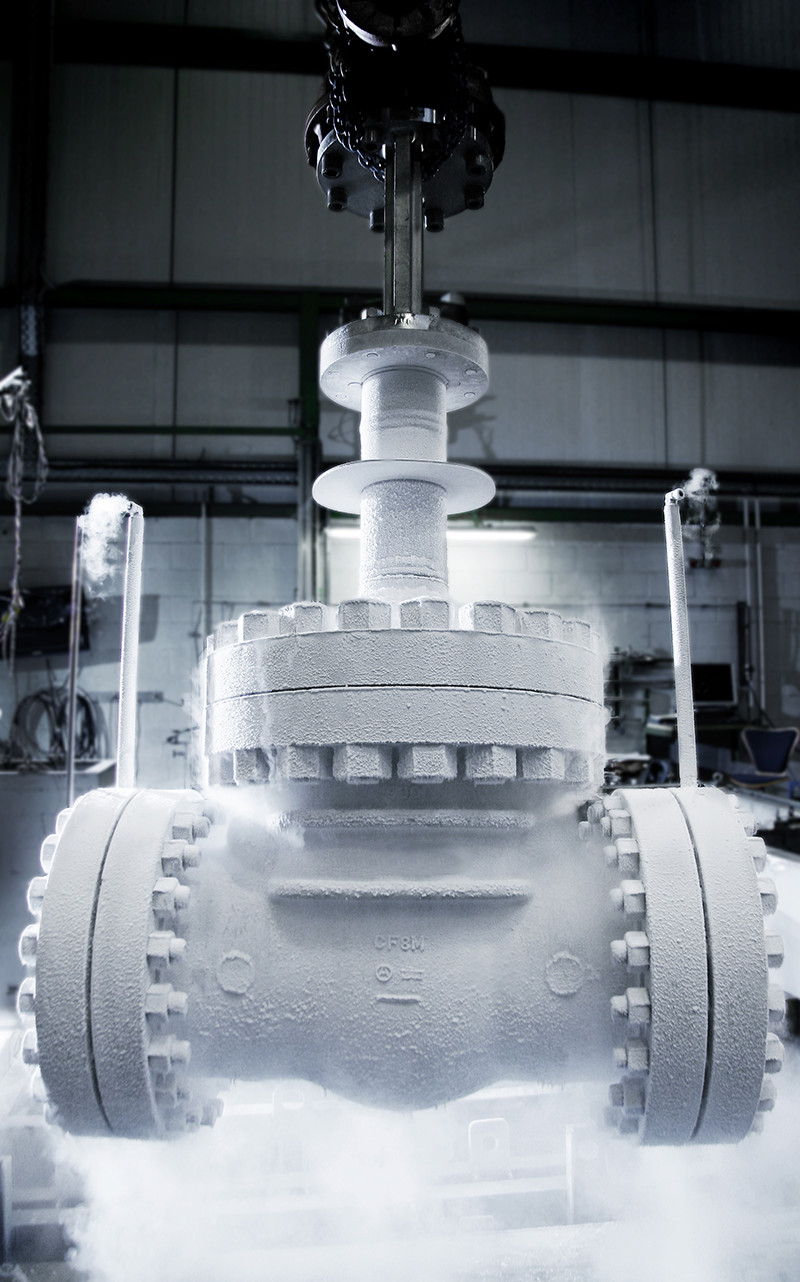
Deep Cryogenic Treatment of Cryogenic Valves
Principle of Cryogenic Deep Cryogenic Treatment
Cryogenic treatment can significantly reduce the retained austenite in metal materials.
Cryogenic treatment can promote the precipitation of uniform, fine, and dispersed carbides in the metal matrix structure.
The low-temperature mechanical properties of materials refer to the mechanical properties tested in a low-temperature environment! Some materials used at low temperatures must have their low-temperature mechanical properties tested, such as refrigerated containers. Cryogenic treatment is an extension of conventional heat treatment (quenching + tempering), aiming to eliminate retained austenite (for high-alloy steels: die steel, high-speed steel, etc.) and improve service performance.
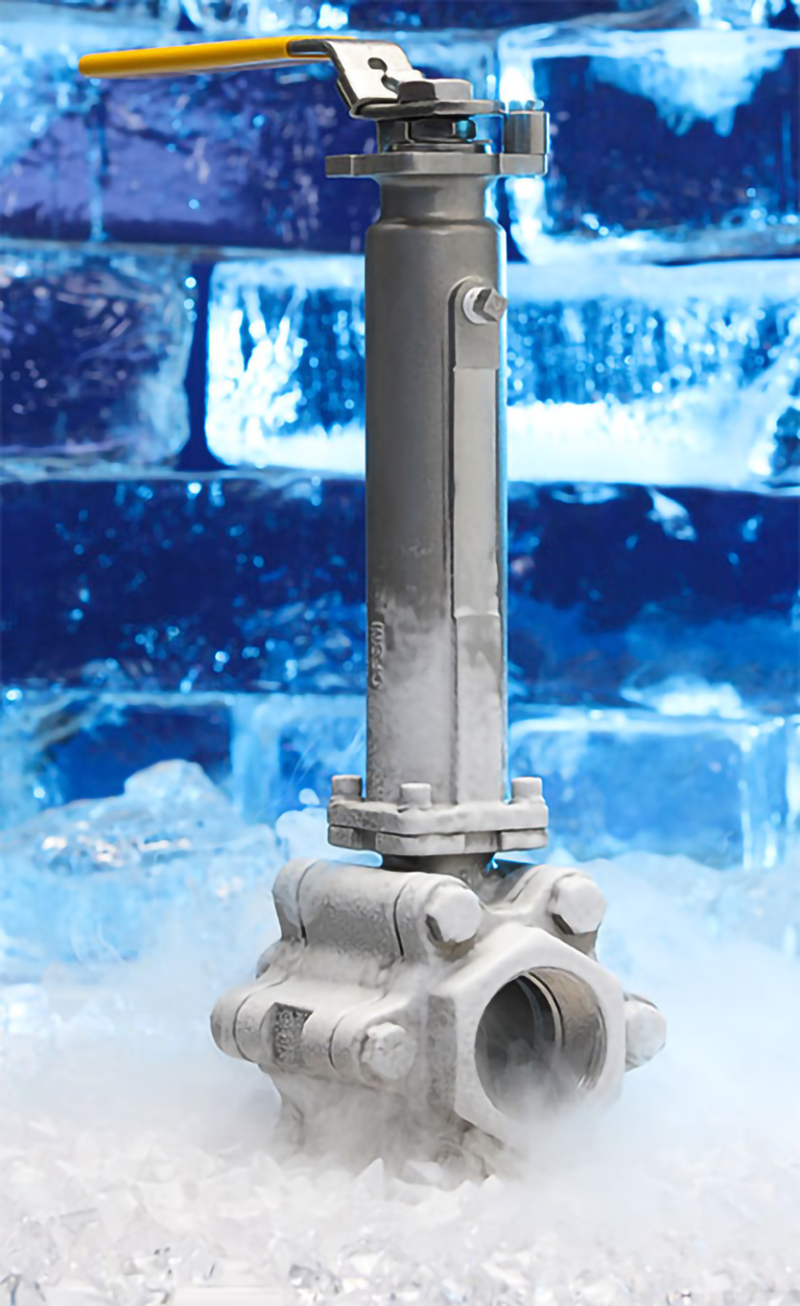
Deep cryogenic technology uses a refrigerant medium as the cooling medium to continue the cooling process of quenched metal materials to a temperature far below room temperature (-196℃), thereby achieving the goal of exerting the performance of metal materials. As an emerging new process technology for enhancing the performance of metal workpieces in recent years, deep cryogenic technology is currently an effective and economical technical means.
During the deep cryogenic processing, a large amount of retained austenite in the metal transforms into martensite. Especially, the supersaturated metastable martensite will reduce supersaturation during the process from -196℃ to room temperature, precipitating ultra-fine carbides with a size of only 20~60A that are dispersed and maintain a coherent relationship with the matrix. This can reduce the lattice distortion of martensite and lower micro-stress. The fine and dispersed carbides can hinder dislocation movement during plastic deformation of the material, thereby strengthening the matrix structure. At the same time, after the precipitation of ultra-fine carbide particles, they are uniformly distributed on the martensite matrix, which weakens the grain boundary embrittlement effect. The refinement of the matrix structure not only reduces the segregation of impurity elements at the grain boundaries but also exerts the grain boundary strengthening effect, thereby improving the performance of tools and dies, increasing hardness, impact toughness, and wear resistance.
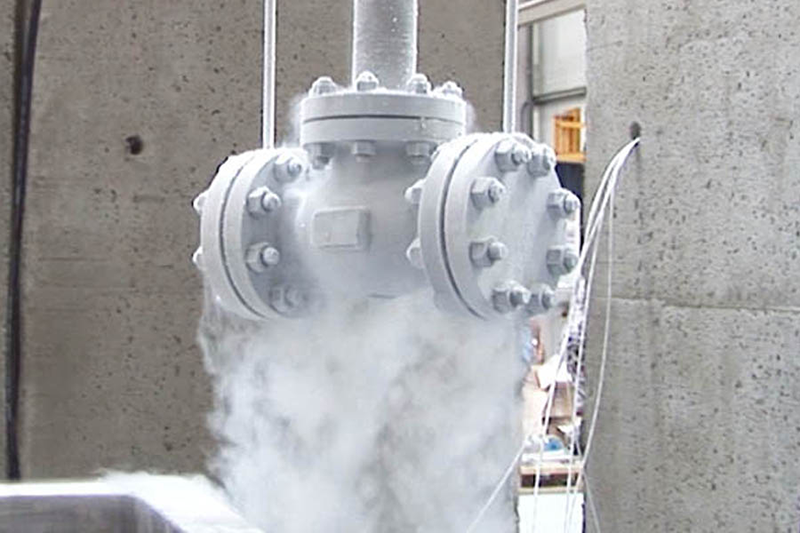
The improvement effect of deep cryogenic technology is not limited to the working surface; it penetrates into the interior of the workpiece, reflecting an overall effect. Therefore, the workpiece can be re-ground and reused repeatedly. In addition, it also has the effects of reducing quenching stress and enhancing dimensional stability of the workpiece.
Engineers have found through experiments that the functions of deep cryogenic treatment are as follows:
It can transform retained austenite, improve the hardness and wear resistance of the workpiece, and stabilize the size of the workpiece.
It can precipitate ultra-fine carbides and improve the wear resistance of the workpiece; it can refine grains and enhance the impact toughness of the workpiece.
It can significantly improve the corrosion resistance of martensitic stainless steel and enhance the polishing performance of the workpiece.
It can improve the electrical conductivity and corrosion resistance of non-ferrous metals.
It can reduce the deformation and cracking of dies and improve the dimensional accuracy of the workpiece.
 What Are Creamic Lined Valves?
 How to Select High‑Pressure Ball Valves
 Gas Pressure Regulator Installation and Operation Instructions
 What is a Flowmeter?