


What are Cryogenic Valves?
Cryogenic Valves: Definition, Working Principle, Material Selection & Applications
Cryogenic Valves refer to valves suitable for media temperatures ranging from -40℃ to -196℃. They include cryogenic ball valves, cryogenic gate valves, cryogenic globe valves, cryogenic safety valves, cryogenic check valves, cryogenic butterfly valves, cryogenic needle valves, cryogenic throttle valves, cryogenic pressure reducing valves, etc. They are mainly used in ethylene and liquefied natural gas (LNG) plants, natural gas LPG/LNG storage tanks, receiving terminals and satellite stations, air separation equipment, petrochemical tail gas separation equipment, cryogenic storage tanks and tankers for liquid oxygen, liquid nitrogen, liquid argon, and carbon dioxide, pressure swing adsorption oxygen generation devices, and other installations. The output liquid cryogenic media such as ethylene, liquid oxygen, liquid hydrogen, liquefied natural gas, and liquefied petroleum products are not only flammable and explosive but also vaporize when heated, expanding hundreds of times in volume during vaporization.
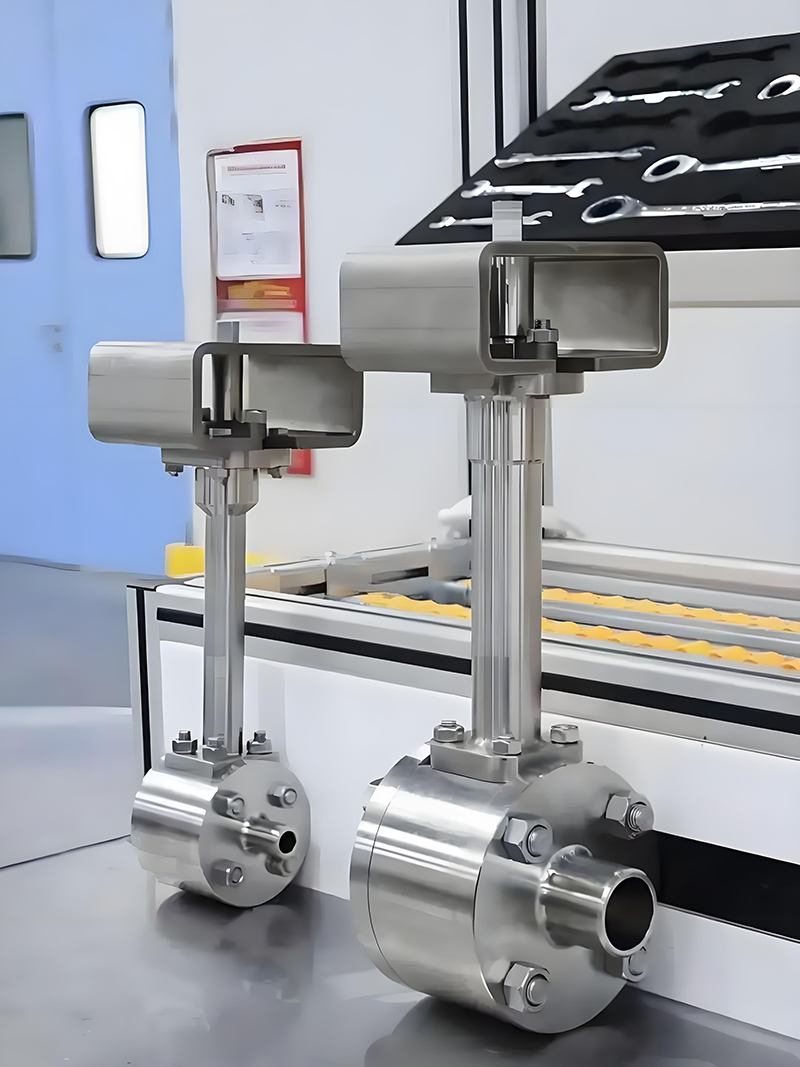
Working Principle of Cryogenic Valves
There are mainly three transmission methods for cryogenic valves, each with different principles:
Pneumatic Cryogenic Valves: Their working principle is that the cylinder of the valve head can be inflated and deflated, which can effectively control the transmission mechanism to drive the movement of the valve core, thereby achieving the purpose of controlling the flow area and flow rate.
Manual Cryogenic Valves: Their working principle is that the movement of the valve core is controlled by a handwheel, then the flow area of the valve is controlled, and finally the flow rate is controlled.
Pneumatic Valves with Solenoid Valves: Their working principle is that the exhaust and inflation of the cylinder are achieved by controlling power on and off, then the transmission mechanism is controlled, and finally the flow rate is controlled.
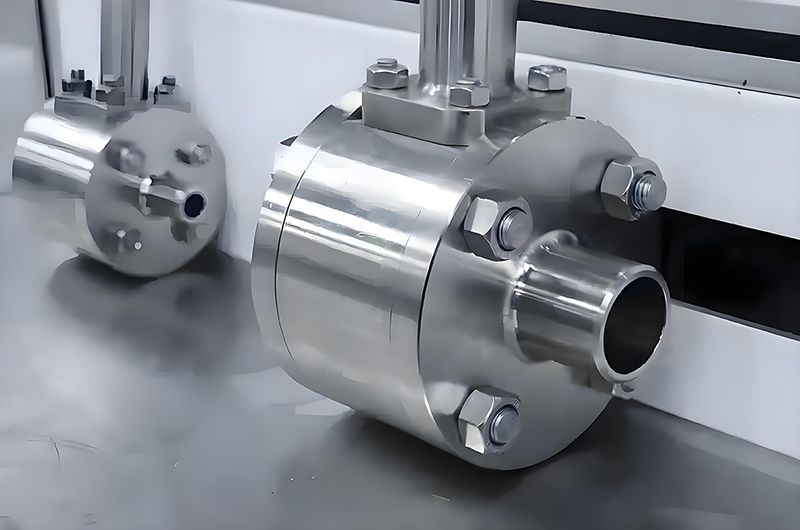
Material Selection and Structural Design of Cryogenic Valves
The material of LNG valves is very important. Unqualified materials will cause external or internal leakage of the valve body and sealing surface; the comprehensive mechanical properties, strength, and rigidity of components cannot meet the use requirements or even break, leading to leakage of LNG media and causing explosions. Therefore, in the process of developing, designing, and manufacturing LNG valves, material is the primary and key issue. Cryogenic valves have the following design characteristics:
Extended bonnet or valve stem to keep the actuator and packing away from the supercooled medium and prevent freezing.
Vacuum-insulated or jacketed body can minimize heat intrusion and frost formation.
The selected materials have good low-temperature performance and corrosion resistance.
Main Applications of Cryogenic Valves
LNG and Liquefied Gas Infrastructure
One of the main applications of cryogenic valves is in the LNG (liquefied natural gas) industry. Storage tanks, transmission pipelines, and vaporization systems all require valves that can operate reliably at -160°C or lower.
Industrial Gas and Medical Systems
Another major application is industrial gas processing, such as liquid nitrogen, helium, and argon. Cryogenic valves are used in storage tanks, vaporization systems, and transmission pipelines where cryogenic fluids must be isolated or safely controlled.
Aerospace and Research
Cryogenic valves also play a key role in scientific and aerospace systems such as rocket fuel tanks, superconducting equipment, and laboratory cooling systems. In these applications, ultra-low temperature performance is crucial.
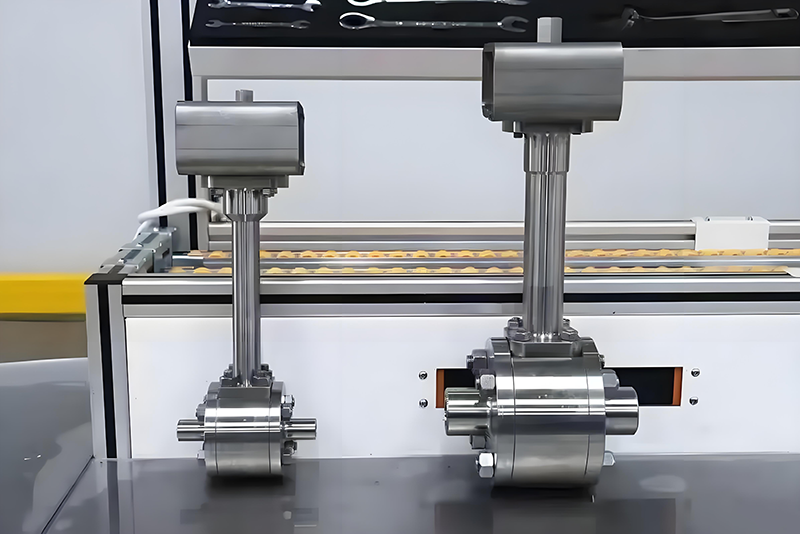
Testing and Inspection of Cryogenic Valves
The main components of cryogenic valves are subjected to cryogenic treatment, and each batch is sampled for cryogenic impact testing to ensure that the valves do not become brittle and can withstand the impact of cryogenic media under low-temperature working conditions.
Each valve undergoes the following tests:
Room temperature shell strength test;
Room temperature low-pressure upper seal test;
Room temperature low-pressure seal test;
Low-temperature upper seal air tightness test (when there is an upper seal);
Low-temperature air tightness test, etc., to ensure that the entire cryogenic valve meets the requirements of the standard;
The main components of cryogenic valves are subjected to cryogenic treatment, and each batch is sampled for cryogenic impact testing to ensure that the valves do not become brittle and can withstand the impact of cryogenic media under low-temperature working conditions;
Cryogenic (deep cold) valves are subjected to cryogenic treatment and impact testing in accordance with the corresponding material specifications;
The anti-static function is more powerful, and the conduction resistance between the valve body and the valve stem or between internal parts and the valve body is less than 1 ohm.
Cryogenic Valve Test Equipment
Cryogenic valve test device
Liquid nitrogen storage device
Cryogenic treatment tank
Cryogenic test bench to ensure the performance of the valve under low-temperature working conditions
 What Are Creamic Lined Valves?
 How to Select High‑Pressure Ball Valves
 Gas Pressure Regulator Installation and Operation Instructions
 What is a Flowmeter?