


Why Cryogenic Valves Have Long Stems?
Why Cryogenic Valves Have Long Stems?
Valves suitable for medium temperatures ranging from -40℃ to -196℃ are called cryogenic valves, and such valves generally adopt long-neck bonnets. The specification for cryogenic valves to use long-neck bonnets covers cryogenic emergency shut-off valves, cryogenic globe valves, cryogenic check valves, LNG-specific cryogenic valves, etc. They are mainly used in 300,000-ton ethylene, liquefied natural gas and other chemical plants. The output liquid cryogenic media such as ethylene, liquid oxygen, liquid hydrogen, liquefied natural gas, and liquefied petroleum products are not only flammable and explosive but also vaporize when heated, expanding hundreds of times in volume during vaporization.
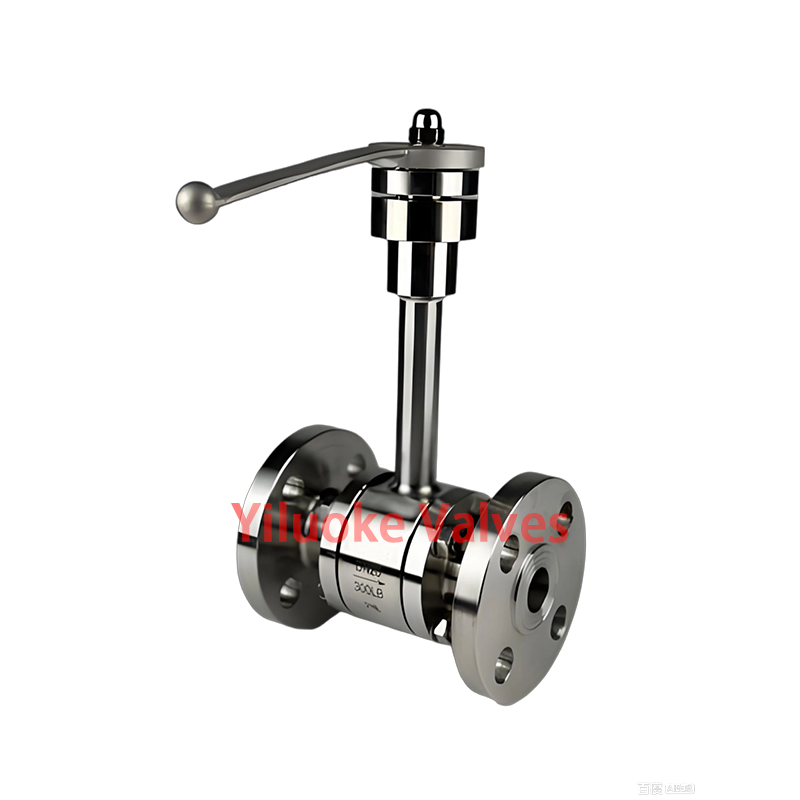
So why do cryogenic valves use long-neck bonnets? There are three reasons:
The long-neck bonnet has the function of protecting the stuffing box of the cryogenic valve, because the tightness of the stuffing box is one of the keys of the cryogenic valve. If there is leakage at the stuffing box, the cold insulation effect will be reduced, leading to the vaporization of liquefied gas. At low temperatures, as the temperature decreases, the elasticity of the packing gradually disappears, and the leakage prevention performance decreases accordingly. Medium leakage will cause freezing between the packing and the valve stem, affecting the normal operation of the valve stem, and also scratching the packing due to the up and down movement of the valve stem, causing serious leakage. Therefore, it is necessary to ensure that the temperature at the stuffing box is above 8℃.
The structure of the long-neck bonnet is convenient for wrapping cold insulation materials, preventing cold energy loss of the cryogenic valve.
The long-neck structure of the cryogenic valve facilitates the quick replacement of the main valve components by removing them through the bonnet. Since the process pipelines and valves in the cold section of the equipment are often installed in cold boxes, the long-neck bonnet can extend through the wall of the "cold box". When replacing the main valve components, it is only necessary to disassemble and replace them through the bonnet without disassembling the valve body. The valve body is welded integrally with the pipeline, which minimizes the leakage of the cold box and ensures the tightness of the valve.
Principle of Long Stem for Cryogenic Valves
A prominent feature of cryogenic valves is that their bonnets are generally of long-neck structure, which is also clearly stipulated in GB/T 24925 "Technical Conditions for Cryogenic Valves"; the bonnets of cryogenic gate valves, cryogenic globe valves, cryogenic ball valves, cryogenic shut-off valves, and cryogenic butterfly valves shall be designed into long-neck bonnet structures convenient for cold insulation according to different operating temperature requirements to ensure that the temperature at the bottom of the stuffing box is maintained above 0℃.
Advantages of Long Stem for Cryogenic Valves
The design of the elongated bonnet structure is mainly to keep the valve operating handle and stuffing box structure away from the low-temperature area. It can not only avoid frostbite of operators due to too low temperature but also ensure that the stuffing box and pressure sleeve are used at normal temperature, preventing the sealing performance of the packing from decreasing and extending the service life of the packing. Because at low temperatures, as the temperature decreases, the elasticity of the packing gradually disappears, and the leakage prevention performance decreases accordingly. Medium leakage will cause freezing between the packing and the valve stem, affecting the normal operation of the valve stem, and also scratching the packing due to the up and down movement of the valve stem, causing serious leakage.
The long-neck structure is also convenient for wrapping cold insulation materials to prevent cold energy loss. Since low-temperature pipelines generally have a thick cold insulation layer, the long-neck bonnet facilitates cold insulation construction and keeps the packing gland outside the cold insulation layer, which is conducive to tightening the gland bolts or adding packing at any time when needed without damaging the cold insulation layer. When selecting the length, in addition to meeting the requirements of BS, MSS SP and other standards and the special requirements of the design unit, it is also necessary to consider whether the designed cold insulation layer thickness is greater than this length. If so, it should be lengthened to match the cold insulation thickness.
Common Cryogenic Valves
Cryogenic ball valves and cryogenic globe valves are two major series of cryogenic valves. They are widely used in storage tanks and spherical tanks in chemical fertilizers, liquid nitrogen, liquid oxygen, LNG, petrochemical and other fields. Except for liquid nitrogen and other liquid inert gases, most of the controlled media are flammable media, which will vaporize when heated or flashed, resulting in a sharp expansion in volume and easy leakage. In the industry, valves used at medium temperatures below -40℃ are generally called cryogenic valves, and valves used at medium temperatures below -101℃ are called ultra-low temperature valves.
 What Are Creamic Lined Valves?
 How to Select High‑Pressure Ball Valves
 Gas Pressure Regulator Installation and Operation Instructions
 What is a Flowmeter?