


What is a Cryogenic Emergency Shut-Off Valve?
Cryogenic Emergency Shut-Off Valves: Working Principle, Features, Applications & Trends
Cryogenic emergency shut-off valves are mainly used to control the flow of cryogenic fluid media. When an abnormal situation occurs, they can quickly cut off the fluid media to prevent accidents. As a special type of valve, cryogenic emergency shut-off valves are mainly applied in pipeline systems of refrigeration, air conditioning, cryogenic engineering and other fields. They get their name due to their function of cutting off pipeline media in low-temperature environments. Generally, a cryogenic emergency shut-off valve consists of a valve body, valve disc, drive device, emergency shut-off mechanism, etc. Under normal conditions, the valve is in an open state, allowing the media in the pipeline to flow freely. When an abnormal situation such as pipeline rupture or leakage occurs, the emergency shut-off mechanism will act quickly to close the valve, preventing further leakage of the media, thereby protecting system equipment and personal safety.
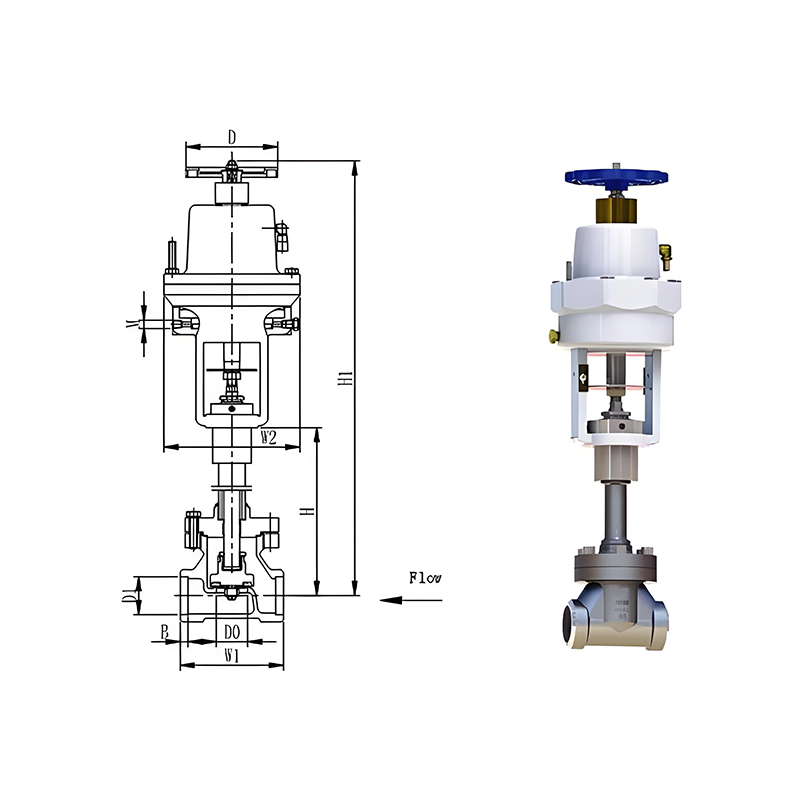
Working Principle of Imported Cryogenic Emergency Shut-Off Valves
A cryogenic emergency shut-off valve is mainly composed of a valve body, valve disc, drive device and control system. Under normal conditions, the cryogenic emergency shut-off valve is in an open state, and the fluid medium can pass through the valve. When an abnormal situation occurs, the control system will receive a signal, and the drive device will quickly close the valve to cut off the fluid medium.
Main Features of Cryogenic Pneumatic Emergency Shut-Off Valves
Rapid Response: Adopting advanced control systems and drive devices, cryogenic emergency shut-off valves can close quickly in an extremely short time, effectively preventing accidents.
High Safety: Made of high-quality materials and advanced manufacturing processes, these valves can withstand the impact and corrosion of cryogenic fluids, ensuring long-term stable operation. In addition, the valves are equipped with multiple safety protection functions such as overcurrent protection and overtemperature protection, further improving system safety.
Easy Maintenance: With a simple and compact structure, cryogenic emergency shut-off valves are convenient for installation and maintenance. Meanwhile, they adopt standardized interfaces and connection methods, facilitating integration with other equipment.
Application Fields of Cryogenic Pneumatic Emergency Shut-Off Valves
Chemical Industry: In the chemical industry, cryogenic fluids are widely used in various chemical reactions and separation processes. Cryogenic emergency shut-off valves can effectively control the flow of fluids, preventing safety accidents caused by equipment failures or operational errors.
Pharmaceutical Industry: Many drugs need to be stored and processed at low temperatures in the pharmaceutical industry. Cryogenic emergency shut-off valves can ensure that the temperature of drugs is controlled within a certain range, preventing drug deterioration or failure caused by excessively high or low temperatures.
Food Industry: In the food industry, cryogenic fluids are mainly used for the processing and transportation of frozen and refrigerated food. Cryogenic emergency shut-off valves can ensure that the temperature of food is controlled within the specified range, preventing food deterioration or contamination.
Aerospace Industry: In the aerospace industry, cryogenic fluids are used for cooling, lubrication and other purposes. Cryogenic emergency shut-off valves can ensure the normal flow of fluids, preventing safety accidents caused by fluid leakage.
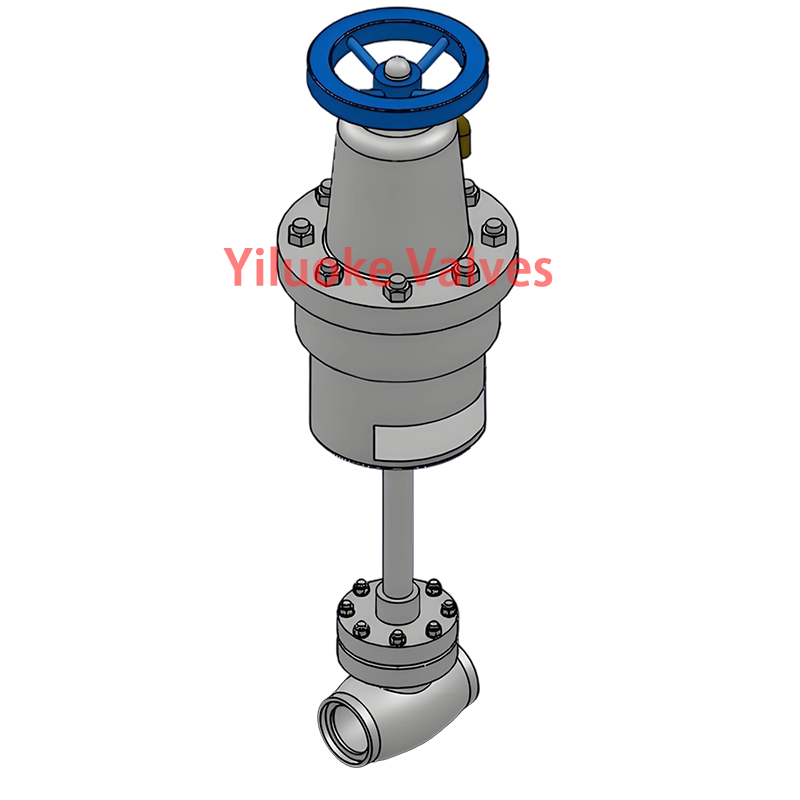
Selection Parameters of Cryogenic Pneumatic Emergency Shut-Off Valves
Nominal Pressure: 1.6-42MPa
Design Temperature: -196℃~+75℃
Applicable Media: LNG, LO2, LN2, LAr, CO2
Connection Method: Socket Weld
Drive Pressure: 0.4~0.7MPa
Main Component Materials of Cryogenic Pneumatic Emergency Shut-Off Valves
Valve Body, Valve Bonnet: CF8
Valve Disc, Valve Stem: S30408
Valve Disc Seal: PCTFE
Performance of Cryogenic Pneumatic Emergency Shut-Off Valves
1. Excellent Low-Temperature Sealing Performance
Since cryogenic emergency shut-off valves need to work in low-temperature environments, their sealing performance is crucial. The valves adopt special sealing materials and structural designs, which can maintain good sealing performance at low temperatures and effectively prevent medium leakage.
2. Rapid Response
The emergency shut-off mechanism of cryogenic emergency shut-off valves uses high-sensitivity sensors and control components, which can respond to abnormal situations and close the valve quickly in an extremely short time. This helps to reduce the impact range of accidents and minimize losses.
3. Safety and Reliability
The design of cryogenic emergency shut-off valves fully considers safety and reliability. Equipped with multiple safety measures such as overload protection and misoperation protection, the valves can work reliably under various conditions. At the same time, they have good durability and stability, and can maintain excellent performance for a long time.
4. Easy Maintenance and Operation
The maintenance and operation of cryogenic emergency shut-off valves are simple and easy to understand. With a simple structure and few components, they are easy to disassemble and install. Meanwhile, the valves have good interchangeability and versatility, facilitating maintenance and replacement.
Strong Adaptability of Cryogenic Pneumatic Emergency Shut-Off Valves
Emergency shut-off valves can be applied to various working environments and medium types. Different types of valves can be selected according to different needs to meet different process requirements and technical parameters. In fields such as refrigeration, LNG systems, air conditioning, and cryogenic engineering, cryogenic emergency shut-off valves play an important role. They can effectively protect system equipment and personal safety, reduce the impact range of accidents, and minimize losses. In the future, with the continuous development and progress of technology, the performance and application range of cryogenic emergency shut-off valves will be further expanded and improved.
Future Development Trends of Cryogenic Pneumatic Emergency Shut-Off Valves
With the continuous development of science and technology, cryogenic emergency shut-off valves will continue to be innovated and improved in the future. The following aspects may be the future development trends:
Intelligentization: In the future, cryogenic emergency shut-off valves may realize intelligent control, such as RS485 communication interface, Modbus communication protocol, and self-diagnosis and self-adaptation capabilities. The valves can automatically adjust parameters and control methods according to actual conditions, improving system stability and reliability. At the same time, through intelligent control, the valves can realize remote monitoring and management, facilitating users' operation and maintenance.
High Efficiency: With the continuous increase of energy consumption, high efficiency and energy saving have become important development directions in the future. Cryogenic emergency shut-off valves may adopt more advanced materials and manufacturing processes to improve sealing performance and heat exchange efficiency, and reduce energy consumption and operating costs.
Standardization: With the continuous development of industrial automation, standardization has become an important trend. In the future, cryogenic emergency shut-off valves may adopt more unified interfaces and connection methods, facilitating integration and interoperation with other equipment. At the same time, the design and manufacturing of valves may become more standardized, improving product reliability and consistency.
Safety: Safety has always been one of the most important concerns in the industrial field. In the future, cryogenic emergency shut-off valves may further enhance safety protection functions and improve system stability and reliability. The valves may adopt more advanced safety detection and control systems, which can detect and handle abnormal situations in an extremely short time, ensuring the safety of personnel and equipment.
 What Are Creamic Lined Valves?
 How to Select High‑Pressure Ball Valves
 Gas Pressure Regulator Installation and Operation Instructions
 What is a Flowmeter?