


What Are Creamic Lined Valves?
Ceramic wear resistant valves adopt high-performance structural ceramics. They feature good self-cleaning performance, ultra wear resistance, strong corrosion resistance, excellent self-lubricating property, long service life and wide operating environment, especially suitable for chemical industry.
In harsh environments such as chemical, coal and petroleum industries, metal valves can no longer meet the requirements of severe working conditions with high wear and strong corrosion, mainly reflected in easy leakage, large torque and corrosion-prone sealing surfaces of metal valves. Traditional metal valves are in urgent need of thorough innovation in materials, design and processing technology. Applying ceramic materials to industrial valves is a bold and beneficial innovation.
Metal valves are widely used in various industries with a history of hundreds of years. Although metal valves have been improved in structure and materials, limited by the properties of metal materials, they cannot adapt to increasingly severe working conditions of high wear and strong corrosion. The main problems are short service life and serious leakage, which greatly affect the stability of system operation.
Ceramic materials have small deformation and much higher mechanical strength than metals. Generally, the crystal ions constituting ceramic materials have small radius, high ionic valence and large coordination number. These properties make ceramic materials have extremely high tensile strength, compressive strength, elastic modulus and hardness. However, the brittleness and difficult processing characteristics of ceramics limit their application range. In the past decade, thanks to the development and progress of martensitic phase transformation toughening technology, composite material technology and nano-ceramic concept, the brittleness of ceramics has been greatly improved, their toughness and strength have been greatly enhanced, and their application scope has been continuously expanded. In recent years, new ceramic materials have been widely applied in petroleum, chemical, mechanical and other fields. Using the wear and corrosion resistance of ceramics to make wear-resistant and corrosion-resistant parts to replace metal materials has become one of the important development directions in the high-tech material market in recent years.
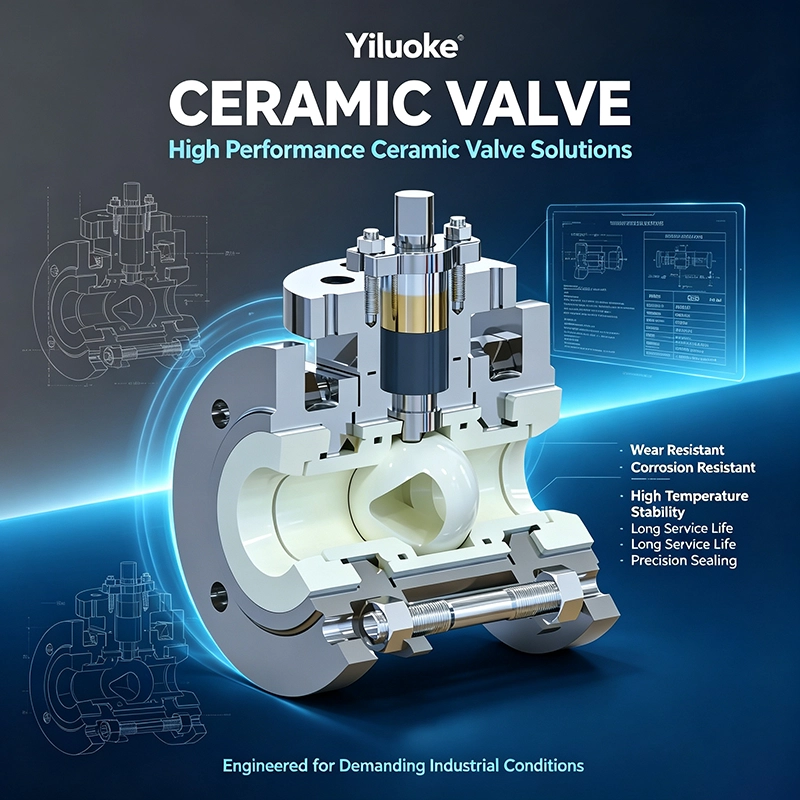
Ceramic On-Off Ball Valve
Size: 1/2''--12"
Temperature: -29°C--220°C or up to 900°C
Pressure: Class150#, 300#, 600#
Leakage: Class VI
Ceramic Material: Al₂O₃, ZrO₂, Si₃N₄, SiC
Stem: 316, 17-4PH, Nickel, Inconel, Zirconium, Titanium, HC, HB
Body: Optional A105, 304, 316 and more
Product Features: All valve internals of ceramic ball valves are made of structural ceramics with excellent wear and corrosion resistance. For valve sealing, O-rings enhance the contact sealing between ball and seat, maintaining constant sealing and providing dynamic loading during switching, reducing torque and extending valve service life. Multiple material options are available. No matter what complex working conditions you encounter, we can provide high-quality solutions to meet your requirements.
Ceramic Control Ball Valve
Size: 1/2''--12"
Temperature: -29°C--220°C or up to 900°C
Pressure: Class150#, 300#, 600#
Leakage: Class VI
Ceramic Material: Al₂O₃, ZrO₂, Si₃N₄, SiC
Stem: 316, 17-4PH, Nickel, Inconel, Zirconium, Titanium, HC, HB
Body: Optional A105, 304, 316 and more
Product Features: Ceramic V-port ball valve features equal percentage flow characteristic. We supply V-port balls with 60°, 45°, 30°, 15° or even smaller openings to meet precise control requirements of different applications. The valve can be equipped with pneumatic or electric actuators and other accessories.
Ceramic Gate Valve
Size: 2''--10"
Temperature: -29°C--400℃
Pressure: Class150#, PN10, PN16
Leakage: Class V, max Class VI
Disc: Al₂O₃, ZrO₂, metal
Plug: Al₂O₃, metal
Stem: Optional 316, 17-4PH and more
Body: Optional WCB, 304, 316 and more
Product Features: Material conveying systems in polysilicon, organosilicon, power plant, steel plant and other industries usually adopt pneumatic conveying or slurry conveying to improve system efficiency and reliability. However, high-speed solid materials during transmission seriously damage valve sealing surfaces and flow paths. SSZ engineers specially designed CDGV valves for this working condition, with maximum size up to 10". It is easy to assemble and maintain. The self-cleaning disc design allows micro-movement to avoid blockage by solid particles. Due to material characteristics, the sealing surface of CDGV series can resist impact from high-hardness materials, and its service life is several times longer than valves made of other materials.
Ceramic Eccentric Rotary Valve
Size: 1"--12"
Temperature: -29°C--320°C
Pressure: Class150#, 300#, 600#
Sealing Class: Class IV
Ceramic Material: Al₂O₃, ZrO₂, Si₃N₄, SiC
Stem: 17-4PH, HC, HB
Body: Optional WCB, 316, 304 and more
Product Features: Eccentric rotary valve serves for on-off or regulating control with large flow capacity. When fully open, the inner flow path of the valve is almost consistent with the inner diameter of the process pipeline without any obstructions. CREV provides perfect control solution for viscous media. The seat, plug and stem adopt eccentric design. Relying on the characteristics of ceramic materials, it can withstand severe working environments. At small opening control, the flow changes smoothly with high control accuracy. When the valve is closed, the plug generates lateral thrust to strengthen the contact between plug and seat and improve sealing performance.
Features of Ceramic Valves
Ceramic valves can greatly improve the smoothness and tightness of industrial pipeline systems, enhance the safety and stability of supporting equipment operation systems, and play a positive role in environmental protection and energy saving. Structural ceramic materials have small deformation, high tensile strength, compressive strength and hardness. With technological innovation, ceramic valves have attracted high attention and recognition at home and abroad with wider applications, and they are government-supported scientific and technological projects.
1. Ceramic valves adopt high-tech new structural ceramic materials for sealing and wearing parts, improving wear resistance, corrosion resistance and sealing performance, and greatly extending valve service life.
2. The application of ceramic valves can greatly reduce the frequency of valve maintenance and replacement, improve the safety and stability of supporting equipment systems and save maintenance costs.
3. Ceramic valves improve the tightness of industrial pipeline systems and minimize leakage so as to protect the environment.
4. Raw materials for ceramics are widely available at low cost. High-performance ceramic materials can be manufactured from common elements such as aluminum, carbon and silicon, saving a large amount of metal materials and rare mineral resources.
Wear resistant ceramic valves are mainly used in power, petroleum, chemical, metallurgy, mining, wastewater treatment and other industrial fields. Especially under severe working conditions of high wear, strong corrosion, high temperature and high pressure, ceramic valves show outstanding performance. Ceramic valves can adapt to environments with high wear and strong corrosion, featuring ultra-long service life. The cost performance of ceramic valves is far better than other similar metal valves. With continuous development of science and technology, technologies of ceramic materials including formula, forming, processing and assembly have become mature and complete. Ceramic valves are widely recognized by professionals in the valve industry for their excellent performance. The experience in manufacturing ceramic valves can also be extended to a wider range of engineering fields.
Application Fields
Thermal power plants, steel, petroleum, chemical, paper-making, bioengineering and other industries. Suitable for boiler steam, lime slurry, seawater with particles, high-hardness particles, corrosive media containing soft particles, powder, flue gas desulfurization, ash and slag discharge, feed water treatment. Materials can be replaced according to purposes to adapt to different temperatures and media.
 What Are Creamic Lined Valves?
 How to Select High‑Pressure Ball Valves
 Gas Pressure Regulator Installation and Operation Instructions
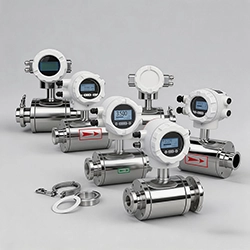 What is a Flowmeter?