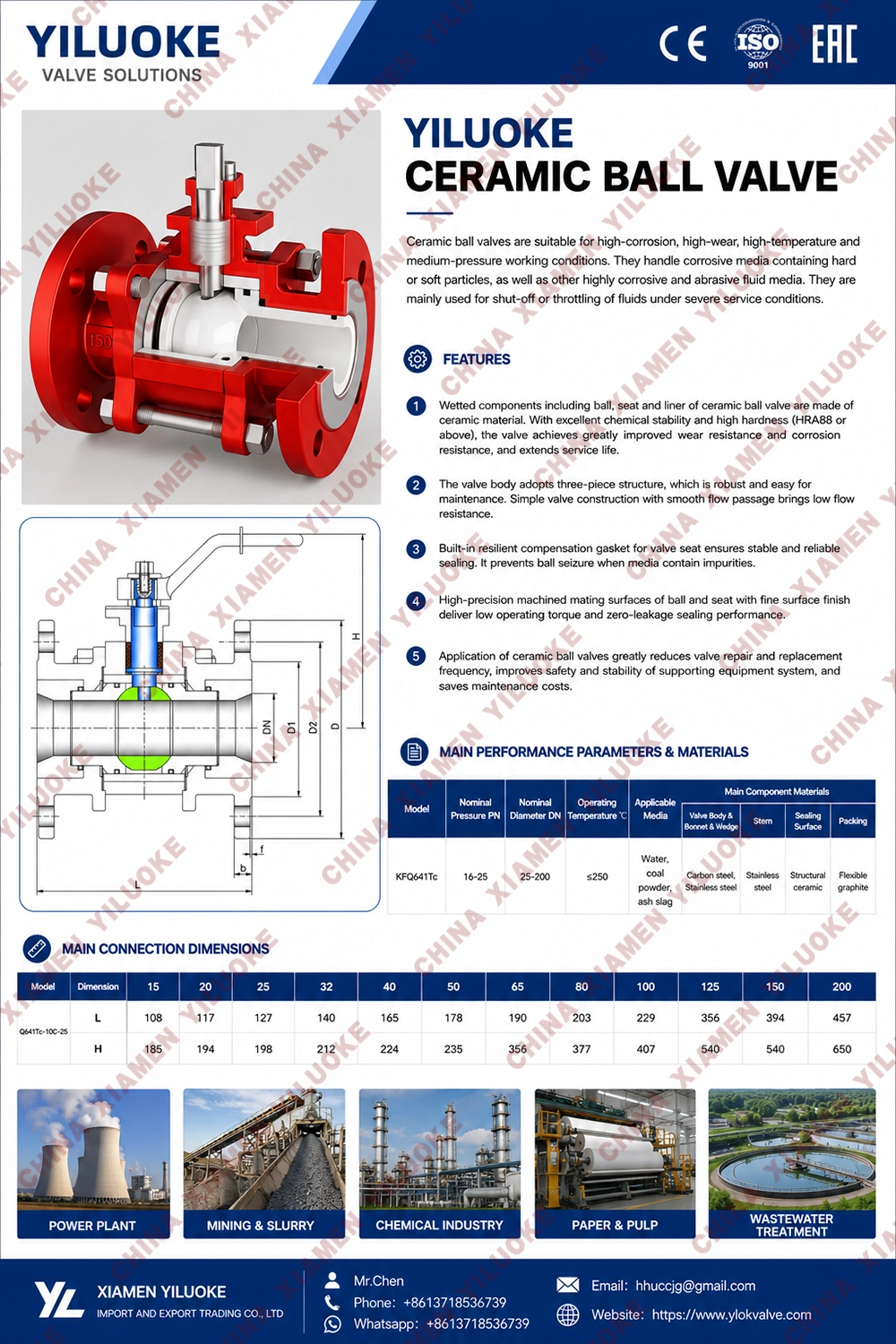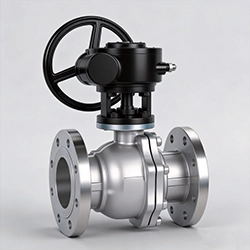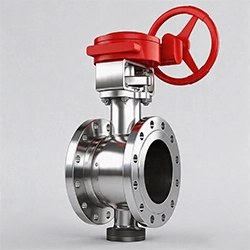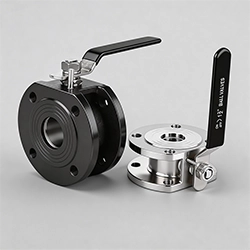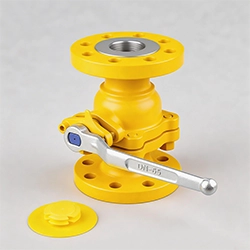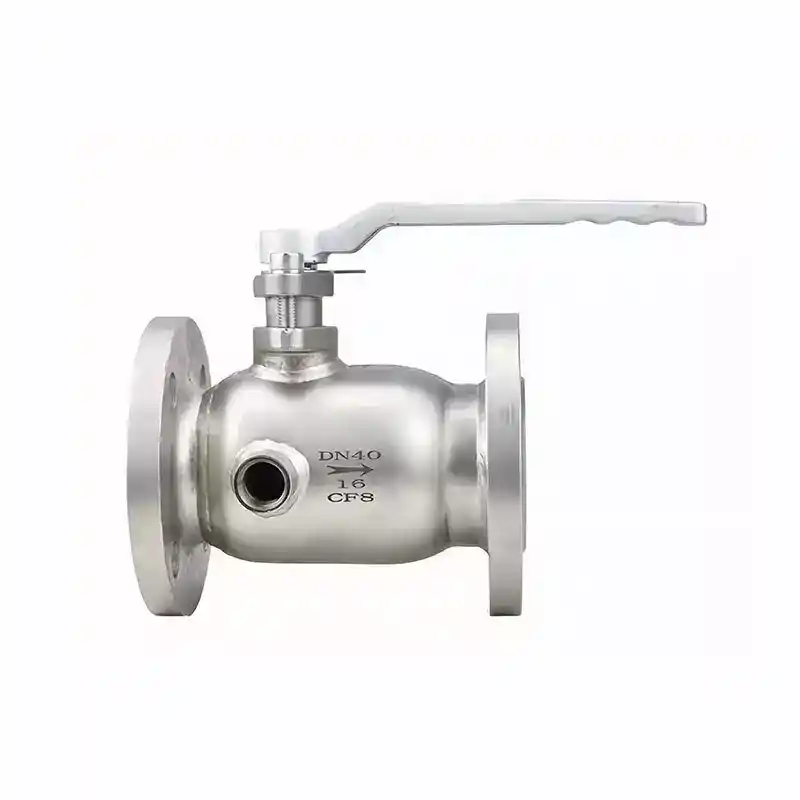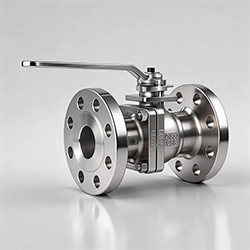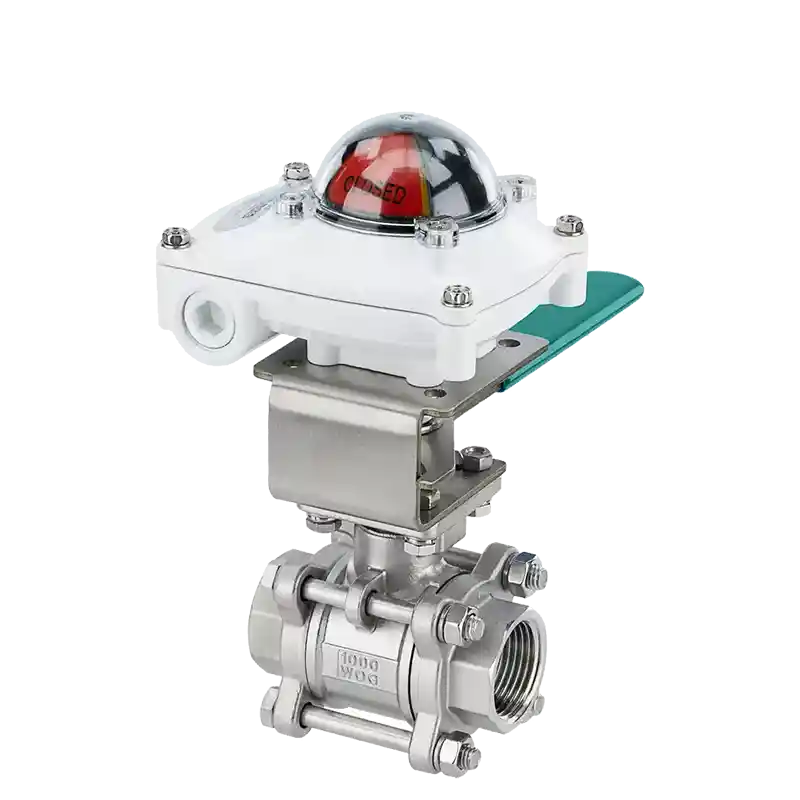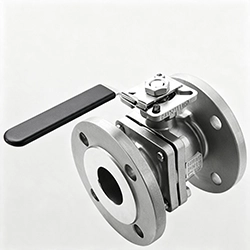


Ceramic Lined Ball Valves
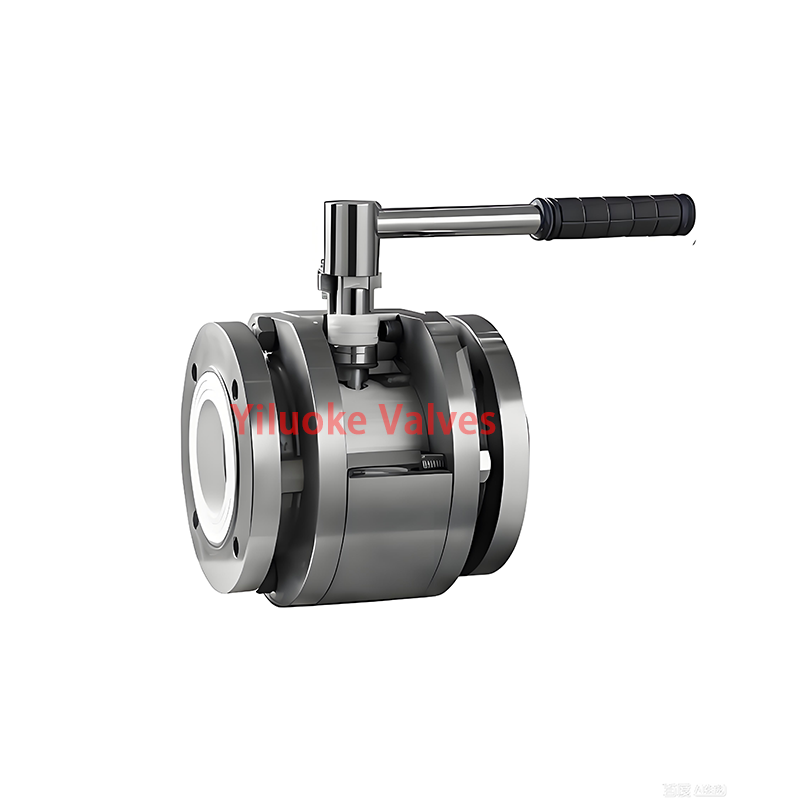
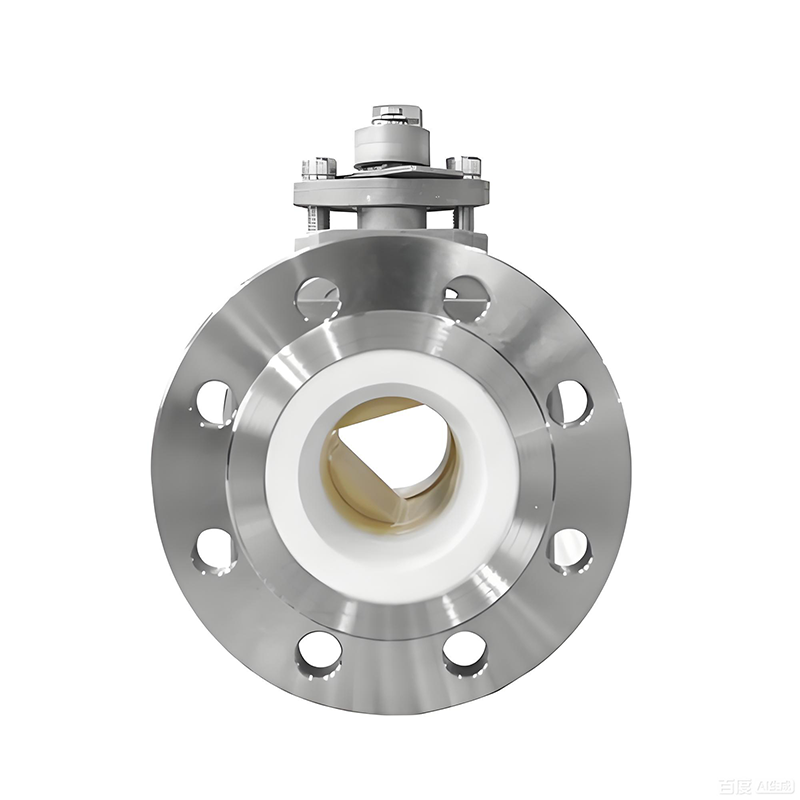
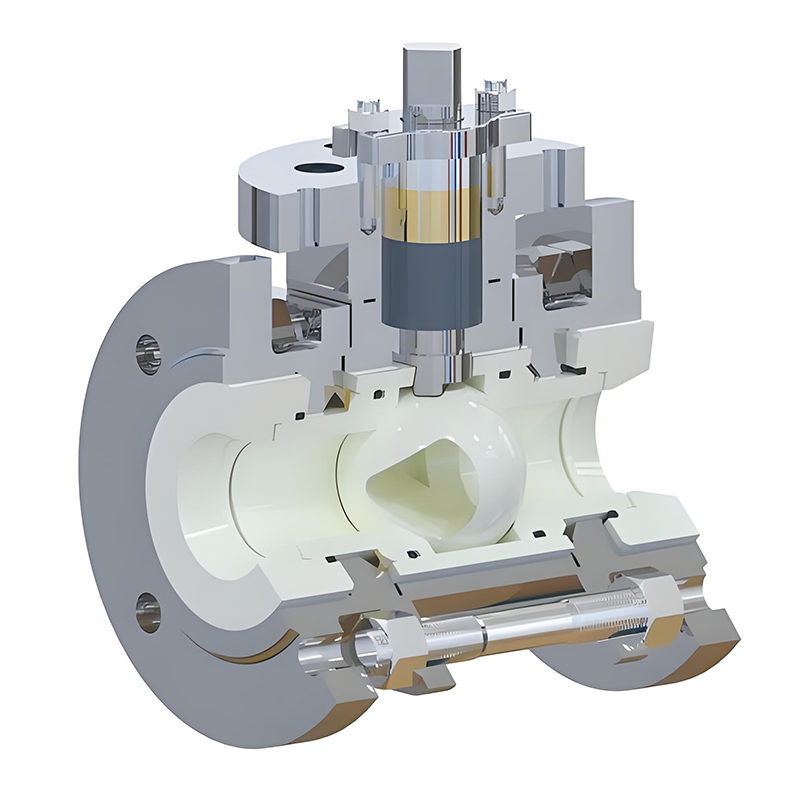
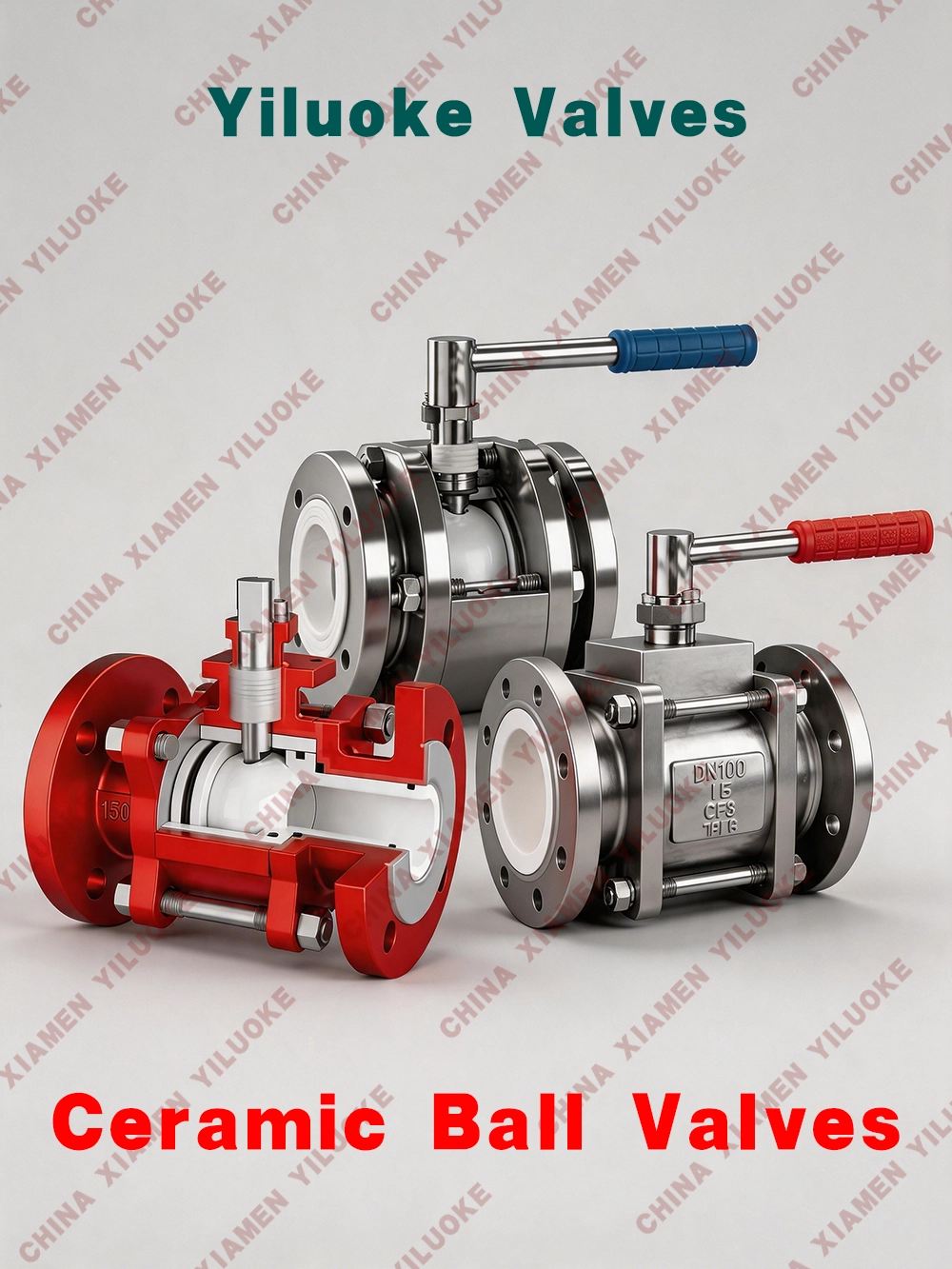
The internal core components of ceramic ball valve are made of toughened alumina or zirconia ceramics. It features high chemical stability and high hardness (Rockwell hardness HRC88), second only to diamond. It delivers outstanding wear‑resistance, corrosion‑resistance and erosion‑resistance, together with good heat insulation, low thermal expansion coefficient, high hardness and high electro‑thermal insulation performance, outperforming other materials. It is widely used in harsh working conditions where metal and other materials cannot work well, such as chemical equipment, waste incineration equipment, flue gas desulfurization equipment, covering power, petroleum, chemical industry, metallurgy, mining, sewage treatment and other industrial fields.
Working Principle
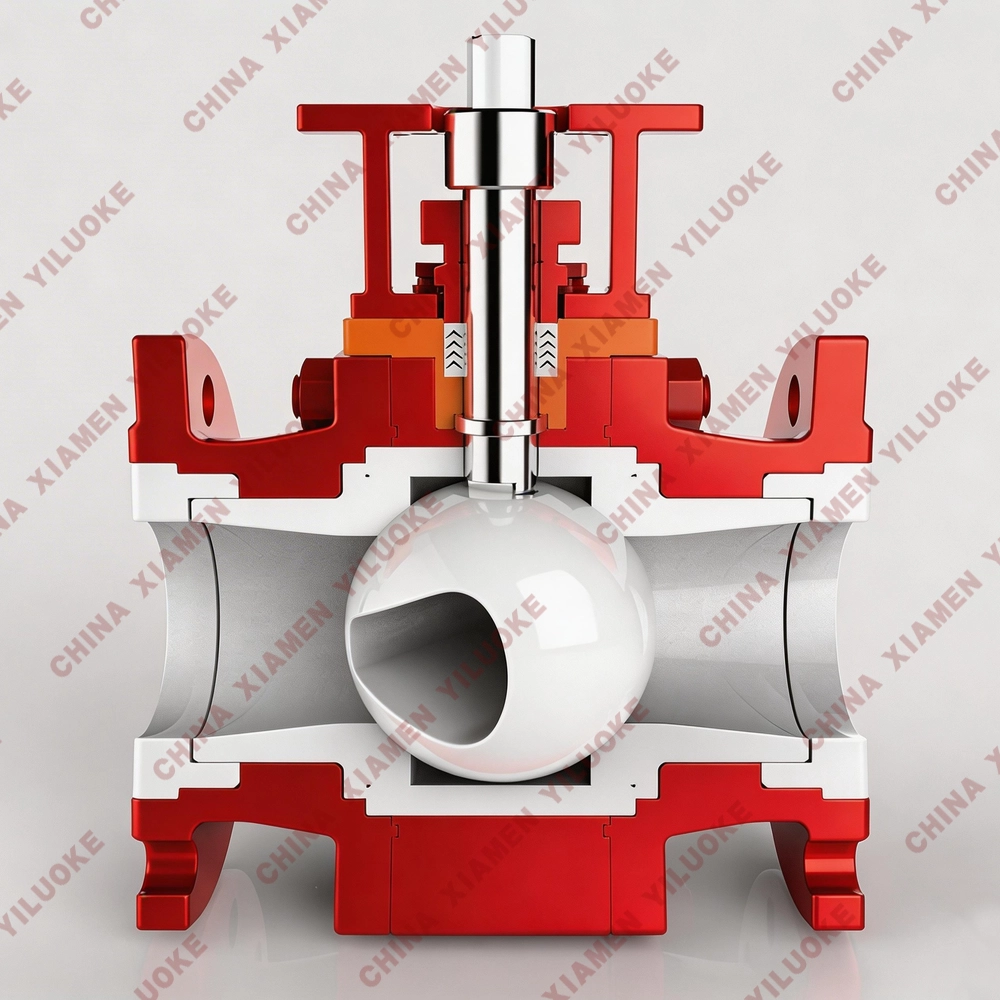
The main working principle of ceramic ball valve is to control fluid flow by rotating the ball. When the ball aligns with the valve seat, the valve opens and fluid flows freely through the valve. When the ball is rotated to the position perpendicular to the valve seat, the valve closes to block fluid flow.
Features & Advantages
● Excellent wear resistance: Lined ceramic hardness is second only to diamond, so it resists wear and erosion with long service life.
● Good corrosion resistance: Except molten metal and hydrofluoric acid, ceramic will not react with most corrosive media.
● Reliable sealing: After lapping between ceramic ball and ceramic seat, zero leakage can be achieved.
● Low operating torque: Benefiting from self‑lubricity of ceramic, energy‑saving for valve operation.
● Symmetrical design with bi‑directional sealing and elastic seat compensation, preventing ball from jamming.
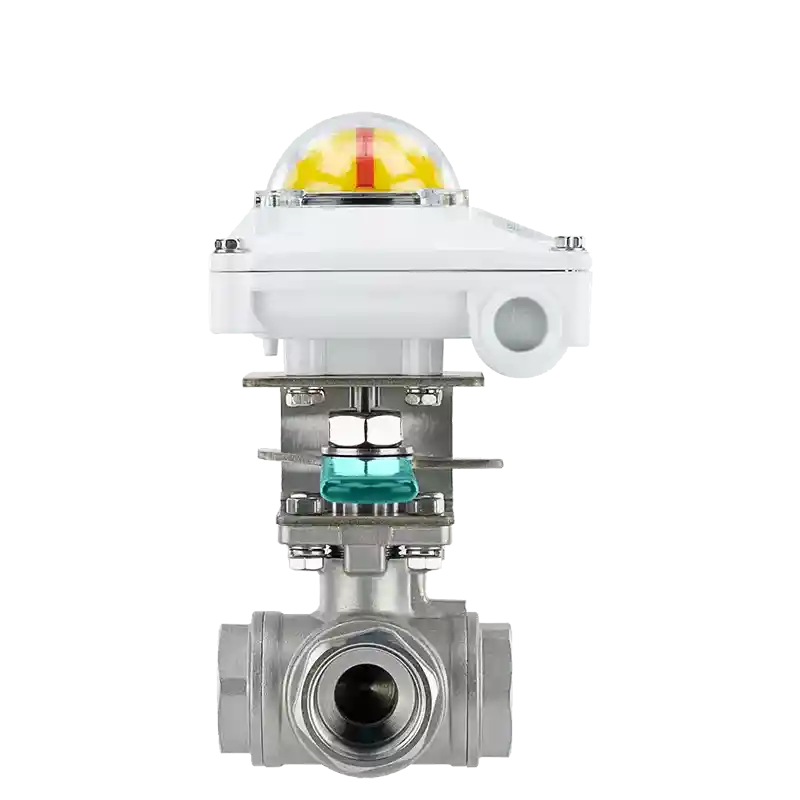
● Multiple actuation options: Manual, Pneumatic, Electric.
Technical Parameters
| Nominal Diameter | DN15 to DN200 (1/2” to 8”) |
| Pressure Rating | PN16 to PN40 (ANSI 150 to 300 lbs) |
| Connection Type | Flange: ANSI B 16.5(RF, RTJ) / DIN EN 1092‑1 |
| Valve Body Material | WCB (1.0619 / GP240GH / WCB) with ceramic lining Stainless steel (1.4408 / CF8 / CF8M / CF3 / CF3M) with ceramic lining |
| Ball Core Material | ZrO₂ Ceramic |
| Optional Function | V‑port ceramic ball valve for regulating service |
| Operating Temperature | Standard: 220°C High temperature: 500°C |
| Flow Characteristic | Equal percentage, Quick opening‑closing |
| Leakage Class | Metal seat IV/V/VI |
| Actuator | Pneumatic: PRS/PRD series Manual: NN series Electric: Customized per customer requirement |
Main Performance Parameters & Materials
| Model | PN | DN | Operating Temp(℃) | Applicable Medium | Body & Bonnet | Stem | Sealing Surface | Packing |
| KFQ641Tc | 16‑25 | 25‑200 | ≤250 | Water, pulverized coal, ash slag | Carbon steel, Stainless steel | Stainless steel | Structural ceramic | Flexible graphite |
Application Fields
Ceramic ball valves are widely used in petroleum, chemical, power, metallurgy, mining, sewage treatment and other industries. In petroleum industry, ceramic ball valves are frequently used for oil flow control. In chemical industry, they handle corrosive fluids. In power and metallurgy industries, they are applied for fluid control under high‑temperature and high‑pressure conditions. In mining industry, they are suitable for particle material transportation. In sewage treatment, their corrosion‑resistant and rust‑proof performance keeps smooth medium delivery.