


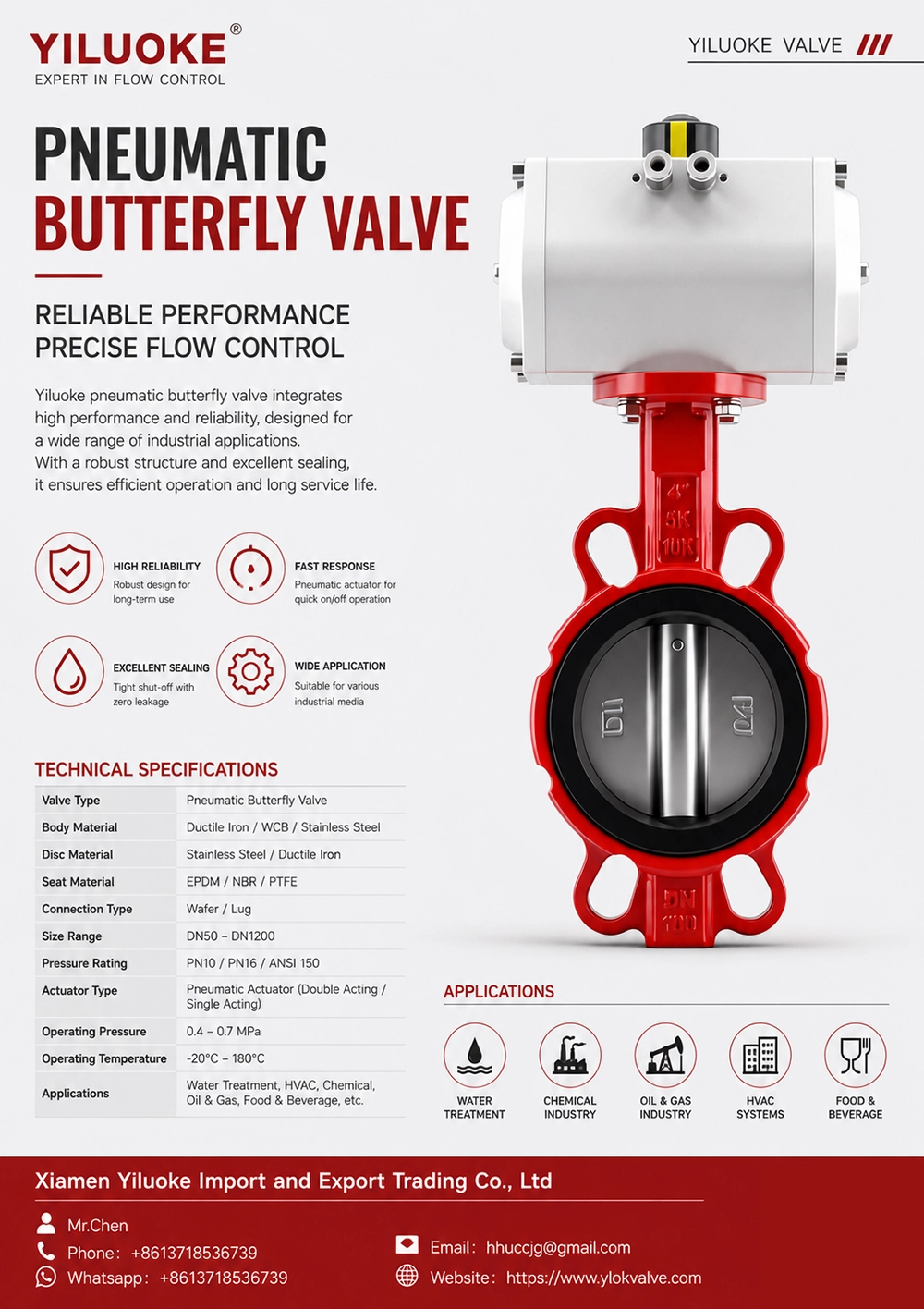
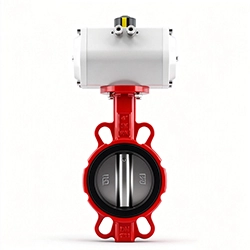
Pneumatic Actuated Butterfly Valve
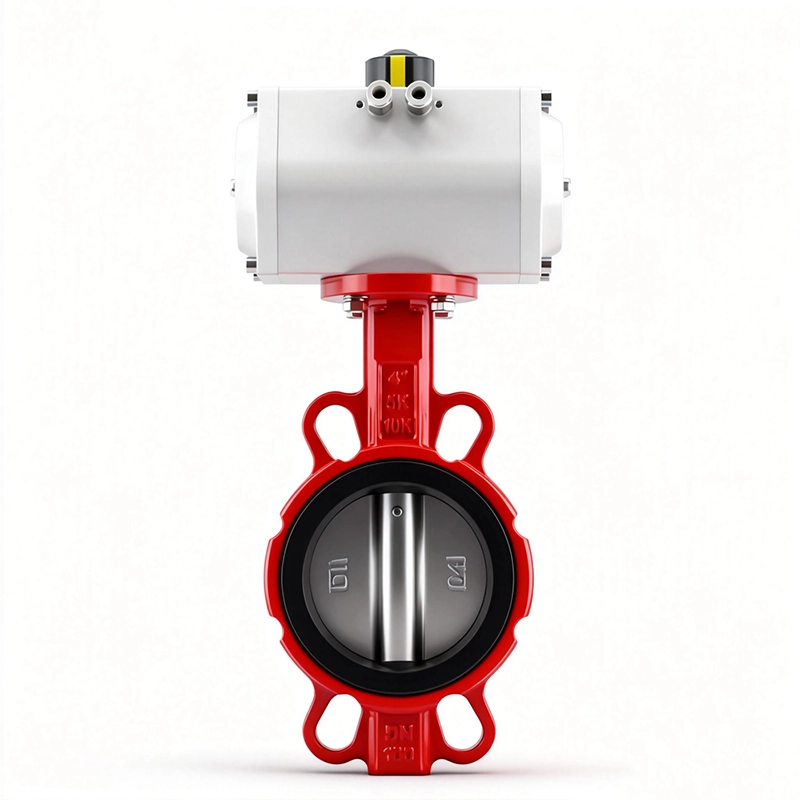
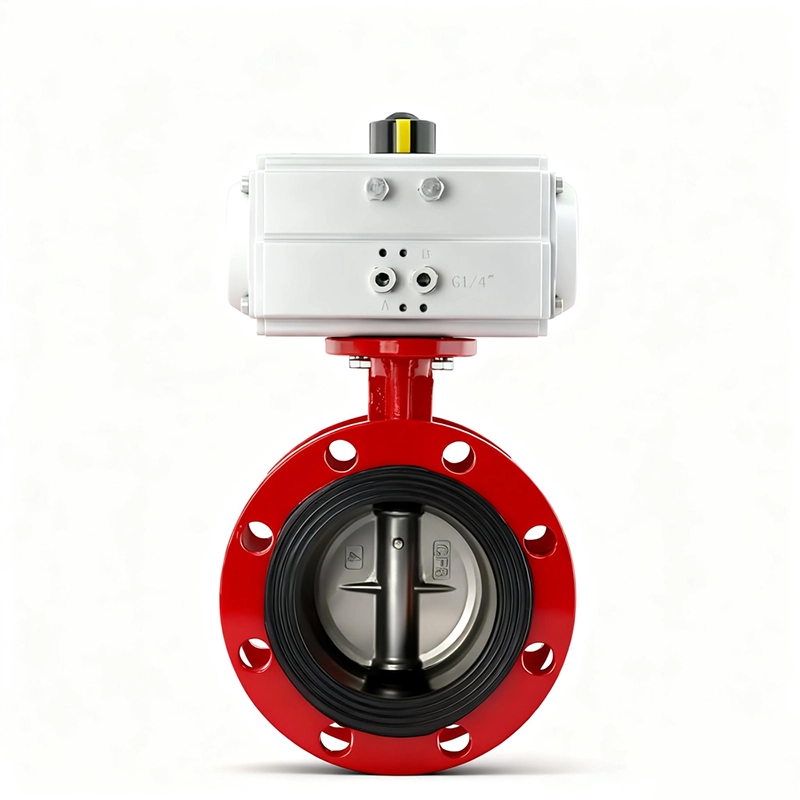
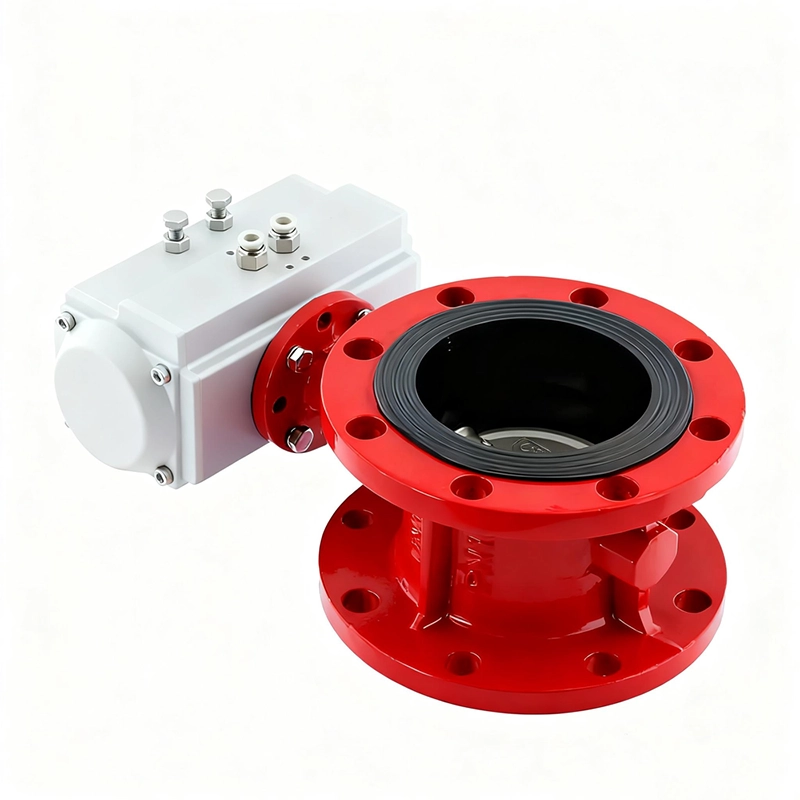
The Pneumatic Actuated Butterfly Valve consists of two main parts: pneumatic actuator and butterfly valve. It is a regulating valve with simple structure. Its closing member (disc) is a circular plate rotating around the valve shaft to realize opening and closing. It can control the flow of air, water, steam, various corrosive media, slurry, oil products, liquid metal and radioactive media. It is mainly used for shut‑off and throttling in pipelines. The opening‑closing component is a disc‑shaped plate rotating around its own axis inside the valve body to achieve opening, closing or regulation.
Working Principle of Pneumatic Actuated Butterfly Valve
Single‑acting Pneumatic Actuated Butterfly Valve
The air signal pressure output by the single‑acting positioner is sent to the spring‑free chamber of the pneumatic actuator. When there is a difference between thrust generated by air signal pressure and spring force, the cylinder piston performs linear motion. The gear‑rack transmission balances the thrust from air signal pressure with spring force, then the movement stops.
While the main shaft of actuator rotates, it drives valve stem and disc to rotate, so as to change the flow area between disc and seat.
Double‑acting Pneumatic Actuated Butterfly Valve
The double‑acting pneumatic actuator is equipped with left and right air chambers. Air signal pressure output by double‑acting positioner is fed into left and right piston chambers respectively. Pressure difference between two chambers pushes piston for linear movement. Gear‑rack converts piston linear motion into rotary motion of actuator main shaft. Movement stops when pressure of two chambers is balanced. For flow regulation, the rotating actuator drives valve stem and disc to rotate to change the flow area between disc and seat.
Features
1. Compact and lightweight, easy to disassemble, repair and install at any position.
2. Simple and compact structure, low operating torque, fast 90‑degree rotation for opening.
3. Approximate linear flow characteristic with good regulating performance.
4. Pin‑free connection between disc and stem eliminates potential internal leakage points.
5. Spherical outer edge of disc improves sealing performance and service life, maintains zero‑leakage after more than 50,000 pressure‑on open‑close cycles.
6. Replaceable sealing parts, reliable bidirectional sealing.
7. Disc can be coated with nylon or PTFE upon customer request.
8. Available in flange connection and wafer connection designs.
Technical Parameters
| Nominal Diameter | DN50~DN1200 |
| Structure Type | Wafer type (concentric, triple offset) |
| Valve Body Material | Ductile iron, cast steel WCB, SS304, SS316 |
| Nominal Pressure | PN6, PN10, PN16, PN25 |
| Operating Temperature | -40℃~450℃ |
| Applicable Media | Sewage, water, steam, oil products, corrosive media |
| Product Advantages | Small valve body, simple structure, suitable for narrow‑space and short‑distance pipeline conditions |
Accessory Options
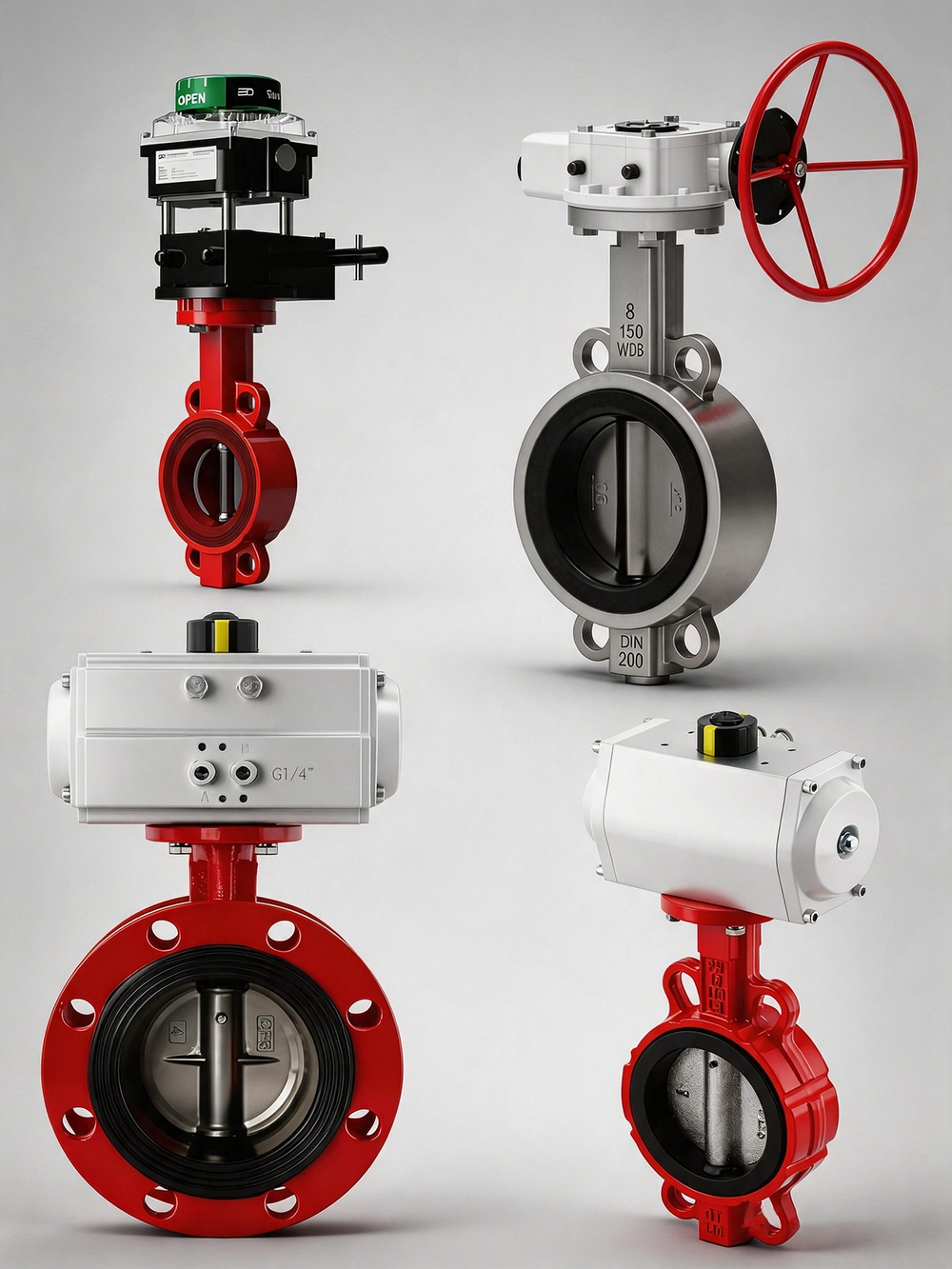
Limit Switch: Remote feedback of open‑close signal.
Solenoid Valve: 5/2 way for double‑acting actuator; 3/2 way for single‑acting actuator.
Air Filter Regulator Lubricator: Air pressure stabilization, filtration and cylinder lubrication, Model YT‑200.
Handwheel Mechanism: Manual open‑close operation for emergency use.
Valve Positioner: Receives 4‑20mA signal for valve modulating control.
Classification of Pneumatic Actuated Butterfly Valve
Classified by Structure Type
1. Concentric Seated Butterfly Valve
Center lines of disc, valve body and seat coincide. Symmetrical and simple structure with low cost, suitable for low‑pressure, medium‑low temperature working conditions.
2. Single Offset Butterfly Valve
Disc center deviates from valve body center. Disc separates from seat quickly when opening, reduces friction and wear, extends service life, suitable for medium‑low pressure systems.
3. Double Offset Butterfly Valve
Two offsets exist for disc center relative to valve body and seat center. Disc separates from seat rapidly upon opening to further reduce friction and wear, suitable for medium‑high pressure systems.
4. Triple Offset Butterfly Valve
One extra offset based on double‑offset structure. Line‑contact sealing pair with nearly zero friction, excellent sealing performance, suitable for high‑pressure and high‑temperature systems.
Classified by Sealing Surface Material
1. Soft‑seated Butterfly Valve
Sealing pair consists of non‑metallic soft materials such as rubber and PTFE. Good sealing performance for low‑pressure and normal‑temperature service, limited high‑temperature and pressure resistance.
2. Hard‑seated Butterfly Valve
Sealing pair is metal‑to‑non‑metal or metal‑to‑metal. Good high‑temperature and pressure resistance for medium‑high pressure and high‑temperature conditions, relatively ordinary sealing performance.
Classified by Sealing Mode
1. Force‑sealed Butterfly Valve
(1) Elastic‑sealed: Sealing pressure generated by disc compressing seat when valve closes, relying on elasticity of seat or disc, for low‑pressure systems.
(2) External Torque‑sealed: Sealing pressure generated by external torque on valve shaft, for medium‑high pressure systems.
(3) Pressure‑charged Sealed: Sealing pressure generated by pressurized elastic sealing elements on seat or disc, for medium‑low pressure systems.
(4) Self‑sealed: Sealing pressure automatically generated by medium pressure, for medium‑high pressure systems.
Classified by Working Pressure
1. Vacuum Butterfly Valve: Used in vacuum environment with high sealing requirements.
2. Low‑pressure Butterfly Valve: Working pressure below 1.6MPa.
3. Medium‑pressure Butterfly Valve: Working pressure 1.6MPa‑6.4MPa.
4. High‑pressure Butterfly Valve: Working pressure 6.4MPa‑25MPa.
5. Ultra‑high‑pressure Butterfly Valve: Working pressure above 25MPa.
Leave Your Message
Products categories
-
Pneumatic Actuated Butterfly Valve
-
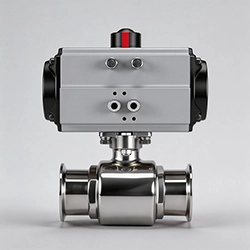
Pneumatic Actuated Sanitary Ball Valve
-
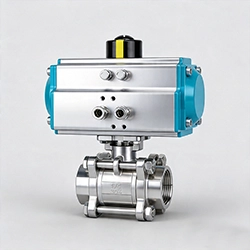
Pneumatic Actuated 3-Piece Ball Valve
-
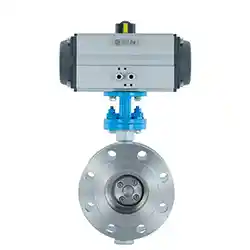
Pneumatic Hard Seal Flange Butterfly Valve
-
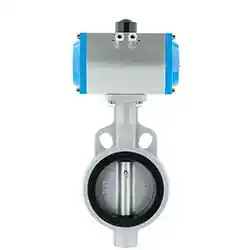
Pneumatic Center-Line Rubber Sealed Butterfly Valve
-
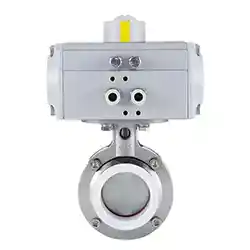
Pneumatic Sanitary PTFE Lined Butterfly Valve
-
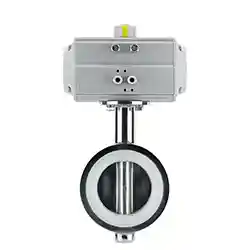
Pneumatic Sanitary Wafer Butterfly Valve
-
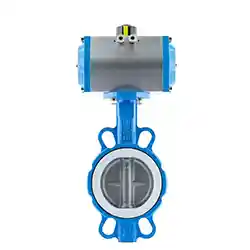
Pneumatic Carbon Steel WCB Butterfly Valve
-
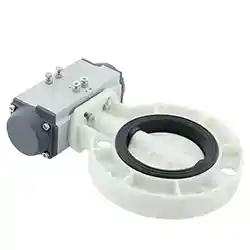
Pneumatic PPR Butterfly Valve