


Gate Valves VS Butterfly Valves
Gate Valves and Butterfly Valves: Definitions, Applications, Advantages and Disadvantages
A gate valve refers to a valve whose closing part (gate plate) moves perpendicular to the axis of the flow channel. It is mainly used to cut off the medium in the pipeline, that is, for fully open or fully closed use. Generally, gate valves cannot be used to regulate flow. They can be applied to both low temperature and pressure conditions and high temperature and pressure conditions, depending on the different materials of the valve. However, gate valves are generally not used in pipelines for transporting media such as sludge.
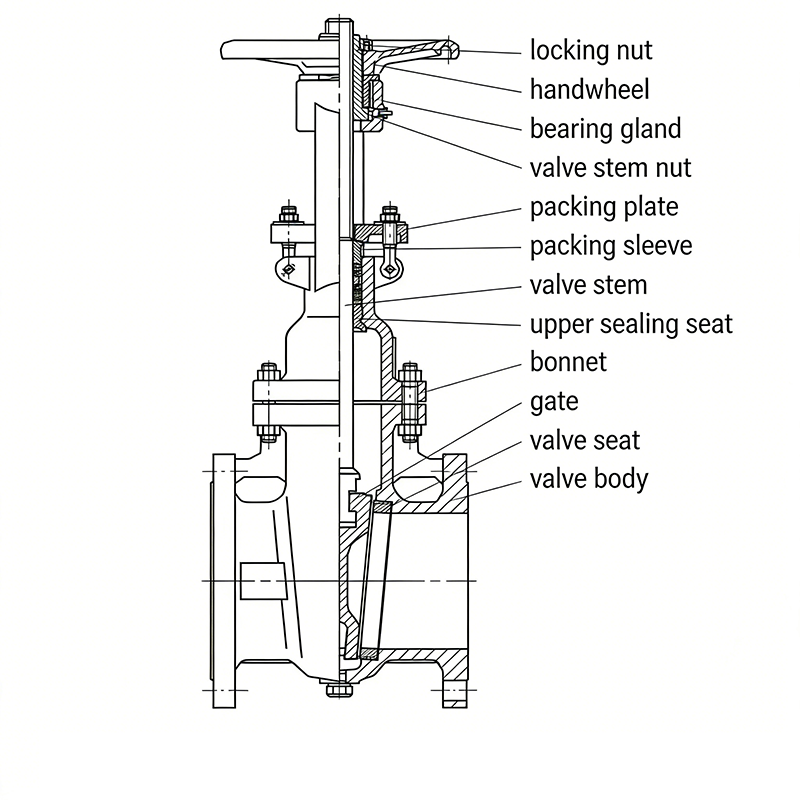
Advantages:
Small fluid resistance;
Small torque required for opening and closing;
Can be used in loop pipelines where the medium flows in both directions, that is, the flow direction of the medium is not restricted;
When fully open, the erosion of the sealing surface by the working medium is less than that of globe valves;
Relatively simple shape and structure, with good manufacturability;
Short structural length.
Disadvantages:
Large overall dimensions and opening height, requiring a large installation space;
During the opening and closing process, the sealing surfaces rub against each other, resulting in large wear, and even easy scuffing at high temperatures;
Generally, gate valves have two sealing surfaces, which increases some difficulties in processing, grinding and maintenance;
Long opening and closing time.
A butterfly valve is a type of valve that uses a disc-shaped opening and closing part to rotate back and forth by about 90° to open, close and regulate the fluid channel.
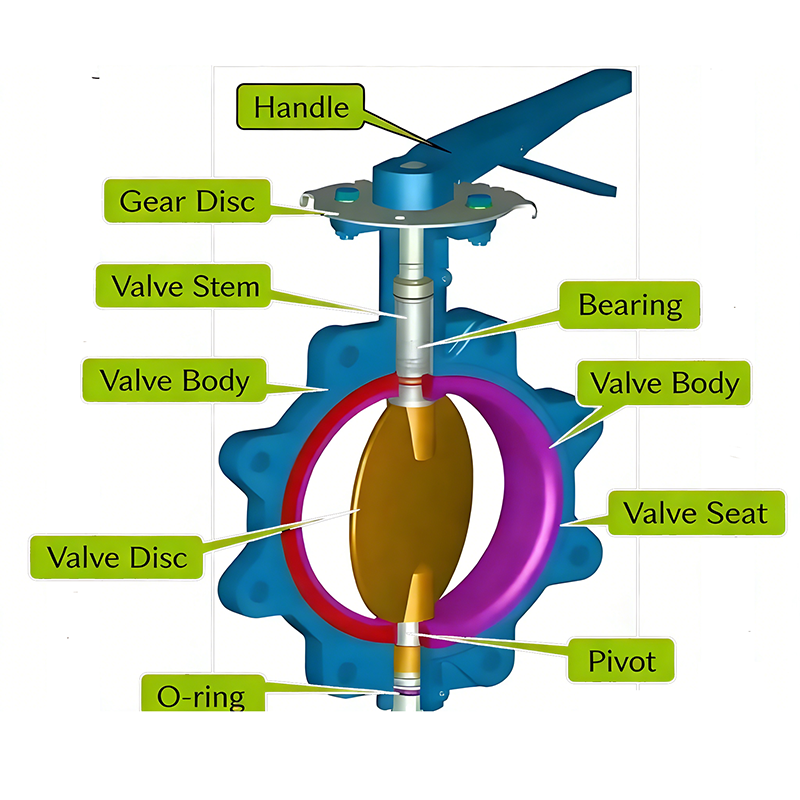
Advantages:
Simple structure, small volume, light weight, and material saving, especially suitable for large-diameter valves;
Fast opening and closing, small flow resistance coefficient;
Can be used for media with suspended solid particles, and can also be used for powdery and granular media depending on the strength of the sealing surface. It is suitable for two-way opening, closing and regulation of ventilation and dust removal pipelines, and is widely used in gas pipelines and waterways of metallurgy, light industry, electric power, petrochemical systems, etc.
Disadvantages:
The flow regulation range is not large; when the opening reaches 30%, the flow will be more than 95%;
Due to the limitations of the structure and sealing materials of butterfly valves, they are not suitable for high-temperature and high-pressure pipeline systems. Generally, the working temperature is below 300℃ and below PN40 (6~40);
The sealing performance is worse than that of ball valves and globe valves, so it is used in places where the sealing requirements are not very high.
 What Are Creamic Lined Valves?
 How to Select High‑Pressure Ball Valves
 Gas Pressure Regulator Installation and Operation Instructions
 What is a Flowmeter?