


How to Prepare Your Steam Traps for Winter?
How to Prepare Your Steam Traps for Winter?
As the cold winter approaches, many users worry that steam traps will be frozen and damaged, leading to work stoppages and losses. In fact, if a properly selected and installed steam trap is used, as long as there is steam circulation, freezing problems will not occur. However, when the steam supply stops, a vacuum is likely to form in the equipment or pipelines. After the pressure difference disappears, the steam trap stops working, and the remaining condensate cannot be discharged in a timely manner.
Once the accumulated condensate freezes and expands in volume, it will freeze and damage the valves and pipelines.
Therefore, during the use of steam traps, users should select appropriate anti-freezing measures according to specific conditions to ensure the normal operation of the equipment. The anti-freezing measures are as follows:
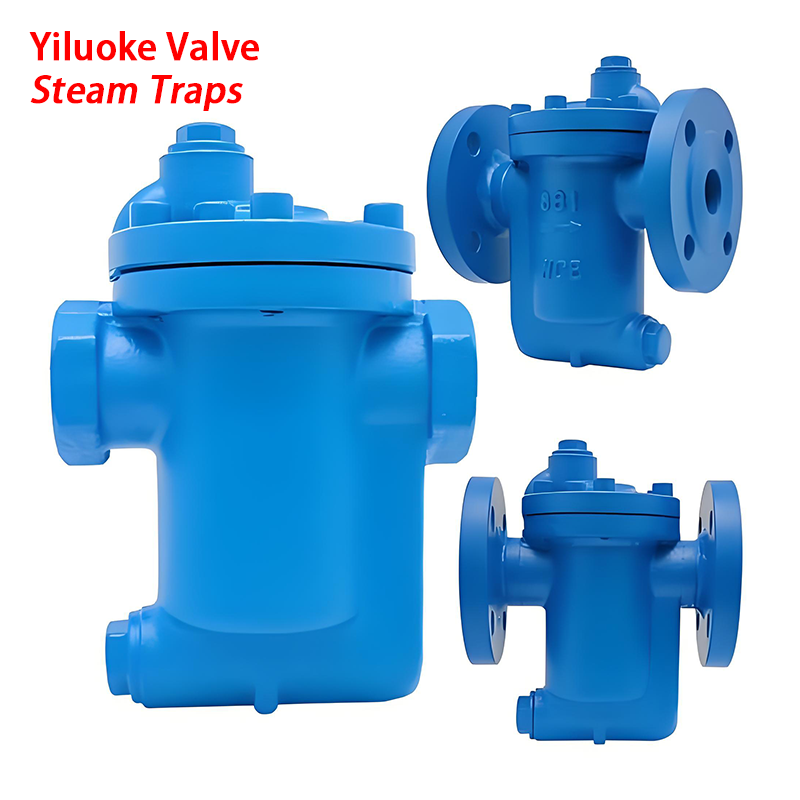
I. Select and Install Appropriate Steam Traps
Choose the appropriate size and displacement to avoid over-sizing. When the steam trap is over-sized, the water accumulation cavity is larger, resulting in the failure to drain the condensate in time after the steam is cut off, which in turn causes freezing problems.
Select the appropriate type. For outdoor freezing working conditions, thermodynamic and inverted bucket steam traps are more suitable than float steam traps.
Avoid installing the steam trap in a pit that may be submerged by rainwater.
II. Install a Vacuum Breaker
Install a vacuum breaker between the steam trap and the discharged equipment to prevent the formation of vacuum in the steam system and block free discharge.
The vacuum breaker can ensure that the condensate is drained in time when the steam is cut off, avoiding freezing.
III. Reasonably Design the Steam Trap Discharge Pipeline
Design the steam trap discharge pipeline to be as short as possible so that the condensate can quickly reach the steam trap and be discharged from the system in time.
Incline the steam trap discharge pipeline downward to accelerate the discharge speed by gravity.
IV. Add Thermal Insulation Measures
Insulate the steam trap discharge pipeline and return water pipeline to prevent freezing.
If the condensate return water pipeline is exposed to atmospheric conditions, a heat tracing pipe can also be considered to maintain an appropriate temperature of the pipeline.
V. Solve the Problem of Vertical Discharge Pipes
When the return water pipe rises and vertical discharge is required, adjacent the discharge pipe to the discharge pipe at the upper part of the return water pipe, and insulate the pipeline.
For a horizontal discharge pipe of a certain length, the far end of the pipe may freeze, affecting the normal operation of the steam trap. Steam cannot smoothly enter the steam trap.
VI. Sequence of Cutting Off Steam Valves
When cutting off the steam supply, first close the globe valve of the upstream boiler steam header, and then consume all the steam in the pipeline. Avoid incorrect sequence of closing steam valves, which will cause a large amount of steam to be trapped in long-distance pipelines, and finally freeze after condensation.
If there is no gravity discharge from the steam trap to the return water pipe, it is recommended to manually drain the steam trap and discharge pipeline after the steam is stopped. Alternatively, use Guangzhou Weiyuan anti-freezing steam traps to ensure that the condensate can be automatically discharged when there is no pressure difference in the system.
In summary, selecting and installing appropriate steam traps, installing vacuum breakers, reasonably designing steam trap discharge pipelines, strengthening thermal insulation measures, and solving the problem of vertical discharge pipes are all effective measures to prevent steam traps from freezing.
These measures can ensure that the steam traps work normally in the cold winter and avoid losses.
 What Are Creamic Lined Valves?
 How to Select High‑Pressure Ball Valves
 Gas Pressure Regulator Installation and Operation Instructions
 What is a Flowmeter?