


Problems of Steam Perssure Reducing Valves and How to Fix Them
Problems of Steam Perssure Reducing Valves and How to Fix Them
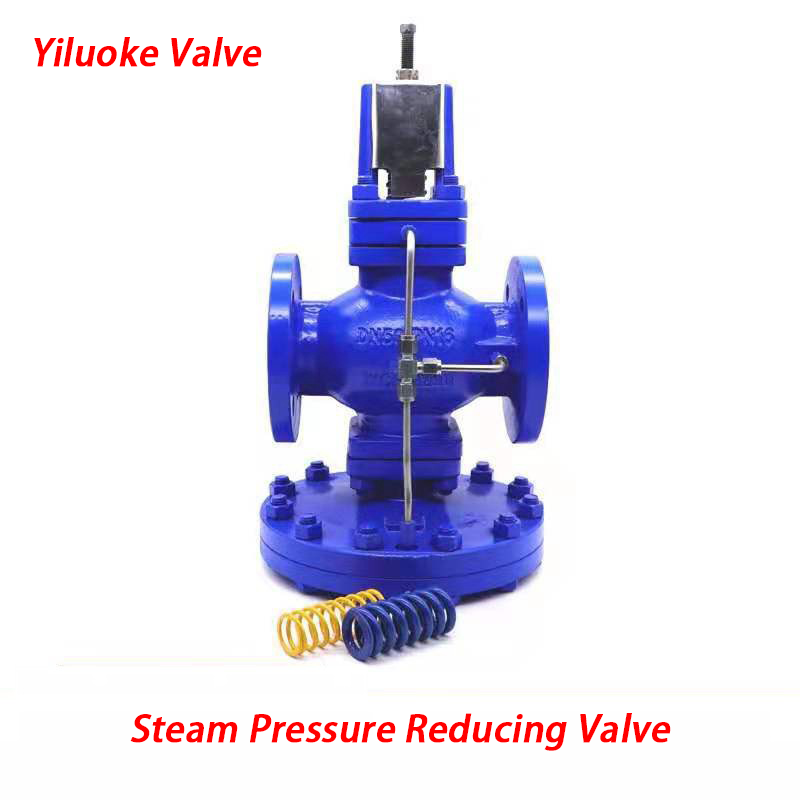
A steam pressure reducing valve adjusts the flow rate of the medium by controlling the opening degree of the opening and closing part in the valve body, reducing the pressure of the medium. At the same time, it adjusts the opening degree of the opening and closing part with the help of the effect of the pressure behind the valve, keeping the pressure behind the valve within a certain range. When the inlet pressure changes continuously, it maintains the outlet pressure within the set range and protects the subsequent daily and production appliances. During long-term use, the valve may experience various faults, such as pressure failure. So what are the common faults and corresponding handling methods?
I. Pressure Regulation Failure
Fault Phenomenon
The pressure behind the valve cannot be adjusted (too high or too low) or is consistent with the pressure in front of the valve (straight-through phenomenon).
Common Causes
The main valve piston or pilot valve core is stuck by foreign objects (such as sand, rust residues);
The pilot valve diaphragm is damaged or the spring fails;
The sealing surface of the main valve is covered with dirt or damaged.
Handling Methods
Disassemble and clean the main valve piston, pilot valve core and sealing surface to remove foreign objects;
Replace the damaged pilot valve diaphragm or spring;
Grind the sealing surface or replace the valve core assembly.
II. Condensate Invasion Fault
Fault Phenomenon
The pressure in front of/behind the valve fluctuates greatly or drops continuously.
Common Causes
No steam-water separator or steam trap group is installed in front of the valve, leading to condensate entering the main valve diaphragm chamber or pilot valve cavity;
Condensate backflows into the pressure reducing valve during shutdown.
Handling Methods
Install a steam-water separator within 3 meters in front of the valve, and configure a free-floating ball steam trap (thermal dynamic steam traps are prohibited);
Install a check valve and a steam trap group behind the valve to prevent condensate backflow;
Discharge the accumulated condensate in the valve body cavity.
III. Frequent Pressure Fluctuation
Fault Phenomenon
The outlet pressure jumps frequently or has a response lag.
Common Causes
The pressure fluctuation in front of the valve exceeds ±20%, which is beyond the valve's adjustment capacity;
The valve diameter does not match the flow rate (too large or too small).
Handling Methods
Select a pilot valve type diaphragm pressure reducing valve (with pressure fluctuation resistance of ±20%);
Match the valve diameter according to the actual flow rate (control the flow range within 15%~90% of the valve's Cv value);
Add a damper or expansion tank in the pipeline.
IV. Seal Leakage and Material Failure
Fault Phenomenon
Steam leaks outside the valve body or the sealing surface leaks.
Common Causes
High-temperature steam causes aging of sealing elements (such as deformation of PTFE sealing rings);
The valve body material is not corrosion-resistant (such as ordinary cast steel used for superheated steam).
Handling Methods
Replace with high-temperature resistant sealing materials (graphite or metal wound gaskets);
Select stainless steel or chrome-molybdenum alloy valve bodies for superheated steam systems (>300℃).
V. Foreign Object Blockage and Maintenance Defects
Fault Phenomenon
The valve operates sluggishly or is completely stuck.
Common Causes
No filter is installed, leading to pipeline impurities entering the valve cavity;
Long-term non-cleaning causes blockage of the diversion hole.
Handling Methods
Install an 80~100 mesh Y-type filter in front of the valve and clean it regularly;
Unclog the diversion holes of the main valve body and pilot valve with compressed air or fine iron wire.
 What Are Creamic Lined Valves?
 How to Select High‑Pressure Ball Valves
 Gas Pressure Regulator Installation and Operation Instructions
 What is a Flowmeter?