


What is the purpose of Insuation Valve?
What Are Insulated Valves?
The thermal insulation performance of insulated valves plays a crucial role in ensuring the normal operation of the entire pipeline and exerting economic benefits. This article analyzes the specific impacts from four aspects: the influence of thermal alternation, the corrosion impact on exposed valves, the influence of differences in thermal expansion, and the influence of thermal expansion differences between flanges and bolts.
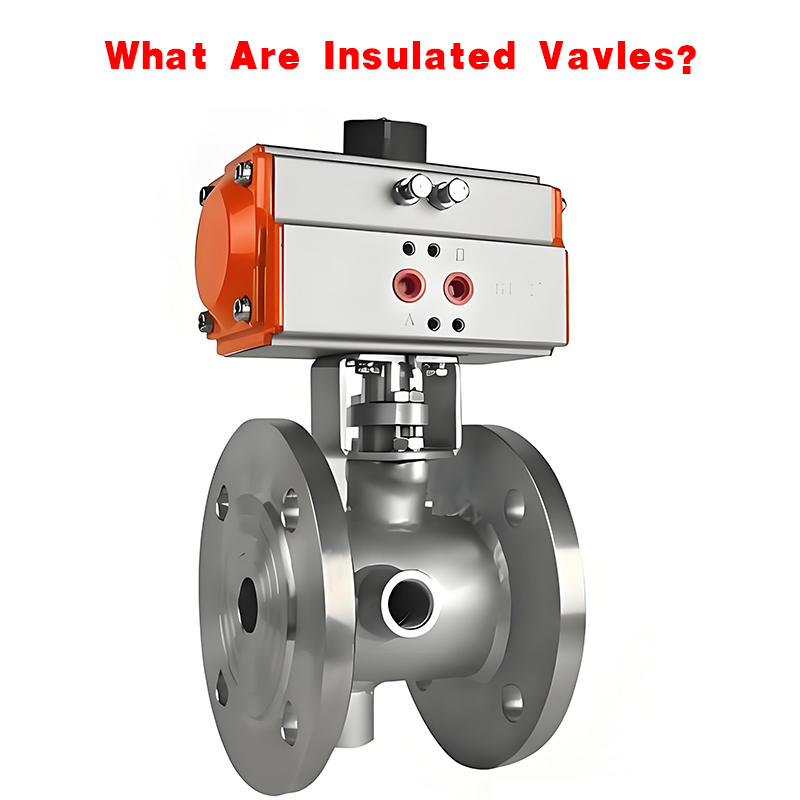
Many media must be transported through pipelines at a certain temperature. If pipelines exposed to air are used for long-distance transportation, there will definitely be significant heat loss, leading to vaporization of the medium; some media may solidify and become ineffective. Therefore, insulated valves must be adopted. For example, in pipelines where catalysts are added for petroleum cracking, hard-seal insulated ball valves are used to ensure that the catalyst does not solidify.
For valves on thermal pipelines, if effective thermal insulation is not implemented, leakage may occur due to uneven thermal expansion and contraction during multiple opening and closing processes. In winter in alpine regions, once an uninsulated valve is closed, the freezing speed of the imported valve is much higher than that of a well-insulated valve. If the interval between closing and opening is short, a well-insulated valve is always closed and opened in a hot state; while a poorly insulated or uninsulated valve may be closed at a high temperature and opened at a low temperature. High-temperature thermal alternation causes valve parts in contact with or close to the medium to be subjected to alternating stress, which accelerates the fatigue and aging of valve parts and shortens the service life of the valve. At the same time, thermal alternation of the medium may also cause the valve seat and guide sleeve (interference fit or threaded connection) to loosen, thereby losing the sealing function.
If outdoor valves are not insulated, they will be corroded by water vapor and other acidic gases in the air. Even valves installed indoors may dew on their surfaces in winter. After dew formation, sulfur dioxide in the air combines with water to form sulfuric acid, which also corrodes the valves. For tightly insulated valves, the insulation layer and outer protective layer form an anti-corrosion barrier for the valve, protecting it from or minimizing corrosion.
The reasons for differences in thermal expansion include differences in thermal expansion coefficients of materials, differences in heat loads borne by parts, and differences in constraint conditions of parts. For exposed valves, when flowing in a cold state, if the working gap between valve parts is not designed very accurately, the possibility of scuffing and seizing during operation is greater than that of well-insulated valves. This is because during the thermal alternation process, for the same valve, the number of times of hot closing and cold opening is more in the exposed state than in the well-insulated state. The reason for scuffing and seizing is that when hot fluid enters a cold valve, the valve disc is surrounded by the hot fluid. Since the heat dissipation of the valve disc only relies on the valve stem with a small cross-section connected to it, the entire valve disc can quickly reach the temperature of the pipeline fluid. The seat ring is heated almost simultaneously with the valve disc, and the heat dissipation condition of the seat ring is better than that of the valve disc. However, the linear expansion of the valve body is often smaller than that of the seat ring, so the valve body restricts the radial expansion of the seat ring. As a result, scuffing may occur between the valve disc and the seat ring. For an insulated valve body, the overall average temperature of the valve body will be higher than that of an uninsulated or poorly insulated valve body, and the linear expansion of the valve body will be correspondingly larger. The restriction on the linear expansion of the seat ring will be smaller, and the possibility of scuffing between the valve disc and the valve seat will also be smaller.
For flanged valves, good thermal insulation includes insulation of the entire flange and bolts. After overall insulation, the temperature of all parts of the valve (valve body, flange, bolts, etc.) during operation is basically consistent. However, for exposed valves, during operation, the temperature of the flange is higher than that of the bolts, and the axial expansion of the flange is greater than that of the bolts, thereby exerting an additional temperature stress on the bolts in the axial direction. This temperature stress is superimposed with the tensile stress generated by the bolt itself during tightening, which may cause creep and yield of the bolts. When the unit is shut down, the bolts cannot return to their original length after the temperature drops, resulting in loosening, and leakage is likely to occur when restarted.
 What Are Creamic Lined Valves?
 How to Select High‑Pressure Ball Valves
 Gas Pressure Regulator Installation and Operation Instructions
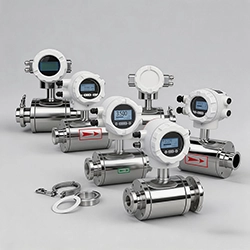 What is a Flowmeter?