


Inverted Bucket Steam Trap Working Principle
Inverted Bucket Steam Trap Working Principle
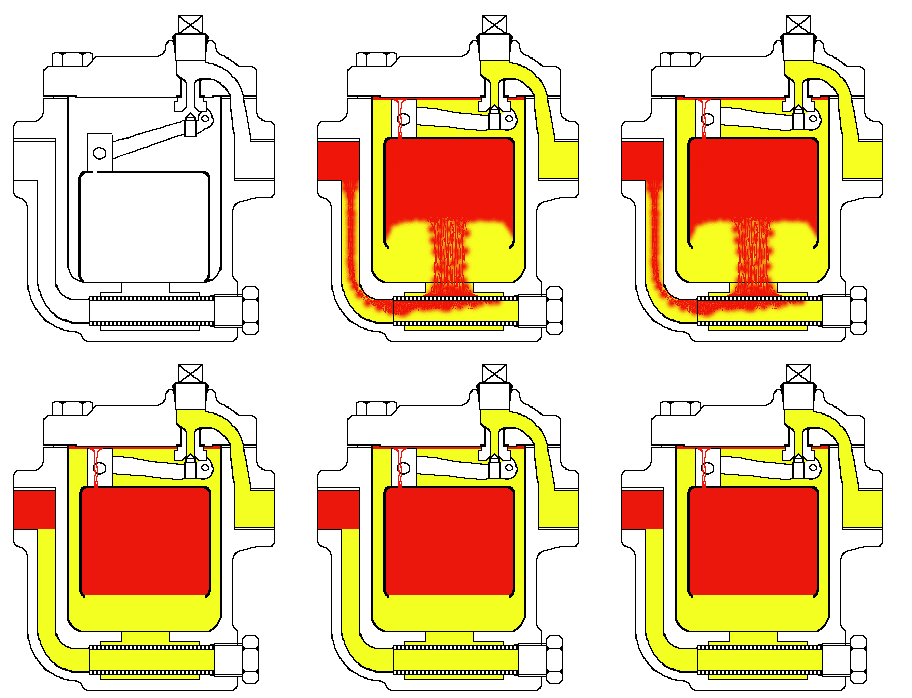
Different from the free float type, the inverted bucket steam trap operates on the principle of the density difference between condensed water and steam. Its internal structure consists of an inverted bucket (as the liquid level sensing element with a downward opening) connected by a lever system, which overcomes steam pressure to switch the valve on and off. The specific working cycle is as follows:
Startup Phase
When the device is first started, air and low-temperature condensed water are present in the pipeline. At this stage, the steam trap is fully open, allowing rapid discharge of air and low-temperature condensed water, which helps the device quickly raise its temperature to the working level.
Steam Entry & Valve Closing
When steam enters the inverted bucket, the bucket generates upward buoyancy. The lever connected to the inverted bucket drives the valve core to close the valve, preventing steam leakage.
Condensation & Valve Opening
There is a small hole on the inverted bucket that enables automatic air discharge. As part of the steam is discharged through this small hole, the remaining steam condenses into water. The inverted bucket then loses buoyancy and sinks downward, and the connected lever drives the valve core to open the valve, discharging the condensed water.
Cyclic Operation
When steam enters the inverted bucket again, the valve closes once more. This cyclic process realizes intermittent but efficient drainage of condensed water.
Below is the animated working principle of the inverted bucket steam trap:
 What Are Creamic Lined Valves?
 How to Select High‑Pressure Ball Valves
 Gas Pressure Regulator Installation and Operation Instructions
 What is a Flowmeter?