


Free Float Steam Trap Working Animation
Free Float Steam Trap Working Principle Animation
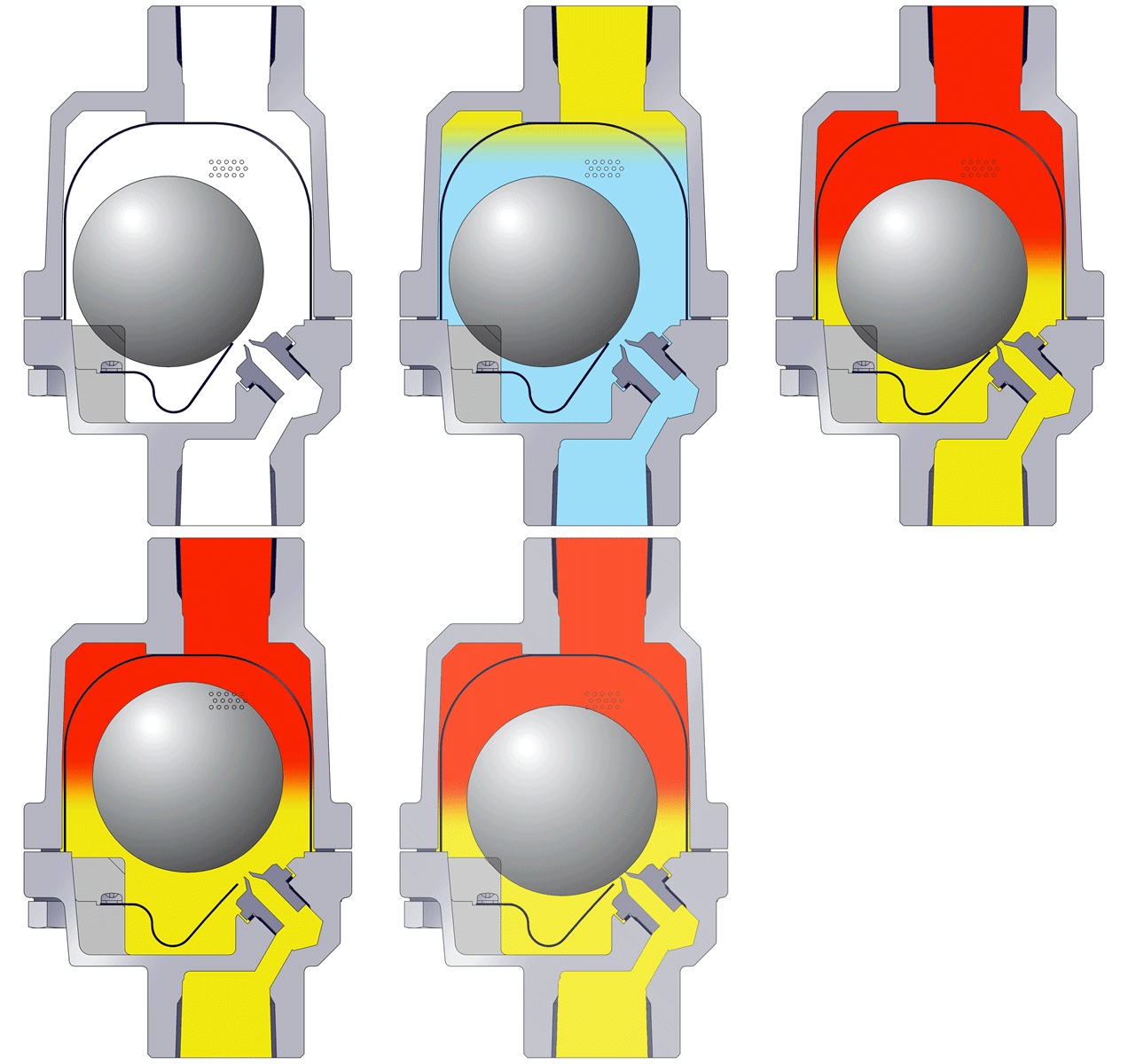
The free float steam trap operates on the principle of buoyancy. The float rises and falls with the water level in accordance with the volume of condensed water, automatically adjusting the opening degree of the valve seat orifice to discharge condensed water continuously. When the inflow of condensed water ceases, the float falls to the bottom by its own weight and closes the drain valve seat orifice. The drain valve seat orifice is positioned below the condensed water level, where water and steam are separated naturally to form a water seal, achieving almost zero steam leakage essentially.
The free float steam trap has a simple structure with only one moving part inside — a precision-ground stainless steel hollow float, which serves as both the float and the opening-closing component. It has no wearing parts and an ultra-long service life. The steam trap is built-in with a highly sensitive automatic air vent device, which can discharge air automatically and ensure high working performance.
Below is the animated working principle of the free float steam trap:
 What Are Creamic Lined Valves?
 How to Select High‑Pressure Ball Valves
 Gas Pressure Regulator Installation and Operation Instructions
 What is a Flowmeter?