


Operating Instruction of Pressure Regulator
Pressure Regulator Operating Instructions: Purpose, Installation, Operation & Maintenance
I. Purpose and Structure
(I) Purpose
It is applicable to medium systems such as gas, liquid and steam. It automatically adjusts to stably reduce the high inlet pressure to the low pressure required by equipment, ensuring the safe operation of downstream equipment. It is widely used in industrial, medical, chemical and other fields.
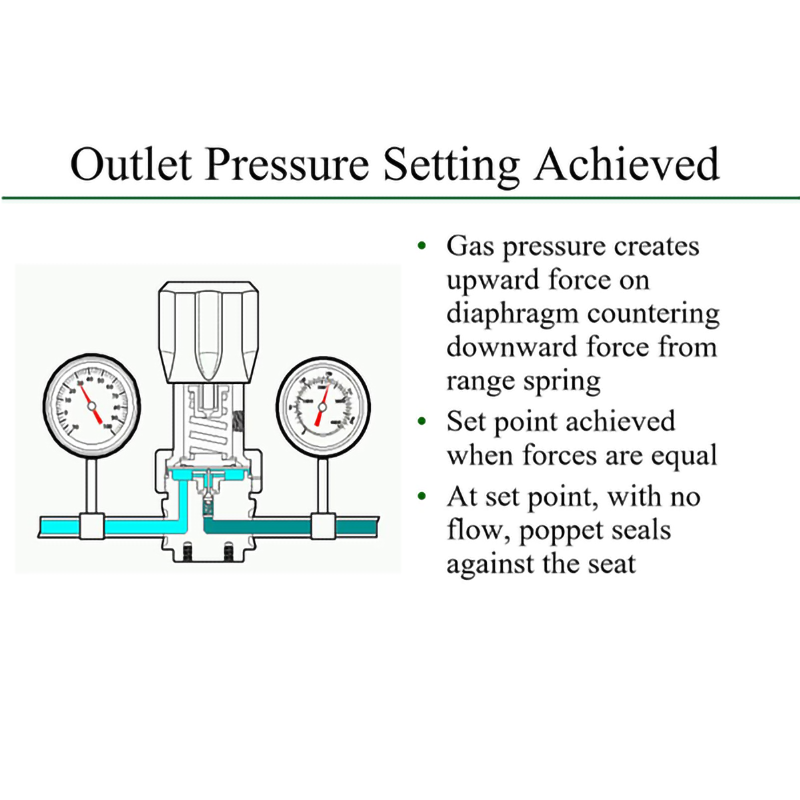
(II) Structure
It mainly consists of a body (made of high-strength alloy or stainless steel), inlet and outlet pressure gauges, a pressure regulating valve, a filter (precision ≥ 10μm), and a diaphragm/spring actuator. Some models are equipped with accessories such as a safety valve and a flowmeter.
II. Installation Specifications
(I) Preparation before Installation
The environment shall be dry and ventilated, away from fire sources, heat sources and corrosive substances. The storage distance between pressure regulators for flammable and oxidizing gases shall be ≥ 5m.
Check the equipment nameplate to confirm the pressure, temperature range and medium compatibility, and remove welding slag and impurities in the pipeline.
For oxygen pressure regulators, ensure there is no oil contamination, use dedicated accessories, and strictly prohibit mixed use.
(II) Installation Steps
Connect the pipeline according to the direction of the arrow on the valve body. Install a filter before the inlet, and install pressure gauges (range 1.5-2 times the working pressure) at the inlet and outlet respectively.
The torque for threaded connection shall comply with specifications (30-40N·m); forced installation is not allowed. A protective steel cable shall be equipped for hoses to prevent "whipping" accidents.
For steam systems, a drainage point shall be set 3 meters away from the outlet, and the pressure/temperature sensor shall be at least 7.5 meters away from the outlet.
After installation, use soapy water or a leak detector to check the seal and ensure no leakage.
III. Operation and Use
(I) Startup Process
Ensure the pressure regulating handle is unscrewed counterclockwise, and the downstream valve is fully open.
Slowly open the upstream stop valve, observe the high-pressure gauge reading until it stabilizes, and discharge the air in the pipeline.
Rotate the pressure regulating handle clockwise to raise the low-pressure gauge to the set value; the operation shall be slow and stable.
(II) Operation Monitoring
Observe the pressure gauge in real time; the pressure fluctuation shall be ≤ ±0.3MPa. Stop the machine immediately if any abnormality is found.
For steam pressure regulators, ensure the cooling water pressure is at least 0.5MPa higher than the steam pressure.
(III) Shutdown Process
First close the upstream stop valve, then loosen the pressure regulating handle.
Open the downstream valve to drain the residual medium, and close the downstream valve after the pressure gauge returns to zero.
IV. Maintenance
Blow off surface dust and check seals monthly. Replace packing or diaphragms in time if leakage is found.
Clean the filter quarterly and calibrate the pressure gauge annually to ensure accuracy.
If frozen, only use hot water below 40℃ for thawing; open flame heating is strictly prohibited.
For long-term storage, keep it in a dry place. Use dedicated regulators for specific gases; switching use is strictly prohibited.
V. Safety Precautions
Strictly prohibit use beyond the rated pressure. Keep oxygen pressure regulators free of oil throughout the process to avoid combustion and explosion caused by oil.
Installation and maintenance shall be conducted by qualified personnel, who shall wear protective gloves and goggles.
In case of leakage, immediately close the gas source, evacuate personnel, strictly prohibit switching on/off electrical appliances, and conduct maintenance after ventilation and replacement.
Comply with standards such as GB 16912 (National Standard of the People's Republic of China) and conduct regular safety calibration.
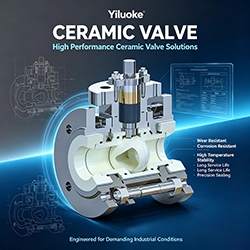 What Are Creamic Lined Valves?
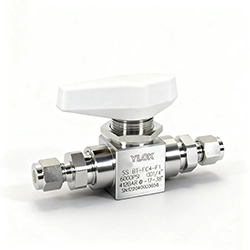 How to Select High‑Pressure Ball Valves
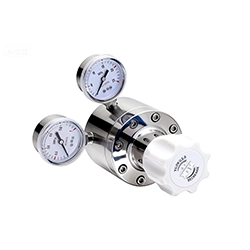 Gas Pressure Regulator Installation and Operation Instructions
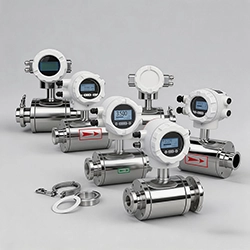 What is a Flowmeter?