


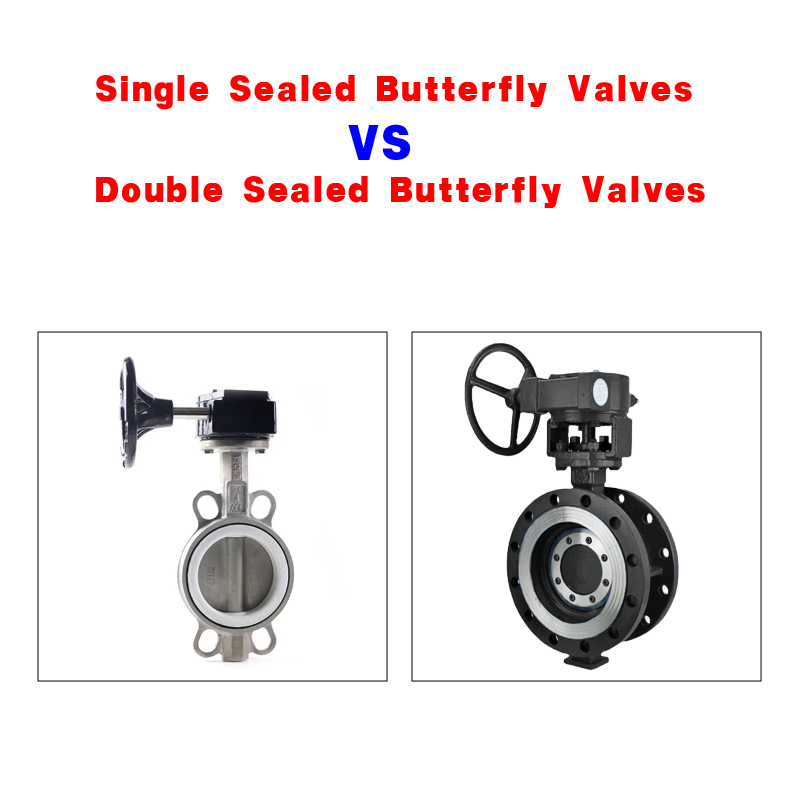
Single Sealed Butterfly Valves VS Double Sealed Butterfly Valves
How to Distinguish Between Single Sealed Butterfly Valves and Double Sealed Butterfly Valves
In the selection of butterfly valves, the issue of Single Sealed Butterfly Valves and Double Sealed Butterfly Valves is often encountered. This article explains how to distinguish between them.
For a Single Sealed Butterfly Valve (imported butterfly valve), the front face of the butterfly disc must face the direction of medium flow when closed; the medium can only flow in one direction, and there must be an arrow on the valve body indicating the direction of medium flow. Attention should be paid to the direction of medium flow during installation. If installed in reverse, it will not only fail to achieve the sealing effect of the imported valve but also may affect the quality of the valve.
A Double Sealed Butterfly Valve allows the butterfly disc to face or face away from the direction of medium flow. There is no need to pay attention to the direction of medium flow during installation, and there is no arrow indicating the direction of medium flow on the valve body. The force on the valve stem of a Double Sealed Butterfly Valve is greater than that of a Single Sealed Butterfly Valve. In the design, for butterfly valves of the same diameter and pressure, the stem diameter of the Double Sealed Butterfly Valve is larger than that of the Single Sealed Butterfly Valve. Manufacturers usually provide reverse pressure for high-performance DDouble Sealed B Sealed Butterfly Valves, which should be selected according to the magnitude of the reverse pressure. Generally speaking, the reverse pressure is equal to or lower than the working pressure of the valve. A reasonable selection can ensure the effective use of the valve equipment.
 What Are Creamic Lined Valves?
 How to Select High‑Pressure Ball Valves
 Gas Pressure Regulator Installation and Operation Instructions
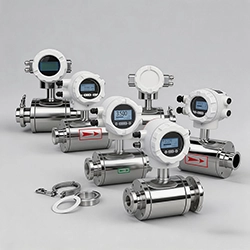 What is a Flowmeter?