


What Are Marine Valves?
Marine Valves: Definition, Characteristics, Standards and Standard Optimization Suggestions
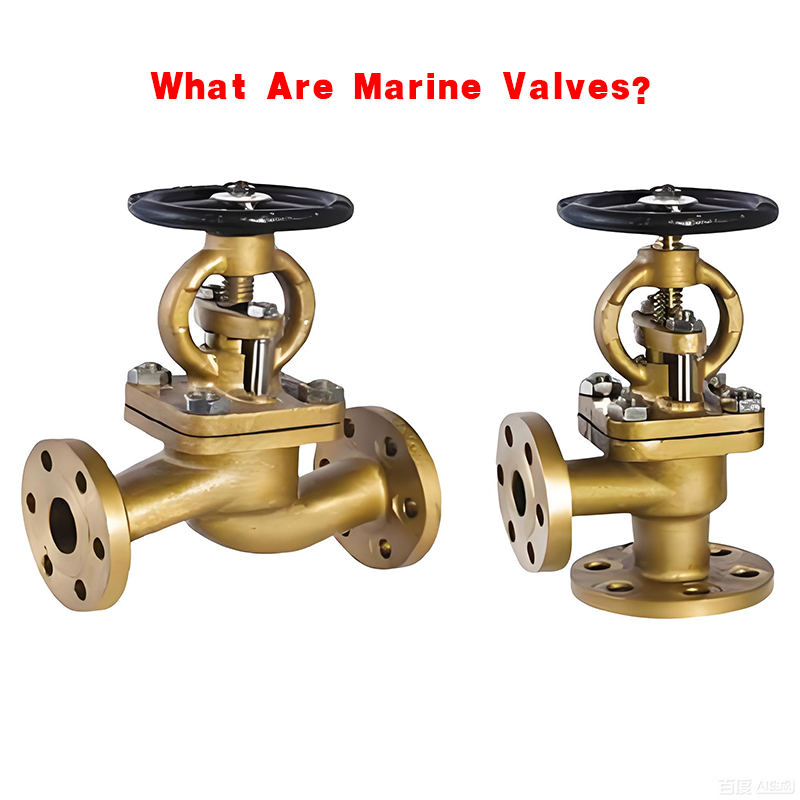
Marine valves are equipment designed to meet marine environmental conditions, used to control the pressure, flow rate and flow direction of fluids in marine pipelines. As control devices for fluid pipelines, their basic functions include opening or closing the circulation of pipeline media, changing the flow path of media, altering the flow direction of media, regulating the pressure and flow rate of media, and protecting the normal operation of pipeline equipment.
Marine valves are characterized by a wide variety of types and specifications, which at the same time is a problem hindering the improvement of valve technology.
The large number of types and specifications brings a series of difficulties to the formulation and revision of valve standards, the drawing of drawings, the organization of specialized production, and the quality control of valves.
Marine Valve Standards
GB/T 12233-2006 "General Valves - Iron Globe Valves and Lift Check Valves"
GB/T 12235-2007 "General Valves - Steel Globe Valves and Lift Check Valves with Flanged Connections"
JB/T53174-94 "Globe Valves - Product Quality Grading"
JB/T53165-92 "High-Pressure Balanced Globe Valves"
GB/T 587-2008 "Marine Flanged Bronze Globe Valves"
GB/T 588-2008 "Marine Flanged Bronze Globe Check Valves"
GB/T 590-2008 "Marine Flanged Cast Iron Globe Valves"
GB/T 591-2008 "Marine Flanged Bronze Globe Check Valves"
GB/T 8464-2008 "Iron and Copper Threaded Valves"
GB8465.2-87 "Internal Threaded Gate Valves, Globe Valves, Ball Valves, Check Valves - Basic Dimensions - Iron Globe Valves"
In marine valve manuals, the most commonly used standards include: GB/T584, GB/T585, GB/T586, GB/T587, GB/T588, GB/T589, GB/T590, GB/T591, GB/T592, etc. Valves under these standards can be divided into 2-6 types according to nominal pressure. For construction convenience, we usually select those with the same nominal pressure level.
Under these standards, valves of the same caliber have similar shapes and overall dimensions. Based on this characteristic, can the standards be simplified? By summarizing the differences of valves under these standards and comprehensively classifying them into cast steel, bronze and cast iron, and unifying the valve standards with only material differences, can the 9 standards be compressed into 3? If the valve parts are reasonably merged and the generalization specifications are expanded, will it be more beneficial to increase the batch of valve products and improve valve quality control?
If all marine valve standards are classified according to flanged valves, threaded valves, plug valves and ball valves, safety valves, pressure reducing valves, control valves, gate valves, butterfly valves, etc.; and classified according to applicable media, working temperature, nominal pressure, etc.
Comprehensive analysis, merging similar items, and reorganizing will be a major reform for marine valve standards.
 What Are Creamic Lined Valves?
 How to Select High‑Pressure Ball Valves
 Gas Pressure Regulator Installation and Operation Instructions
 What is a Flowmeter?