


What is the difference between Vacuum Valve and Ordinary Valve?
Vacuum Valves: Differences from Ordinary Valves
A vacuum valve refers to a valve whose inner cavity is in a vacuum state (usually called negative pressure), where the inner cavity pressure is lower than atmospheric pressure. It is used in vacuum pipeline systems, including vacuum ball valves, vacuum butterfly valves, vacuum diaphragm valves, etc. The medium is of high purity.
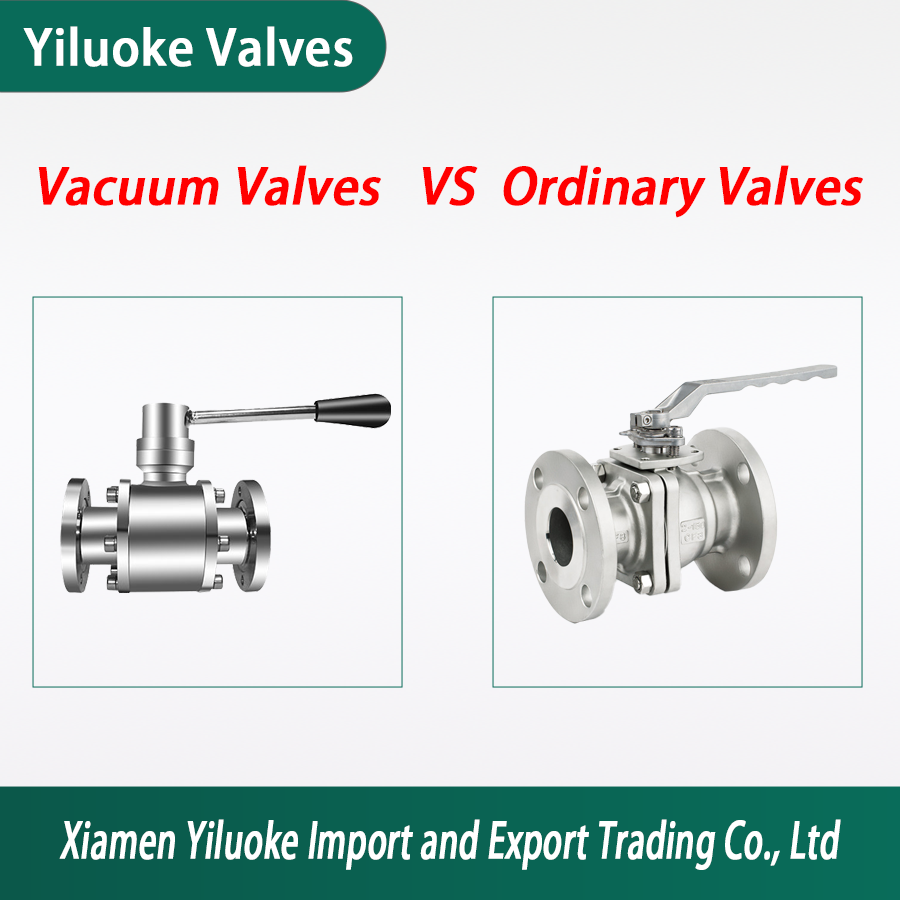
Vacuum Valves vs. Ordinary Valves: Basic Differences
Valves such as ball valves, gate valves, and globe valves can all be manufactured as vacuum valves or ordinary conventional valves. There is no difference in appearance, but there are distinctions in the design of valve connection parts.
Characteristics of Vacuum Valves Compared to Positive Pressure Valves
The pressure is lower than atmospheric pressure, and the pressure drop on the valve disc shall not exceed 1 kgf/cm².
The working temperature of the medium depends on the process of the using device. Generally, the temperature does not exceed the range of -70 ~ +150℃.
The basic requirements for such valves are to ensure high tightness of the connection and compactness of the structure and gasket materials.
In summary, a vacuum valve is a valve whose working pressure is lower than the standard atmospheric pressure.
Differences in Nature Between Vacuum Valves and Ordinary Valves
Safety Valve: The opening and closing part is in a normally closed state under the action of external force. When the medium pressure in the equipment or pipeline is higher than the specified value, the medium can be discharged outside the system to prevent the medium pressure in the pipeline or equipment from exceeding the specified value.
Vacuum Valve: A component in the vacuum system used to change the direction of gas flow, adjust the flow rate of gas flow, and cut off or connect the pipelines of the vacuum system.
Classification of Vacuum Valves by Medium Pressure
Low Vacuum Valves: Medium pressure p = 760 ~ 1 mmHg;
Medium Vacuum Valves: p = 1×10⁻³ mmHg;
High Vacuum Valves: p = 1×10⁻⁴ ~ 1×10⁻⁷ mmHg;
Ultra-High Vacuum Valves: p ≤ 1×10⁻⁸ mmHg.
Common Types of Vacuum Valves
Vacuum bellows globe valves with linear motion of the valve stem are widely used as vacuum valves. Gate valves are subject to greater restrictions, but for large diameters, ball valves, plunger valves, and butterfly valves are also available.
Differences in Function Between Vacuum Valves and Ordinary Valves
Function of Safety Valve: The safety valve plays a safety protection role in the system.
Function of Vacuum Valve: A vacuum component used to isolate (cut off) gas flow, adjust gas flow rate, and distribute gas flow in the vacuum system.
 What Are Creamic Lined Valves?
 How to Select High‑Pressure Ball Valves
 Gas Pressure Regulator Installation and Operation Instructions
 What is a Flowmeter?