


What Are Cryogenic Needle Valves?
What Are Cryogenic Needle Valves?
Cryogenic Needle Valves are small precision control valves specially designed for cryogenic working conditions, widely used for the accurate regulation and shut-off of cryogenic fluids. They are commonly applied in transmission systems of cryogenic liquids and gases, such as liquefied natural gas (LNG), liquid nitrogen, liquid oxygen and other related applications. Thanks to their unique design, Cryogenic Needle Valves can provide excellent sealing performance and precise flow control under ultra-low temperatures.
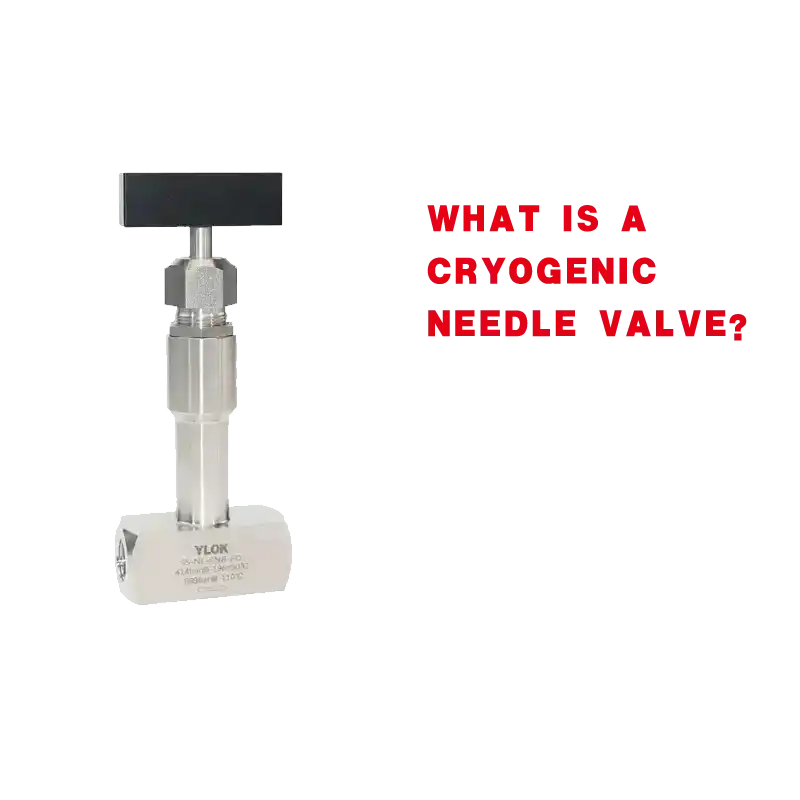
Features of Cryogenic Needle Valves
Precision Flow Control: The needle valve can precisely adjust the flow through the tiny movement of the valve needle, suitable for cryogenic working conditions requiring accurate flow control, such as laboratory analysis and industrial process control.
Low-Temperature Resistant Design: The valve body and valve needle of a cryogenic needle valve are usually made of low-temperature resistant stainless steel, copper alloy or other special alloy materials, which can maintain the material's toughness and sealing performance at extremely low temperatures.
Excellent Sealing Performance: The sealing structure of a needle valve usually includes metal-to-metal or metal-to-flexible material sealing design, which ensures the sealing effect under cryogenic conditions and prevents fluid leakage.
Compact and Small-Sized: The needle valve features a compact structure with a small footprint, suitable for installation in space-constrained cryogenic piping systems.
High Pressure Applicability: Many cryogenic needle valves can operate under high pressure conditions and are often used for the regulation and shut-off of high-pressure cryogenic liquids.
Anti-Freezing Design: To prevent malfunction caused by the freezing of cryogenic media, needle valves are usually designed with anti-freezing characteristics to ensure reliable operation in cryogenic environments.
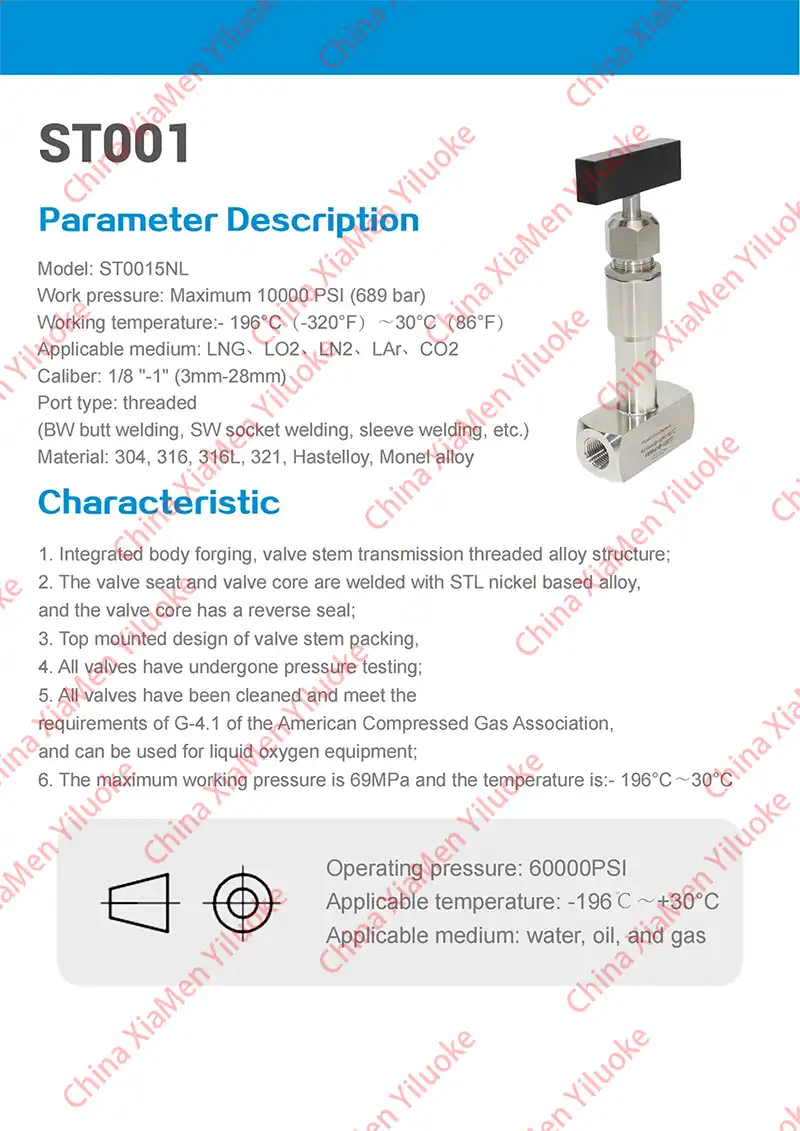
Working Principle of Cryogenic Needle Valves
The working principle of Cryogenic Needle Valves is based on the vertical movement of the valve needle in the valve seat. By rotating the handwheel or actuator, the valve needle moves along the axis of the valve seat, thereby adjusting the fluid flow or cutting off the fluid completely.
Valve Opening: When the handwheel is rotated, the valve needle rises and the fluid starts to pass through the valve. The flow rate is determined by the gap between the valve needle and the valve seat.
Flow Regulation: The fine movement of the valve needle enables precise flow control, making it ideal for applications that require fine-tuning of flow rate.
Valve Closing: With the counterclockwise rotation of the handwheel, the valve needle descends and finally comes into tight contact with the valve seat, cutting off the fluid flow and ensuring leak-tight shut-off.
Components
Valve Body: Made of cryogenic-resistant materials, it is the main pressure-bearing structure of the valve, connecting the pipeline and carrying the fluid flow.
Valve Needle: A precision-machined tapered needle that is responsible for regulating flow and sealing fluid, controlling the circulation or shut-off of fluid through vertical movement.
Valve Seat: Mates with the valve needle to ensure the sealing effect when the valve is closed and prevent fluid leakage.
Handwheel or Actuator: A component for manual or automatic operation of the valve needle, realizing precise control of the valve needle by rotating the handwheel or operating the actuator.
Stuffing Box: Used to seal the passage of the valve stem and prevent fluid leakage along the valve stem. Flexible packing is usually adopted to adapt to the low-temperature environment.
Application Fields
LNG Systems: Applied in LNG transportation and storage facilities to control the precise flow rate of fluids.
Cryogenic Gas Systems: Used for the accurate flow control of cryogenic gases such as liquid nitrogen, liquid oxygen and liquid argon in their production, transportation and application equipment.
Chemical and Pharmaceutical Industries: Suitable for fluid control in cryogenic reaction equipment to ensure the stability and safety of process operations.
Laboratories and Research Institutions: Widely used in experimental and research facilities that require precise control of cryogenic fluids.
Aerospace: Applied in cryogenic propellant and fuel systems to ensure the precise control and safe operation of cryogenic media.
Usage and Maintenance Recommendations
Regularly Inspect Wear of Valve Needle and Seat: Frequent opening and closing operations may cause wear of the valve needle and seat. Inspect and replace worn parts regularly to ensure the sealing performance of the valve.
Prevent Foreign Matter from Entering the Valve Body: Foreign matter may lead to seal failure between the valve needle and seat. Therefore, ensure the cleanliness of the piping system to prevent foreign matter from entering the valve.
Regularly Lubricate the Valve Stem: Ensure the smooth operation of the valve stem under cryogenic conditions and prevent jamming or operational difficulties caused by low temperatures.
Avoid Frequent Operation: Cryogenic needle valves may be affected by the cryogenic environment during frequent operation. It is recommended to reduce unnecessary opening and closing operations to extend the service life of the valve.
Proper Installation and Calibration: Ensure the accurate connection between the valve and the piping system during installation, and calibrate the handwheel or actuator to ensure precise flow control.
Conclusion
Cryogenic Needle Valves have become an indispensable fluid control component under cryogenic working conditions due to their precision flow control, excellent sealing performance and low-temperature resistant design. They play an important role in the transportation, storage of cryogenic liquids and gases as well as laboratory research. Through proper usage and maintenance, Cryogenic Needle Valves can be ensured to operate stably and reliably under severe cryogenic conditions, meeting the needs of various industrial and scientific research fields.
 What Are Creamic Lined Valves?
 How to Select High‑Pressure Ball Valves
 Gas Pressure Regulator Installation and Operation Instructions
 What is a Flowmeter?