


What Are Instrument Valves?
Instrument Valves: Characteristics, Applications, Selection Methods and Classification
An instrument valve is a common component used to control the flow of various fluids (such as gas, liquid, steam, etc.). There are many types of instrument valves, including straight-through valves, globe valves, ball valves, safety valves, etc. Each type of valve has different characteristics and application scenarios. The following will detail the characteristics, applications and selection methods of instrument valves.
Characteristics of Instrument Valves
Precise control: Instrument valves can accurately control the flow rate and pressure of fluids according to actual needs, ensuring the stable operation of equipment.
High reliability: Instrument valves have good sealing performance, which can effectively prevent fluid leakage and ensure the normal operation of equipment.
Strong corrosion resistance: Most instrument valves are made of corrosion-resistant materials, which can meet the needs of various corrosive fluids.
Easy maintenance: Instrument valves have a simple structure and are easy to maintain and clean.
Applications of Instrument Valves
Chemical industry: In the chemical industry, instrument valves are widely used in various fluid pipelines, such as petroleum, chemical, natural gas, etc., to control the flow rate and pressure of fluids.
Power industry: In the power industry, instrument valves are used in various thermal equipment, such as boilers, steam turbines, etc., to control the pressure and flow rate of steam.
Food industry: In the food industry, instrument valves are used in various food processing equipment, such as beverage filling lines, milk production lines, etc., to control the flow rate and pressure of fluids.
Selection Methods of Instrument Valves
Selection according to fluid type: Select the appropriate type of instrument valve according to the properties of the fluid (such as temperature, pressure, corrosion, etc.).
Selection according to pipeline size: Select the appropriate specification of instrument valve according to the size of the pipeline.
Selection according to control precision: Select the appropriate type of instrument valve according to the actual demand for control precision.
Selection according to service environment: Select the appropriate type and material of instrument valve according to the service environment.
In short, as a common industrial automation component, instrument valves are widely used in various industries. Understanding the characteristics, applications and selection methods of instrument valves is of great significance for the normal operation and maintenance of industrial equipment.
Classification of Instrument Valves
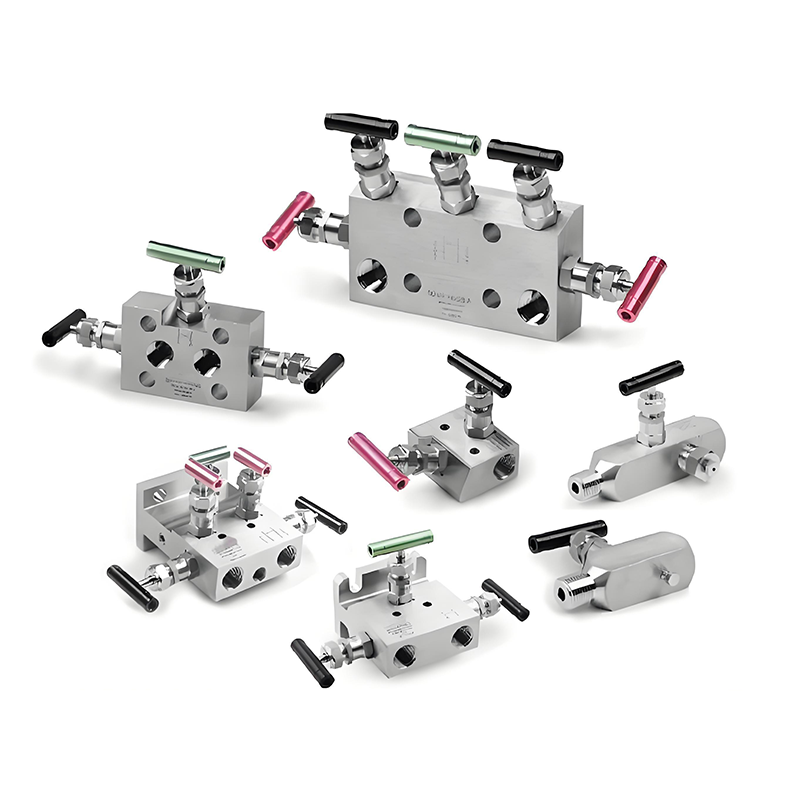
Instrument valves are generally divided into two categories: needle valves and instrument valve manifolds. According to structure, purpose, material and other classifications, they are roughly divided into the following products.
Classification of Needle Valves
There are the most types of needle valves. According to material classification, they are: stainless steel needle valves, carbon steel needle valves, chrome-molybdenum steel needle valves. According to structure and purpose, they generally include: threaded needle valves, ferrule needle valves, welded needle valves, flange needle valves, angle needle valves, pressure gauge three-way valves, multi-functional needle valves, liquid level gauge needle valves, pressure gauge needle valves, sampling needle valves and other products. Common models include J21W, J23W, J24W, J91W, J19W, J13W, J61Y, J43W, JJM8, JJM1, J123H and other series.
Classification of Instrument Valve Manifolds
Instrument valve manifolds are generally divided into two-valve manifolds, three-valve manifolds and five-valve manifolds. Common models include M364W, WF5H, WF-1-2, QFF3, EF-1, EF-2, EF-3, EF-4, WF-2, SS-M2F8, WF-3, SS-M5F8, J23SA, SF-2B and other series.
Instrument valves are used in instrument measurement pipeline systems to open or close pipeline passages. They have the advantages of fire prevention, explosion prevention, high pressure resistance and good sealing performance, and are important products in power stations, oil refining, chemical plants and instrument measurement pipelines. Needle valves are generally used in simple measurement pipelines, while instrument valve manifolds are used in complex pipelines with shunting and confluence.
Instrument valves are widely used in chemical, power, natural gas, hydraulic equipment, metallurgy, water conservancy, printing and dyeing and other fields. They are widely used and have the characteristics of small size, light weight and good pressure resistance.
 What Are Creamic Lined Valves?
 How to Select High‑Pressure Ball Valves
 Gas Pressure Regulator Installation and Operation Instructions
 What is a Flowmeter?