


What is a 3-Valve Manifold?
What is a 3-Valve Manifold?
A 3-Valve Manifold is composed of three interconnected valves, which are classified by their functions in the system: the left one is the high-pressure valve, the right one is the low-pressure valve, and the middle one is the balance valve. It is used in conjunction with differential pressure transmitters to connect or disconnect the positive and negative pressure measuring chambers with the pressure tapping points, or to isolate or conduct the positive and negative pressure measuring chambers from each other.

Structure and Working Principle of the 3-Valve Manifold
A 3-Valve Manifold is made up of a valve body, two stop valves and one balance valve.
Commissioning Procedure for Differential Pressure Transmitters
First, open the two blowdown valves on the differential pressure transmitter.
Then open the balance valve, and slowly open the two stop valves to expel air or contaminants from the impulse pipes.
Close the two blowdown valves and then the balance valve, and the transmitter can be put into operation.
On-line Zero Calibration Procedure for Differential Pressure Transmitters
Simply open the balance valve and close the two stop valves to perform zero calibration on the transmitter.
The balance valve on the differential pressure transmitter is designed to prevent single chamber pressure bearing during transmitter commissioning and avoid damage to the transmitter caused by excessive pressure. The balance valve is open during commissioning and closed during normal operation.
Main Commissioning Process of the Differential Pressure Transmitter
Close the secondary valves.
Open the primary valves.
Open the blowdown valves to flush the pipelines.
Close the blowdown valves.
Open the balance valve on the 3-Valve Manifold, and close the positive and negative chamber valves on the 3-Valve Manifold.
Open the positive and negative chamber secondary valves.
Open the positive chamber valve on the 3-Valve Manifold, and open the blowdown screws of the positive and negative chambers of the transmitter.
Functions of the 3-Valve Manifold
A 3-Valve Manifold is required when connecting flow or differential pressure sensors and instruments to process pipelines, with the following key functions:
When the medium is introduced into the initially empty pipeline, the pressure on both sides of the sensor will change suddenly. Excessive differential pressure may damage the sensor of the transmitter. To avoid this, close valves A and B on both sides of the sensor first, and open the bypass valve C.
After the pipeline is filled with the medium and the pressure tends to be stable and balanced, open either valve A or B to apply pressure evenly on both sides of the sensor.
Close valve C and open the other valve (A or B), and the sensor will start to work normally.
The closing sequence is the reverse of the above steps.
In addition, the 3-Valve Manifold has other functions. For example, the pipeline can be cleaned after a period of operation without affecting the sensor (the pipeline is bypassed).
 What Are Creamic Lined Valves?
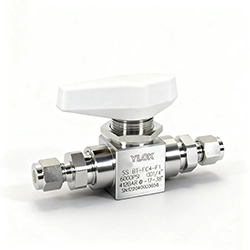 How to Select High‑Pressure Ball Valves
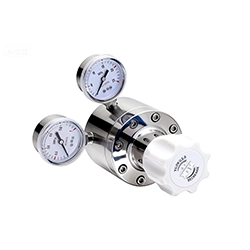 Gas Pressure Regulator Installation and Operation Instructions
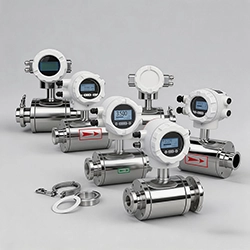 What is a Flowmeter?