


What is a Pneumatic Butterfly Valve?
Product Overview
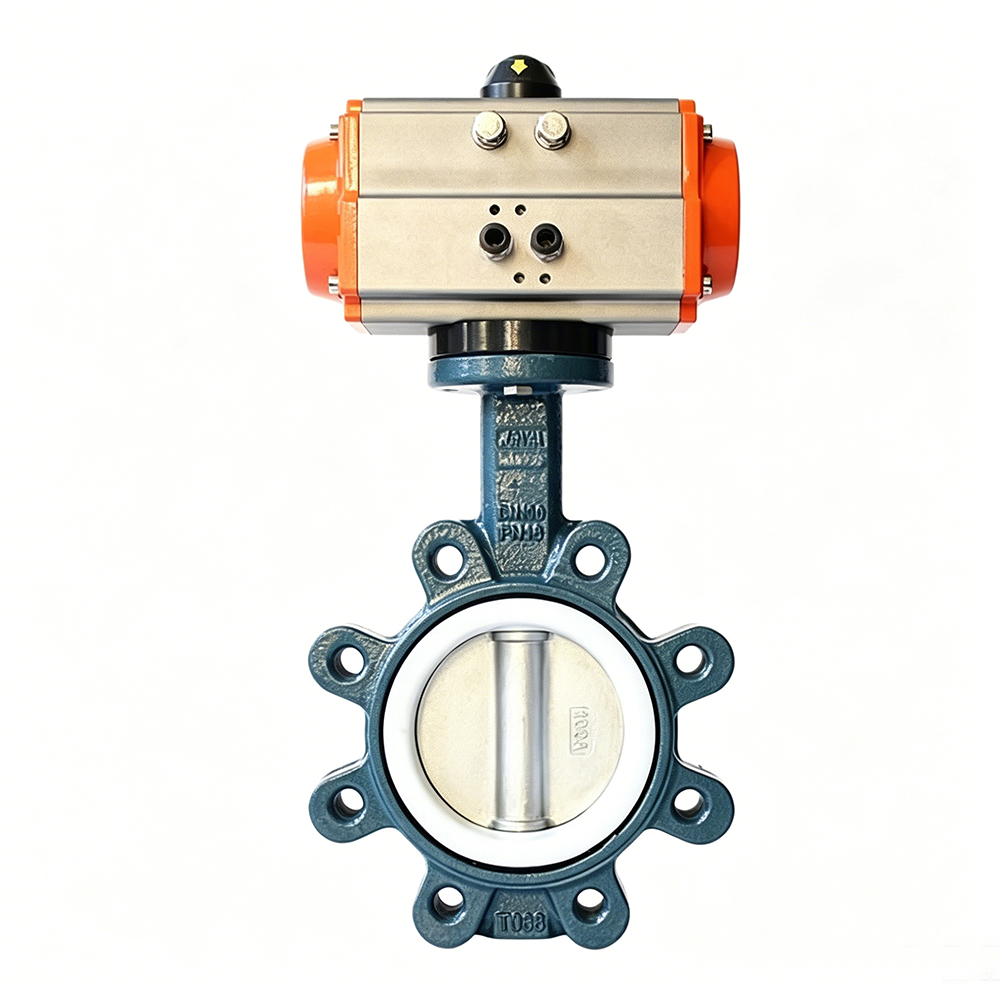
A pneumatic butterfly valve is composed of a pneumatic actuator and a butterfly valve body. It opens and closes via the rotation of a circular disc. It is mainly used as an isolation valve and can also be designed as a control valve. It is available in various types including stainless steel, metal-sealed, soft-sealed, carbon steel, wafer type, flange type and fluorine-lined type.
This valve features simple structure, compact size, light weight and low cost. It can be operated conveniently with a solenoid valve and realize fluid flow control. It is widely applied in water conservancy, environmental protection, petroleum, chemical, gas, power, pharmaceutical, food and other industries.
Working Principle
The pneumatic butterfly valve is driven by a circular disc fixed on the valve stem to perform opening and closing movements. It is primarily used for pipeline isolation, and can also be configured for combined on-off and control functions.
It is equipped with GT or AT series pneumatic actuators with gear transmission, available in double-acting and single-acting (spring return) styles. Large-bore valves adopt AW series pneumatic actuators with lever transmission, which features rational structure and high output torque.
The gear-driven double-piston actuator delivers large torque with small overall dimension. A manual mechanism can be mounted on the top or bottom of the actuator. Optional electric signal feedback and various accessories are available to realize full automatic operation.
Structural Features
Pneumatic butterfly valves stand out for simple structure, small size, light weight and competitive price. Standard GT/AT actuators adopt gear transmission for high safety and reliability in both double-acting and single-acting modes. AW lever-type actuators are used for large-diameter valves to provide sufficient output torque.
The double-piston gear structure generates large torque within a compact body. The cylinder is made of aluminum alloy, featuring light weight and elegant appearance.
Classification & Introduction
Pneumatic butterfly valves are classified by body material (stainless steel, carbon steel), sealing type (metal seal, soft seal), connection type (wafer, flange) and lining material (rubber lining, fluorine lining).
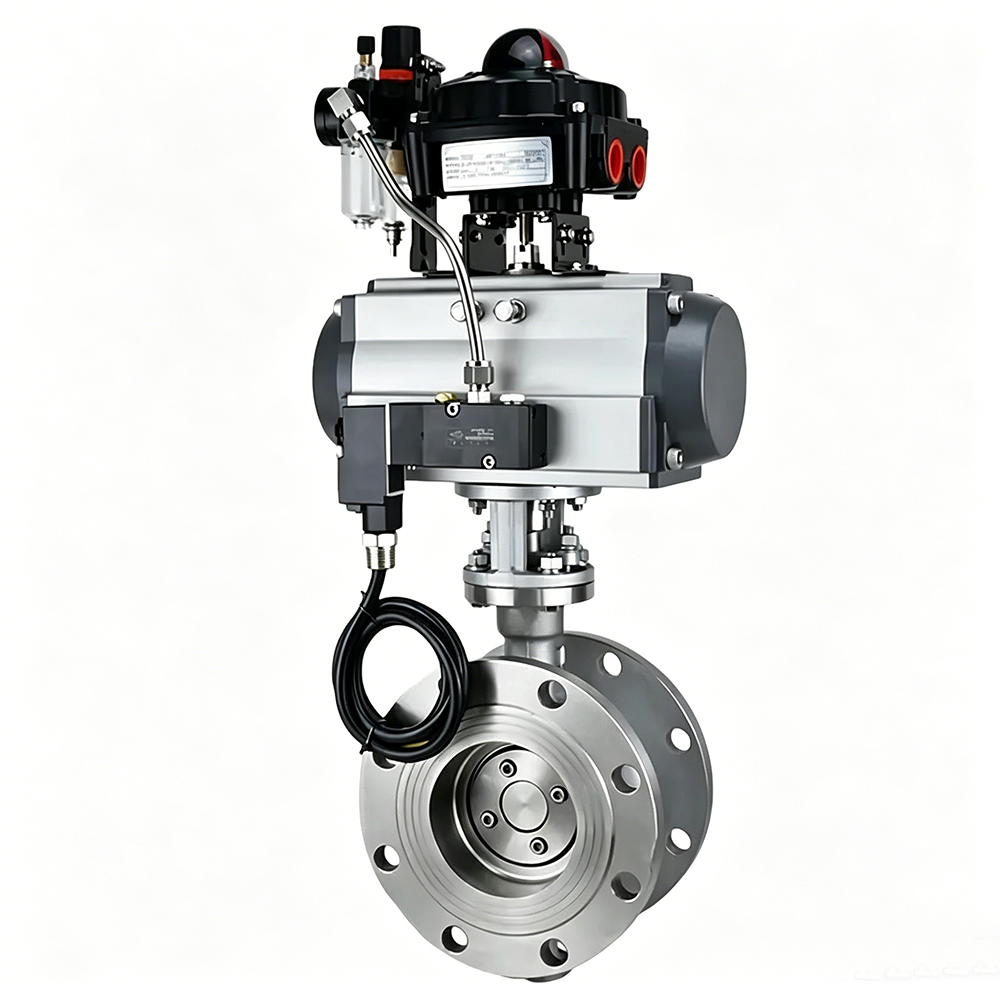
1. Pneumatic Flange Butterfly Valve
Consists of rubber seal, carbon steel or stainless steel disc and stem. Applicable to water supply, drainage and gas pipelines in food, chemical, petroleum, power, textile and papermaking industries with working temperature ≤ 80~120℃, for flow control and medium isolation.
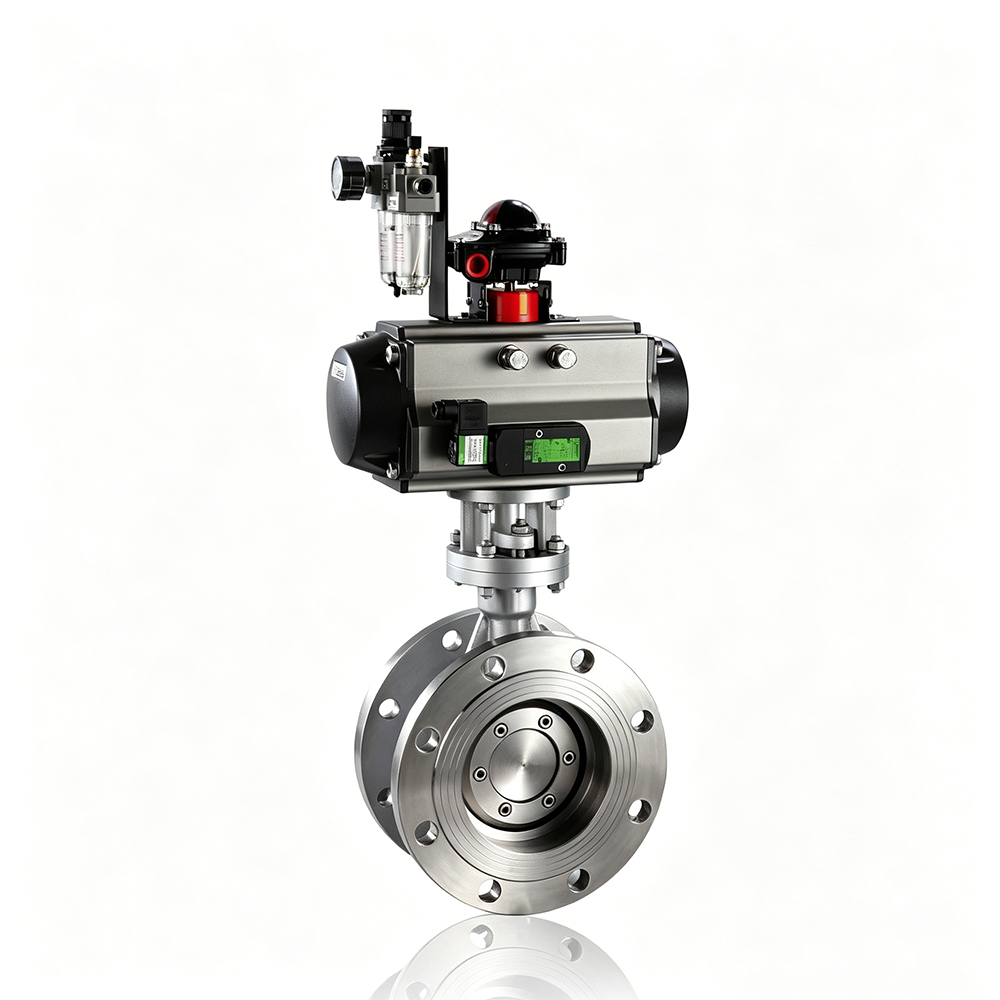
2. Pneumatic Control Butterfly Valve
The disc rotates around a fixed axis perpendicular to the flow channel. Matched with double-acting or single-acting piston pneumatic actuators, it belongs to high-performance rotary control and shut-off valves. Equipped with electro-pneumatic positioner, solenoid valve, air filter regulator and limit switch, it can realize proportional control and two-position cut-off, achieving automatic control of flow, pressure, temperature, liquid level and other parameters.
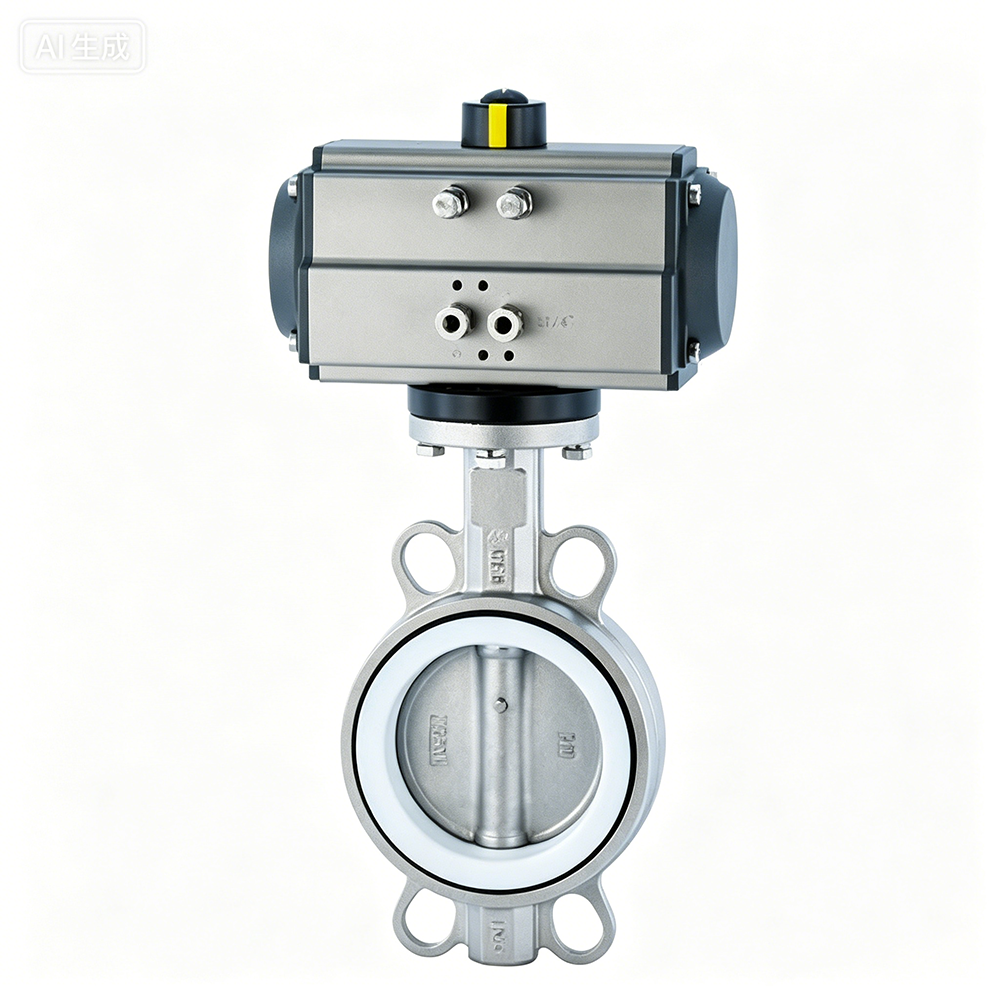
3. Pneumatic Wafer Butterfly Valve
Adopts short wafer structure for narrow installation space. It achieves zero external leakage, and internal leakage complies with national standards.
4. Pneumatic Rubber-Lined Butterfly Valve
Available in flange and wafer connections. Lining materials include NBR, EPDM, heat-resistant EPDM, natural rubber, neoprene, fluororubber and PTFE. Users can select proper materials according to medium properties.
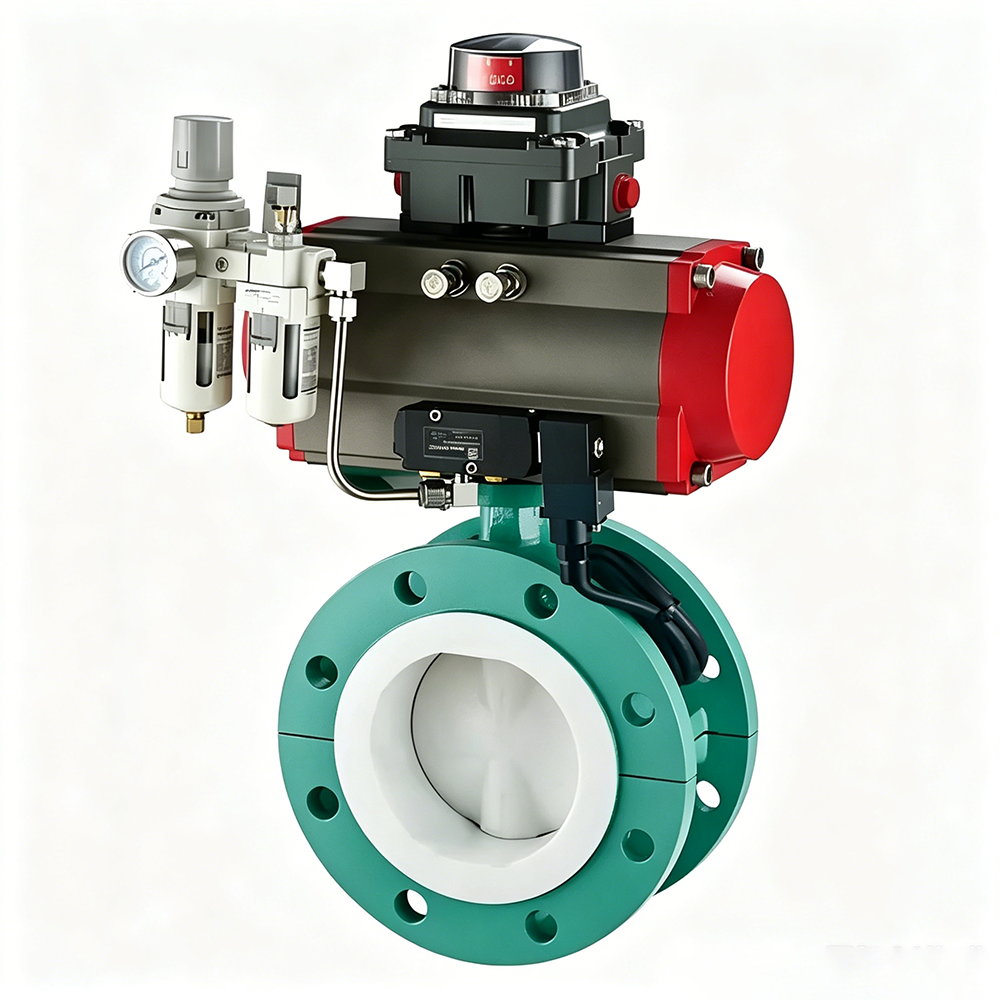
5. Pneumatic Fluorine-Lined Butterfly Valve
The valve body is split into two parts with integrated lining and seat. Only plastic-lined components contact the medium. It resists corrosion by almost all media except molten alkali metals and elemental fluorine. For model D71F46, the forged stem and disc are integrally coated with FEP.
The smooth inner channel reduces flow resistance and raises CV value with strong flow capacity and moderate operating torque. The four-stage sealing structure together with temperature-resistant and anti-aging silicone rubber gasket ensures complete zero leakage.
6. Pneumatic Ventilation Butterfly Valve
A narrow gap is reserved between disc and seat. It is specially designed for environments with poor air circulation.
7. Pneumatic Expansion Butterfly Valve
Wafer type with expansion function. It can perform flow control and medium isolation, and compensate pipeline thermal expansion and contraction caused by temperature change. It facilitates valve installation, replacement and maintenance, and the sealing parts are adjustable and replaceable.
 What Are Creamic Lined Valves?
 How to Select High‑Pressure Ball Valves
 Gas Pressure Regulator Installation and Operation Instructions
 What is a Flowmeter?