


What is a Valve Bellows Seal?
Valve Bellows Seals: Working Principle, Types, Applications & Selection Guide
When valves are subjected to high pressure, extreme temperatures, or corrosive fluids, even the slightest leakage can cause severe damage. Bellows seals are specifically designed to address such situations, providing a tight, flexible seal that remains reliable even under pressure. You will often find them in applications requiring clean, leak-free sealing, such as chemical pumps, vacuum chambers, steam systems, and semiconductor tools. Unlike traditional seals, they control pressure and movement without relying on sliding components or dynamic O-rings.
In this article, we will detail the working principle, composition, application scope of bellows seals for valves, as well as the factors to consider when selecting bellows seals for your system.
What is a Valve Bellows Seal?
A valve bellows seal is a type of mechanical seal that uses a flexible metal bellows instead of traditional springs and secondary sealing devices. It is designed to provide a tight, leak-free seal for rotating equipment such as valves, especially in harsh environments where high temperatures, high pressures, or chemicals can damage traditional seals.
Unlike standard seals, bellows seals have no dynamic O-rings or elastomers, so they do not generate friction or wear. Instead, they rely on the expansion and compression of thin-walled metal bellows to maintain sealing pressure. This makes them ideal for systems requiring ultra-clean operation, such as chemical processing, vacuum systems, or semiconductor tools.
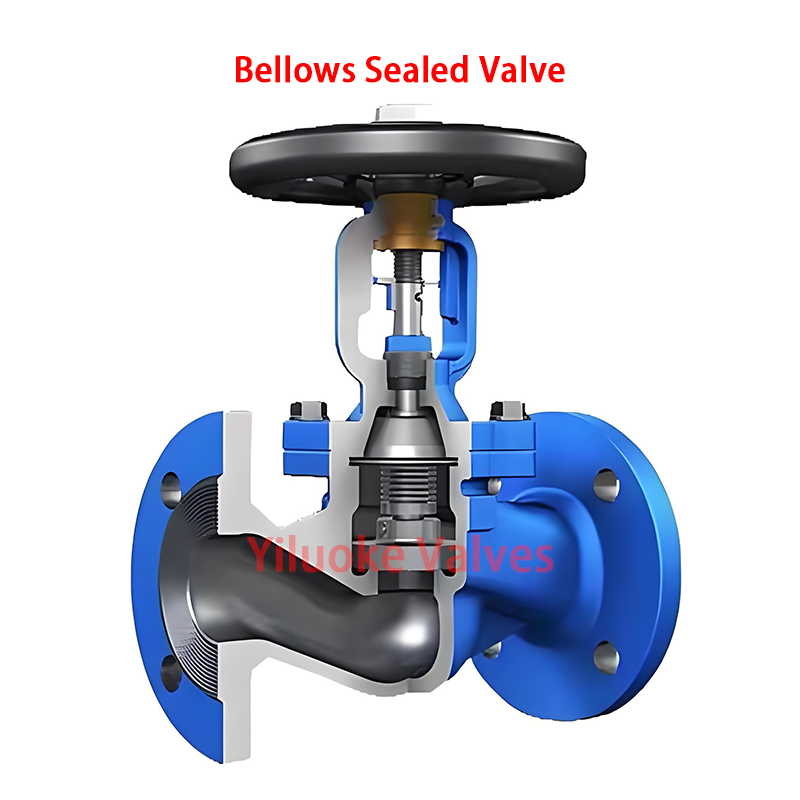
Key Components of Bellows Seals
Each bellows seal consists of several core components to ensure its normal operation. A typical bellows seal includes:
Metal Bellows Element
This is the most important component, acting similarly to a flexible spring. It is made by welding thin metal sheets into a corrugated shape. This allows it to bend and compress while maintaining a seal.
Sealing Faces
One face rotates with the shaft, while the other remains stationary. These faces are made of wear-resistant and heat-resistant materials, such as silicon carbide, carbon, or ceramics. A good seal depends on the flatness and smoothness of these faces.
Hardware
This includes retainers, glands, and housings. These components hold the entire seal in place and connect it to the pump or valve body. You will also find some drive mechanisms, such as pins or set screws, which help transmit motion from the shaft to the rotating components.
Optional Secondary Seals or Support Rings
Some bellows seals may also include support rings or static O-rings, usually made of PTFE or other chemical-resistant materials. These rings provide additional protection in high-pressure or vacuum systems but do not move during operation.
Working Principle of Valve Bellows Seals
Valve bellows seals rely on metal bellows and precision sealing faces to control fluid flow under pressure and temperature. Its working principle is as follows:
Sealing FunctionWhen the shaft rotates, the bellows element keeps the two sealing faces in contact. When fluid pressure acts from the inside, the bellows element forces the two sealing faces to fit together. The bellows compresses slightly, exerting constant pressure and maintaining a tight seal. There are no sliding elastomers in the bellows, only metal-to-metal or metal-to-ceramic contact, thereby maintaining a fluid seal.
Axial Flexibility and Pressure ContainmentThe bellows element bends along its axis, compressing or expanding according to fluid pressure. This flexibility means the seal can adjust automatically: higher fluid pressure compresses the bellows, pressing the end faces together; lower pressure allows it to relax slightly. The result is a self-adjusting seal that maintains contact without the need for external springs or O-rings.
Shaft Movement and Thermal Expansion CompensationUnlike rigid seals, bellows seals can absorb axial shaft displacement and thermal expansion without breaking contact. When the shaft displaces or the ambient temperature rises, the bellows bends accordingly. This movement maintains alignment of the sealing faces, preventing leakage due to misalignment. It also reduces stress on the shaft and bearings, thereby extending equipment life.
How to Prevent Leakage in Harsh Environments
Bellows seals prevent leakage even in harsh conditions by maintaining continuous pressured contact between the sealing faces. As explained in ASME's Metal Bellows Pressure Compensation White Paper, internal pressure helps the seal perform better in high-pressure systems. It pushes the sealing faces together, creating a tighter seal as pressure increases. This makes bellows seals ideal for systems with pressure fluctuations during operation.
In vacuum environments, the sealing action is reversed. Pressure outside the system causes the bellows to collapse slightly but still maintains contact between the sealing faces. Since there are no sliding O-rings or elastomers, there is no air ingress or performance degradation over time. The all-metal construction helps ensure bidirectional sealing performance of the system under pressure or vacuum conditions.
In addition, bellows seals adopt a single-welded structure, so there are no joints or seams that may cause fluid leakage. This design minimizes potential leakage paths, even during shaft movement or temperature changes. Combined with chemical-resistant materials and precision-machined sealing faces, the bellows structure provides reliable sealing performance in environments where traditional seals may fail.
Types of Valve Bellows Seals
There are various types of bellows seals for valves, each suitable for specific types of work. Different bellows seal designs are used depending on the application, pressure range, temperature, and medium type. Each seal has its advantages and limitations, so it is crucial to understand the various options before making a choice. The following are the main types used in industrial applications:
Edge-Welded Metal BellowsThis type of bellows is made by stamping metal diaphragms into shape and then welding them edge-to-edge. The resulting bellows are highly flexible and precise, with a bending capacity of up to 90% of their free length, compared to only 20% for formed bellows. Edge-welded bellows have excellent fatigue life, low spring stiffness, and full controllability, making them ideal for high-pressure, clean, and high-cycle systems.
Formed Bellows (Cold Formed, Hydraulic Formed, Electroformed)Formed bellows are made by reshaping metal tubes through processes such as rolling, hydraulic (hydroforming), or electroforming. These bellows have lower production costs but are less flexible and can withstand fewer cycles than edge-welded bellows. Formed bellows are typically used in simpler low-pressure applications where cost and size are more important than precision.
Electroformed BellowsA type of formed bellows made by electroplating metal onto a mandrel and then removing the mandrel. Electroformed bellows have an extremely thin wall thickness of only a few microns and are very precise. They are best suited for precision, low-pressure applications where sensitivity to small movements is critical.
Machined BellowsMachined bellows are directly milled from a solid metal block. They have high strength and precision but are costly. They are often used in aerospace, high-performance actuators, or systems with strict size and pressure specifications. Click here to learn more about our experts' CNC milling services.
Elastomeric Bellows (Rubber or PTFE)These are made of flexible polymers and are ideal for low-temperature, low-pressure, or general-purpose applications. They are not suitable for high temperatures or corrosive chemicals but perform well in water pumps, HVAC systems, and basic industrial applications.
Single Bellows Seal vs. Double Bellows Seal Designs
Single bellows seals are suitable for systems where leakage is allowed or can be safely managed. They have a simple structure, low cost, and are easy to install. They are often used in applications with non-toxic or harmless fluids.
On the other hand, double bellows seals are designed specifically for hazardous or ultra-sensitive applications. They use two sets of sealing faces, usually with an isolation fluid in between. This sealing device provides additional protection and completely seals toxic or flammable liquids. It is a better choice when safety, environmental control, or zero leakage is required. Double seals also help seal fluids that crystallize, clog, or dry out in air. The isolation fluid keeps all internal components stable.
Common Applications of Bellows Seals
Bellows seals are suitable for systems where reliability, cleanliness, and leak prevention are critical. Their ability to withstand pressure changes, movement, and harsh conditions makes them play an important role in various industries.
Check out where they are most commonly used and why:
Pumps in Chemical and Pharmaceutical IndustriesBellows seals are widely used in chemical and pharmaceutical pumps and agitators, which often handle corrosive or high-pressure chemicals. They are corrosion-resistant and can maintain a tight seal even when exposed to solvents, acids, or high-flow agitators. Bellows seals can also withstand axial displacement without leakage, making them ideal for industrial reactors and metering equipment. Their flexibility helps keep equipment clean and meets hygiene standards in medical environments.
Vacuum Systems and Semiconductor ToolsIn high-vacuum or ultra-clean environments such as semiconductor equipment, bellows seals can maintain the airtightness of the chamber during chemical vapor deposition, etching, or ion implantation processes. Their welded design prevents gas escape, and the metal structure remains leak-proof during vacuum and pressure cycles. For this reason, bellows seals are often used in vacuum valves and semiconductor equipment. For example, in semiconductor process equipment, bellows seals are critical for preventing seal failure.
Cryogenic SystemsBellows seals perform excellently at extremely low temperatures, such as in liquid nitrogen or liquid helium systems. Their all-metal structure can withstand low-temperature shrinkage without cracking and maintain a seal at temperatures below −153 °C. Designs with indium or metal edge seals can meet strict vacuum requirements in cryogenic applications such as magnetic resonance imaging (MRI) or cryopump systems.
High-Purity or Corrosive EnvironmentsWhen a system requires zero contamination or contact with corrosive fluids, bellows seals made of Inconel, Hastelloy, or special stainless steel stand out. These materials are chemical-resistant and do not shed particles, making them ideal for high-purity water systems, corrosive chemical processing, or sterile operations.
Steam or High-Temperature Fluid HandlingBellows seals are ideal for handling hot fluids and steam in power plants, boiler feedwater systems, and high-temperature pipelines. They remain flexible under thermal loads, maintain a tight seal throughout the cycle, and effectively prevent scaling. Their all-metal welded bellows avoid O-ring failure problems that often occur in high-temperature steam environments.
 What Are Creamic Lined Valves?
 How to Select High‑Pressure Ball Valves
 Gas Pressure Regulator Installation and Operation Instructions
 What is a Flowmeter?