

Y Strainers Selection Guide
Core Considerations for Y Strainer Selection
1. Filtration Precision (Mesh/Aperture)
Equipment/Components to Protect: This is the most important factor! The sensitivity of downstream equipment (such as pumps, valves, flow meters, nozzles, heat exchangers, precision instruments) to the size of impurity particles determines the required precision.
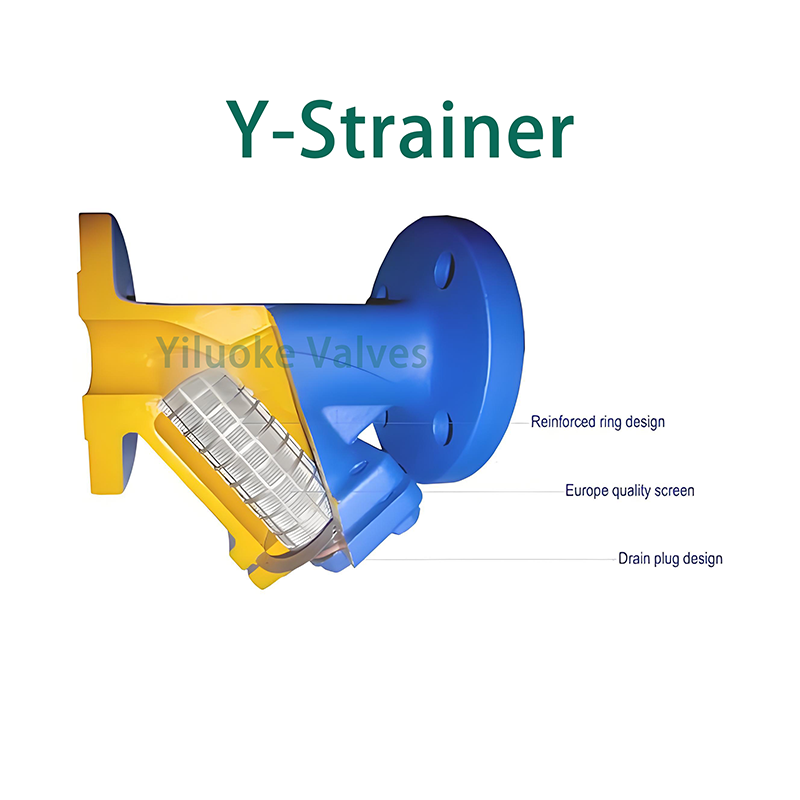
Examples:
Expected Impurity Size: Understand the types and typical sizes of impurities that may exist in the system. The filtration precision should effectively intercept the main harmful impurities.
System Tolerance: The higher the precision, the easier the Strainer screen is to be clogged, requiring more frequent cleaning. It is necessary to balance equipment protection and maintenance frequency. For systems with more impurities, sometimes a slightly lower precision is selected but with increased cleaning frequency, or other pre-filtration measures are adopted.
Protecting Pumps/General Valves: 20-60 mesh (approximately 850-250μm) is usually sufficient.
Protecting Flow Meters, Control Valves, Spray Nozzles: 60-100 mesh (approximately 250-150μm) or higher.
Protecting Very Precision Equipment (such as certain analytical instruments, micro-orifice nozzles): 100-200 mesh (150-75μm) or even higher may be required.
Definition: Refers to the minimum particle size that the Strainer screen can intercept, usually expressed in "Mesh" or microns (μm). The higher the mesh number, the smaller the aperture and the higher the filtration precision.
Common Range: The common mesh range for Y Strainers is between 20 mesh and 100 mesh. Beyond this range (especially higher precision), basket Strainers or other types may need to be considered.
2. Filter Screen Material
Stainless Steel Mesh (SS304, SS316, SS316L): Most commonly used, with good corrosion resistance (316/316L is better than 304), high temperature resistance and strength. Suitable for water, steam, oil products, various chemicals and corrosive media. It is the general first choice.
Brass Mesh: Good corrosion resistance (especially to water), usually lower cost than stainless steel. Suitable for non-strongly corrosive media such as water, air and oil. Pay attention to the risk of dezincification corrosion.
Monel Mesh: Excellent corrosion resistance, especially to seawater, strong alkali and reducing acids. Expensive, used in special corrosive environments.
Plastic Mesh (Nylon, Polypropylene PP, Polytetrafluoroethylene PTFE): Very good corrosion resistance (especially PTFE), light weight and low cost. However, temperature resistance, pressure resistance and mechanical strength are usually not as good as metal mesh. Suitable for low temperature, low pressure, strongly corrosive chemicals (acids, alkalis) or occasions with strict restrictions on metal ions (such as pure water, food and beverages).
Galvanized Steel Wire Mesh: Lowest cost, but poor corrosion resistance, especially not suitable for water (prone to rust) and corrosive media. Usually used for temporary occasions such as low-requirement air filtration, not recommended for long-term use.
Fluid Compatibility: The Strainer screen material must be resistant to corrosion, dissolution or chemical reaction of the fluid. This is the primary consideration.
Operating Temperature: The material must maintain strength and performance at the maximum and minimum operating temperatures of the system.
Mechanical Strength: Must withstand fluid pressure impact, impurity impact and operations during cleaning.
3. Filter Screen Structure
Single-Layer Plain Weave Mesh: Most common, low cost. Suitable for general working conditions.
Double-Layer Mesh/Reinforced Mesh: Add a layer of support mesh (usually with higher mesh number or thicker wire diameter) on the basis of single-layer mesh to improve compressive strength and deformation resistance. Suitable for occasions with high pressure, large flow, strong impurity impact or requiring better support.
Sintered Mesh: Sintered from multiple layers of metal wire mesh with different mesh numbers, it has higher strength, rigidity, dirt-holding capacity and more precise filtration precision, and is not easy to deform. Suitable for occasions requiring high pressure, high precision and high reliability, with high cost.
Punched Plate/Wedge Wire Mesh: Usually used for Strainering larger particles (lower mesh number), with very good strength and rigidity, and not easy to be clogged. Suitable for large particle impurities, high viscosity fluids or occasions requiring high strength.
4. Size and Connection Method
The Strainer screen must accurately match the size of the Y Strainer body (Strainer basket or Strainer cartridge).
Confirm that the installation method of the Strainer screen (such as snap-in type, screw fixing, gland type) is consistent with the Strainer design.
5. Pressure Drop Consideration
The higher the Strainer screen mesh number, the smaller the effective filtration area, and the more impurities, the greater the resistance (pressure drop) when the fluid passes through the Strainer screen.
Excessive pressure drop will affect system flow and efficiency, and may even cause the Strainer screen to rupture or be flattened (especially dangerous at the pump inlet).
When selecting, the maximum allowable pressure drop of the system should be considered. For large flow or pressure drop-sensitive systems, a Strainer screen with appropriate mesh number and large effective filtration area should be selected (sometimes a larger size Strainer body needs to be matched).
6. Maintainability
Consider the convenience of cleaning or replacing the Strainer screen. High-precision, easy-to-clog Strainer screens require more frequent maintenance.
Summary of Selection Steps and Recommendations
Clarify Core Requirements: Determine the minimum particle interception size (filtration precision) required by the equipment you need to protect.
Understand Working Conditions:
Fluid type (water, steam, oil, chemicals, gas, etc.) and specific composition.
Operating temperature and pressure range.
Typical impurity types, concentration and expected maximum particle size in the system.
Maximum allowable pressure drop of the system.
Maintenance plan and convenience requirements.
Preliminary Material Selection: Based on fluid compatibility, temperature and pressure, screen out suitable Strainer screen materials (stainless steel is usually a safe starting point).
Determine Mesh Range: Based on core requirements and impurity conditions, combined with pressure drop and maintenance considerations, select an appropriate mesh range (for example, 40-60 mesh). On the premise of meeting protection requirements, it is not advisable to blindly pursue high precision.
Select Structure Form: Select single-layer mesh, double-layer mesh or sintered mesh according to pressure, flow, impurity impact force and strength requirements. For high pressure, large flow, strong impact or high reliability requirements, reinforced or sintered mesh is preferred.
Match Size: Select the Strainer screen with the correct size and connection method according to the Strainer model or measurement results.
Consider Special Requirements: If there are food-grade, pharmaceutical-grade certification requirements, it is necessary to select materials (such as 316L) and structures that meet the standards. For Strainer screens in high-temperature steam systems, special attention should be paid to materials and strength.
 What Are Creamic Lined Valves?
 How to Select High‑Pressure Ball Valves
 Gas Pressure Regulator Installation and Operation Instructions
 What is a Flowmeter?