


What is a High-Temperature Steam Solenoid Valve?
What is a High-Temperature Steam Solenoid Valve? Working Principle & Features
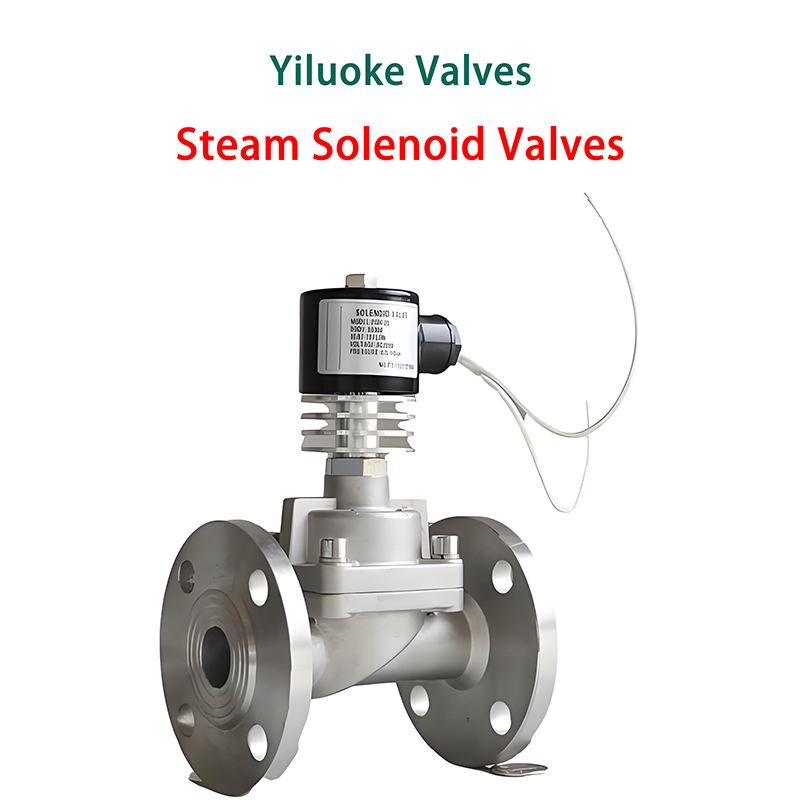
A high-temperature steam solenoid valve is an actuator suitable for automatic temperature control using steam as the heat medium. It can perform two-position automatic control and remote control on boiler steam pipelines of steam equipment such as steam heaters, radiators, and dryers, as well as complete sets of equipment such as temperature automatic controllers, steam setting machines, steam engines, and steam dampening machines. Solenoid valves are applied in automatic control systems of dyestuff, textile, printing and dyeing, food, cement products, petrochemical, metallurgy and other sectors.
Structure and Working Principle of High-Temperature Steam Solenoid Valve
The steam solenoid valve is a pilot-operated secondary opening solenoid valve composed of two major components: a pilot valve and a main valve. The on-off of the main valve is controlled by the opening and closing of the pilot valve. According to the different switch states when power is off, it can be divided into normally closed solenoid valves and normally open solenoid valves.Normally Closed Solenoid Valve
In the normal position when power is off, the pilot valve port is closed and the main valve is in an open-circuit state. When an electrical signal enters the pilot valve coil, the movable iron core is attracted upward by the electromagnetic force to open the pilot valve port. The pressure in the main valve cup disappears rapidly, and the medium pressure lifts the main valve cup to open the main valve, allowing the working medium to circulate.
When the electrical signal disappears, the movable iron core resets and closes the pilot valve port. The working medium enters the valve through the balance hole. When the pressure tends to balance, the valve cup moves down relying on the main valve spring, the dead weight of the valve cup and the medium pressure, tightly closing the main valve port, and the valve returns to a closed state.
Normally Open Solenoid Valve
In the normal position when power is off, the pilot valve port is open and the main valve is circulating under the action of the spring. When an electrical signal enters the pilot valve coil, the movable iron core is attracted downward by the electromagnetic force. When the pressure tends to balance, the valve cup moves down relying on the main valve spring, the dead weight of the valve cup and the medium pressure, tightly closing the valve port, and the valve is in a closed state.
When the main valve is de-energized, the electromagnetic force disappears, the pilot valve opens, the pressure in the main valve cup disappears rapidly, the medium pressure lifts the main valve cup to open the main valve port, the medium circulates, and the valve is in an open state.
Features of High-Temperature Steam Solenoid Valve
Heat Resistance: Special high-temperature resistant electrical materials and sealing materials are used for the electromagnetic part and the sealing part, and various heat insulation measures are applied.
Wear Resistance: Reasonable material selection. The valve cup and guide kit cleverly use the lubricating effect of fluid to reduce wear.
Condensation Resistance: Condensate in steam pipelines is an important factor affecting the action of solenoid valves, but this valve is not affected by condensate.
 What Are Creamic Lined Valves?
 How to Select High‑Pressure Ball Valves
 Gas Pressure Regulator Installation and Operation Instructions
 What is a Flowmeter?