


How to Install Check Valves: Horizontal or Vertical?
Check Valve Installation: Horizontal or Vertical?
A check valve, as a type of valve that automatically opens and closes its disc relying on the self-flow of the medium, has a core function of preventing fluid backflow and ensuring the process safety and operational efficiency of the pipeline system. Regarding the question of whether its installation orientation must be horizontal or vertical, the answer is not singular but determined by the specific structural design and working principle of the valve.
I. Types with Specific Requirements for Installation Orientation
This type of valve is represented by the lift check valve. Its internal structure determines that the disc must perform strict vertical lifting movement along the axis of the valve body channel. To ensure that when there is no medium flow, the disc can reliably fall back to the valve seat by its own weight to achieve effective sealing, this type of valve must in principle be installed on horizontal pipelines. If incorrectly installed on vertical pipelines, the disc will not be able to reset under the action of gravity, which is likely to lead to seal failure and loss of function.
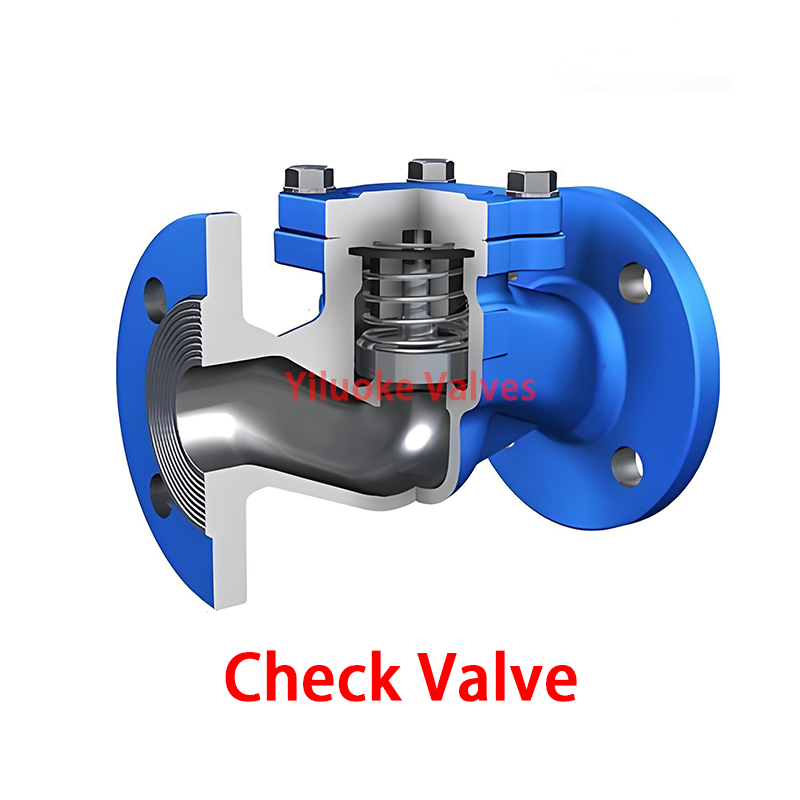
II. Types with Strong Adaptability to Installation Orientation
Most check valves of other structures have higher flexibility in terms of installation orientation.
Swing Check Valve: Its disc is similar to a hinged door, which is opened by the impulsive force of medium flow and closed by the combined action of backflow pressure and the disc's own weight. Therefore, it can be installed both on horizontal pipelines and vertical pipelines (it is necessary to ensure that the medium flows from bottom to top).
Ball Check Valve: It uses a freely rolling ball as the disc, and its opening and closing principle is similar to that of the swing type. It has good adaptability to both horizontal and vertical (medium flows from bottom to top) installations.
Butterfly Check Valve (Wafer Type/Double Disc Type): Its disc is a circular plate that rotates around a rotating shaft. Its compact design allows it to work normally in both horizontal and vertical installation positions, but specific reference should be made to the flow direction requirements in the product manual.
The installation orientation of a check valve is not a subjective regulation but an objective technical requirement jointly determined by its internal mechanical structure and fluid dynamics principles. Before carrying out installation work, operations must be strictly performed in accordance with the valve's product technical manual, design drawings, or relevant engineering specifications (such as GB, API, ANSI standards) to ensure the realization of valve functions and the long-term stable operation of the pipeline system.
 What Are Creamic Lined Valves?
 How to Select High‑Pressure Ball Valves
 Gas Pressure Regulator Installation and Operation Instructions
 What is a Flowmeter?