


How Pneumatic Actuator Works?
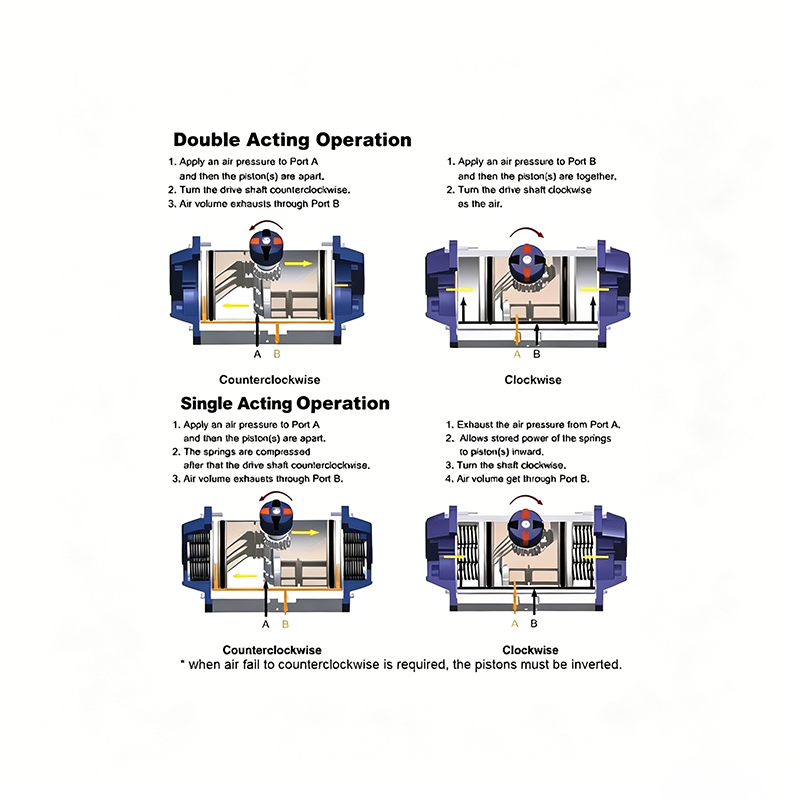
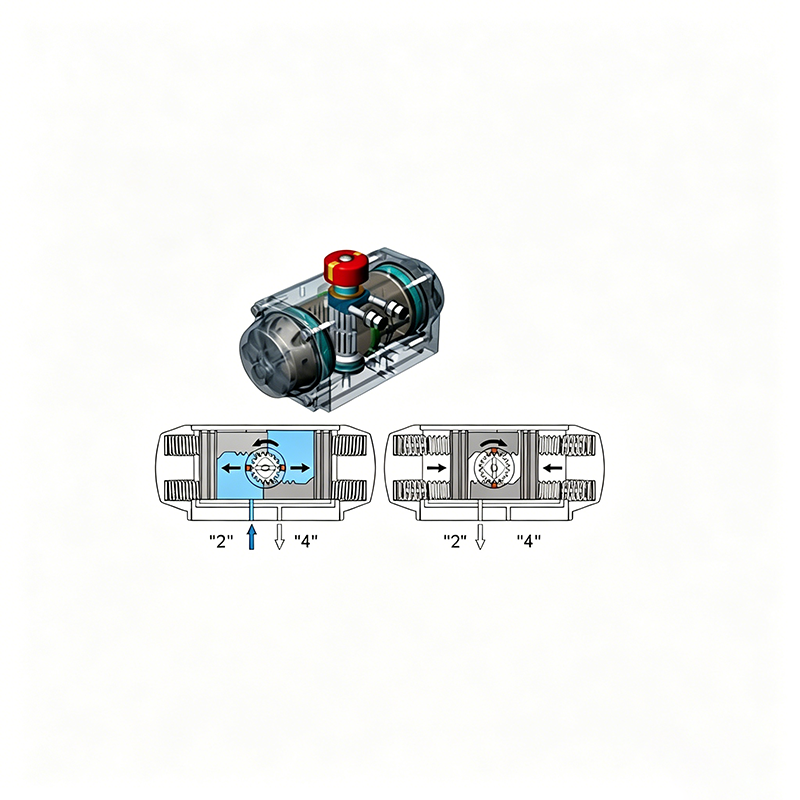
When compressed air enters the pneumatic actuator through port A, the gas pushes double pistons to move linearly toward both end caps. The rack on the pistons drives the gear on the rotating shaft to rotate counterclockwise by 90 degrees, opening the valve. Residual gas discharges out from port B.
Conversely, when compressed air enters both ends via port B, the pistons move toward the center. The rack drives the gear to rotate clockwise by 90 degrees and close the valve. Internal gas exhausts through port A. This is the standard working principle.
The actuator can be assembled in reverse rotation direction on request, clockwise rotation for opening and counterclockwise rotation for closing. For spring return single-acting actuators, port A serves as air inlet and port B as exhaust port equipped with silencer. Air intake opens the valve, and spring force closes it once air supply cuts off.
Structural Specification
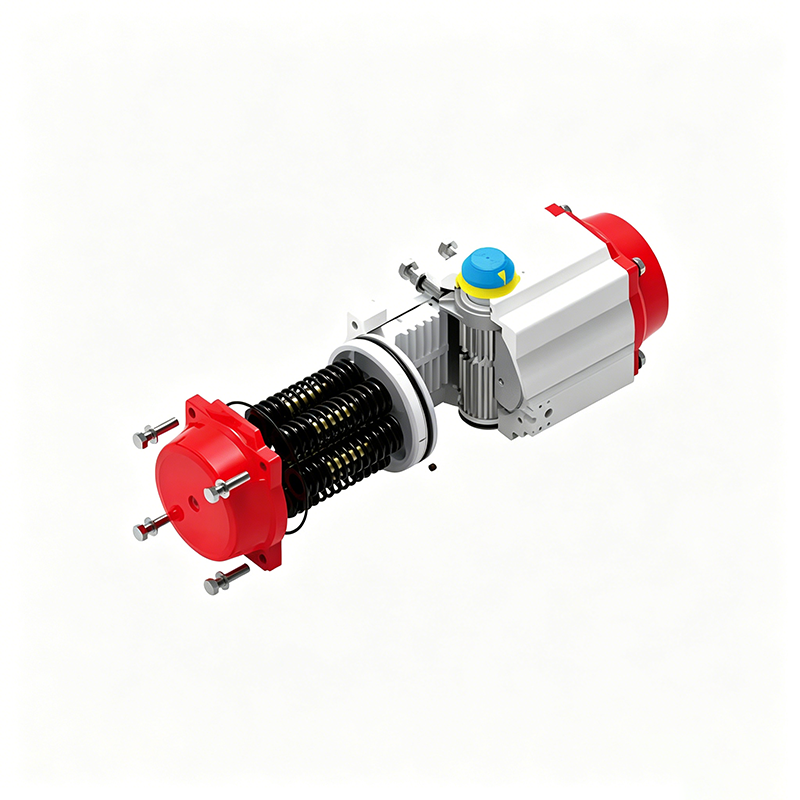
Basic components include cylinder, piston, gear shaft, end cover, seals and fasteners. Complete sets are fitted with position indicator, travel limit switch, solenoid valve, positioner, manual override and signal feedback parts.
Connection dimensions comply with ISO5211, GB/T12222 and GB/T12223.
Manual mechanism enables valve operation without air supply. Counterclockwise handwheel rotation opens the valve, clockwise rotation closes it.
Threaded rod end is designed with standard wrench opening for convenient operation.
Piston sealing rings are easy to disassemble, replace and maintain.
Stroke length of buffer structure follows relevant industrial standards. External adjustment structure is equipped for adjustable buffering performance.
Thread size of air inlet and outlet conforms to NAMUR, GB/T7306.1, GB/T7306.2 and GB/T7307.
Working Composition
A pneumatic actuator consists of actuating mechanism and regulating valve. It generates thrust according to control signals to drive valve movement. The regulating valve changes displacement or rotation angle under thrust force, so as to adjust pipeline fluid flow accurately.
 What Are Creamic Lined Valves?
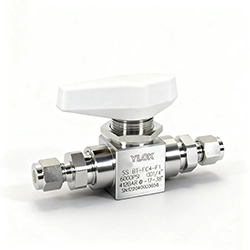 How to Select High‑Pressure Ball Valves
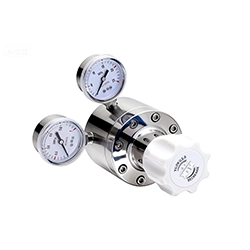 Gas Pressure Regulator Installation and Operation Instructions
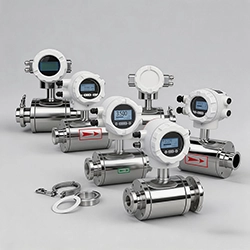 What is a Flowmeter?