


Installation instructions for Sanitary Valves
Installation instructions for Sanitary Valves
The following points should be noted for sanitary valves:
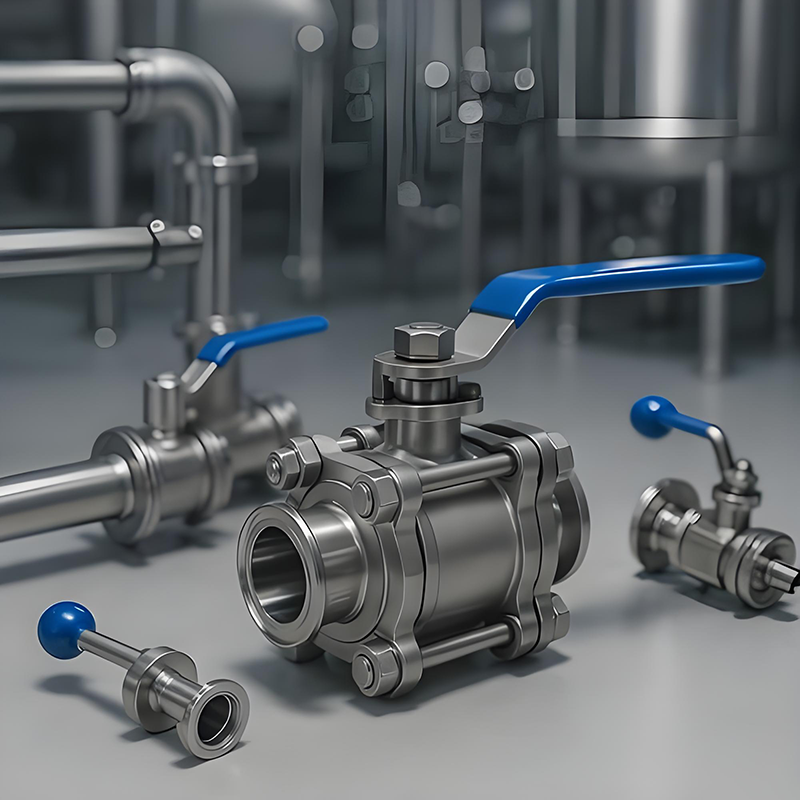
Operators of sanitary valves must clearly understand the function of each valve and its position in the process pipeline to avoid misoperation. Otherwise, accidents such as material leakage, material mixing, and pressure buildup may occur. For example, in a certain oil refining plant, steam purging was performed on sanitary valves before commissioning. A vent valve was left open after purging. As a result, during commissioning, high-temperature oil slurry at 370℃ was discharged from the vent valve, causing a major fire and leading to the shutdown of the plant.
The packing gland of the sanitary valve should not be pressed too tightly; it should be tight enough to allow the valve stem to rotate flexibly. Excessively tight packing will increase the friction of the valve stem and the operating torque. Under normal circumstances, the packing should not be replaced or added under pressure while the valve is in operation; otherwise, it may cause medium leakage and lead to danger.
In seasons where the temperature is below 0℃, attention should be paid to anti-freezing for out-of-service valves. The drain plug at the bottom of the valve should be opened in a timely manner to drain the condensed water inside. Heat preservation measures should be taken for valves that cannot be drained and those in continuous operation.
For pneumatic valves working at high temperatures, when the temperature rises above 200℃, the bolts will elongate due to heat, which may easily cause poor sealing of the valve. If necessary, "hot tightening" of the bolts should be performed. Hot tightening should not be carried out when the valve is in the fully closed position to avoid the valve stem being locked, making it difficult to open again.
When a sanitary valve leaks, the leakage location and cause should first be identified. Generally, there are two types of leaks: internal leakage and external leakage. External leakage is divided into packing leakage, bonnet and valve body leakage, and sealing ring or lining material leakage according to its external structure. Operators should accurately judge; those that can be handled by themselves should be dealt with in a timely manner, and those that cannot be handled should be reported to maintenance personnel for timely treatment.
 What Are Creamic Lined Valves?
 How to Select High‑Pressure Ball Valves
 Gas Pressure Regulator Installation and Operation Instructions
 What is a Flowmeter?