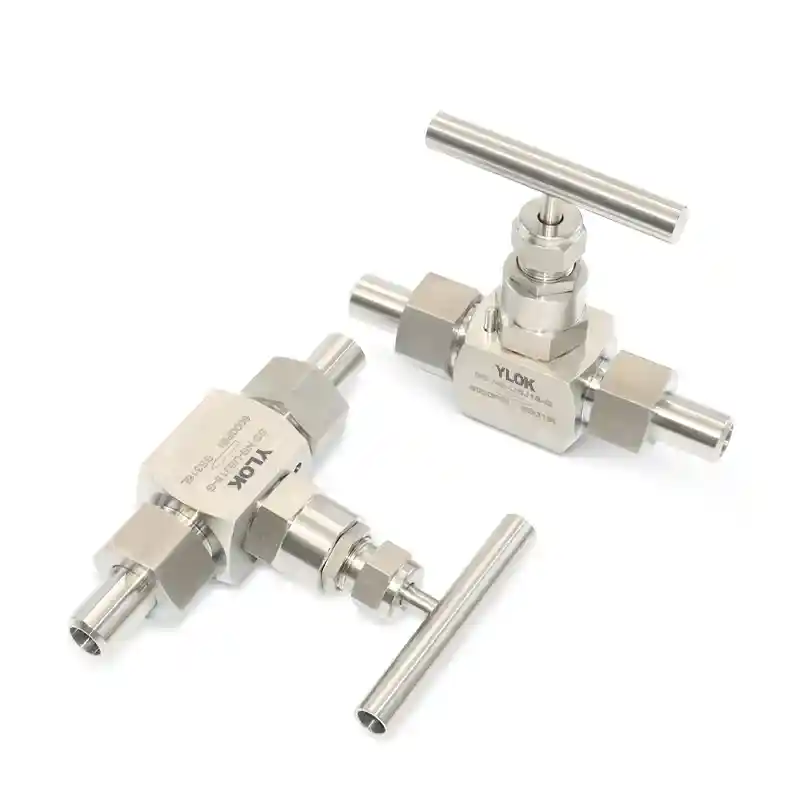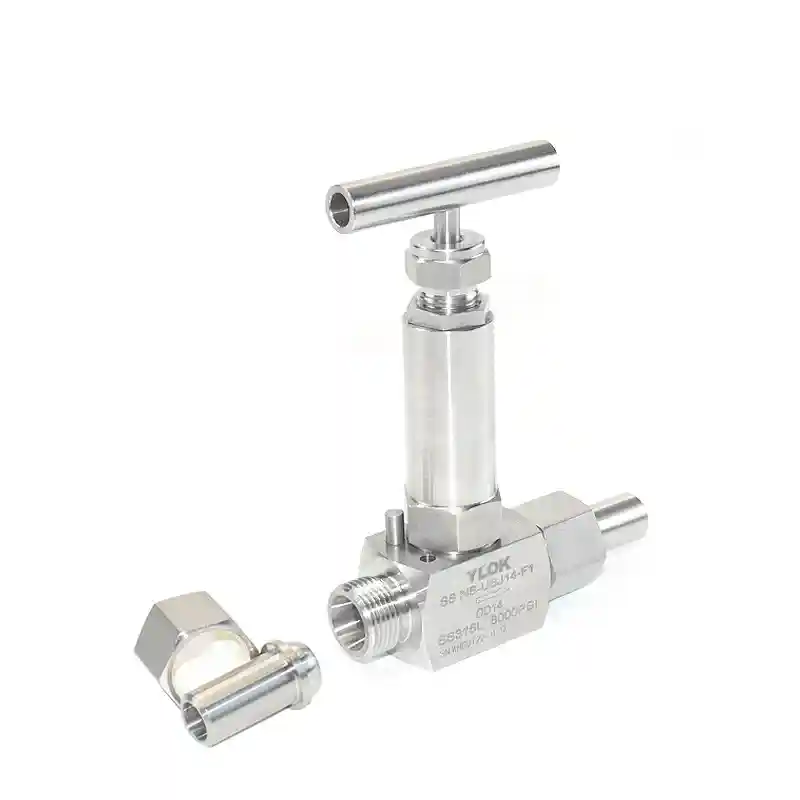


3-Valve Manifolds
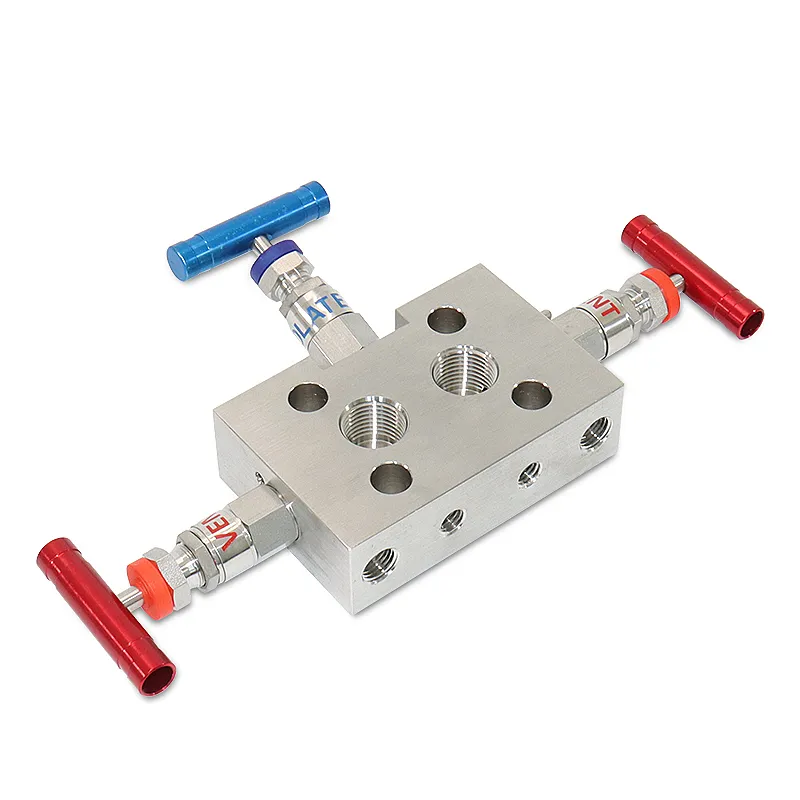
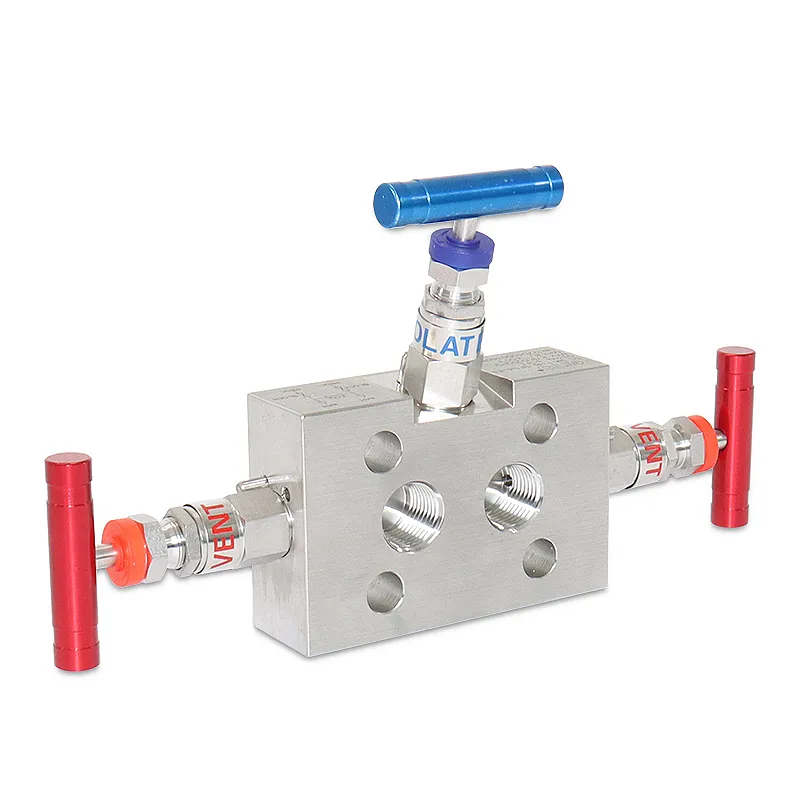
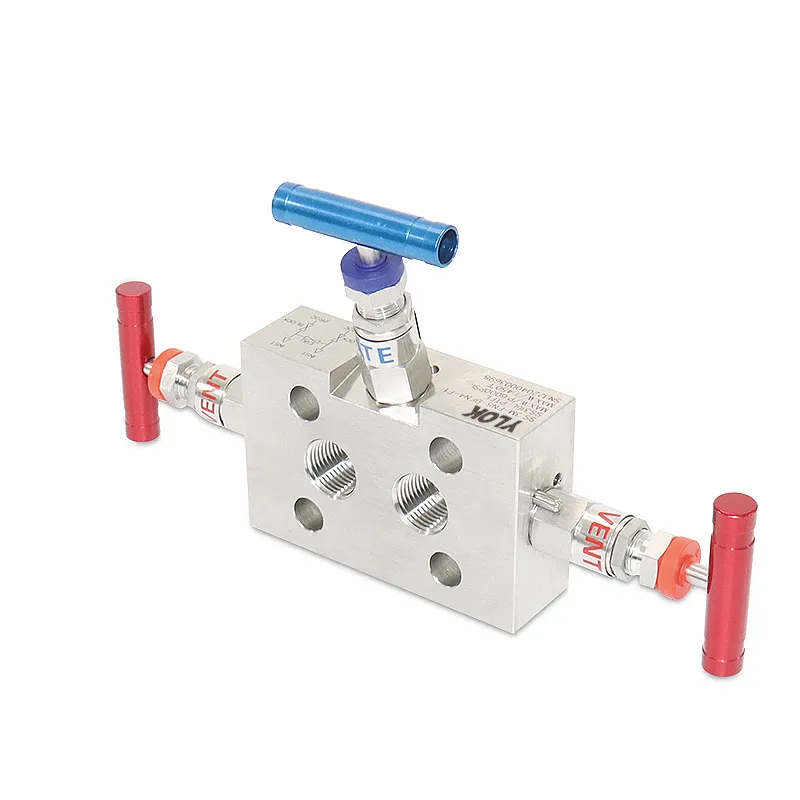
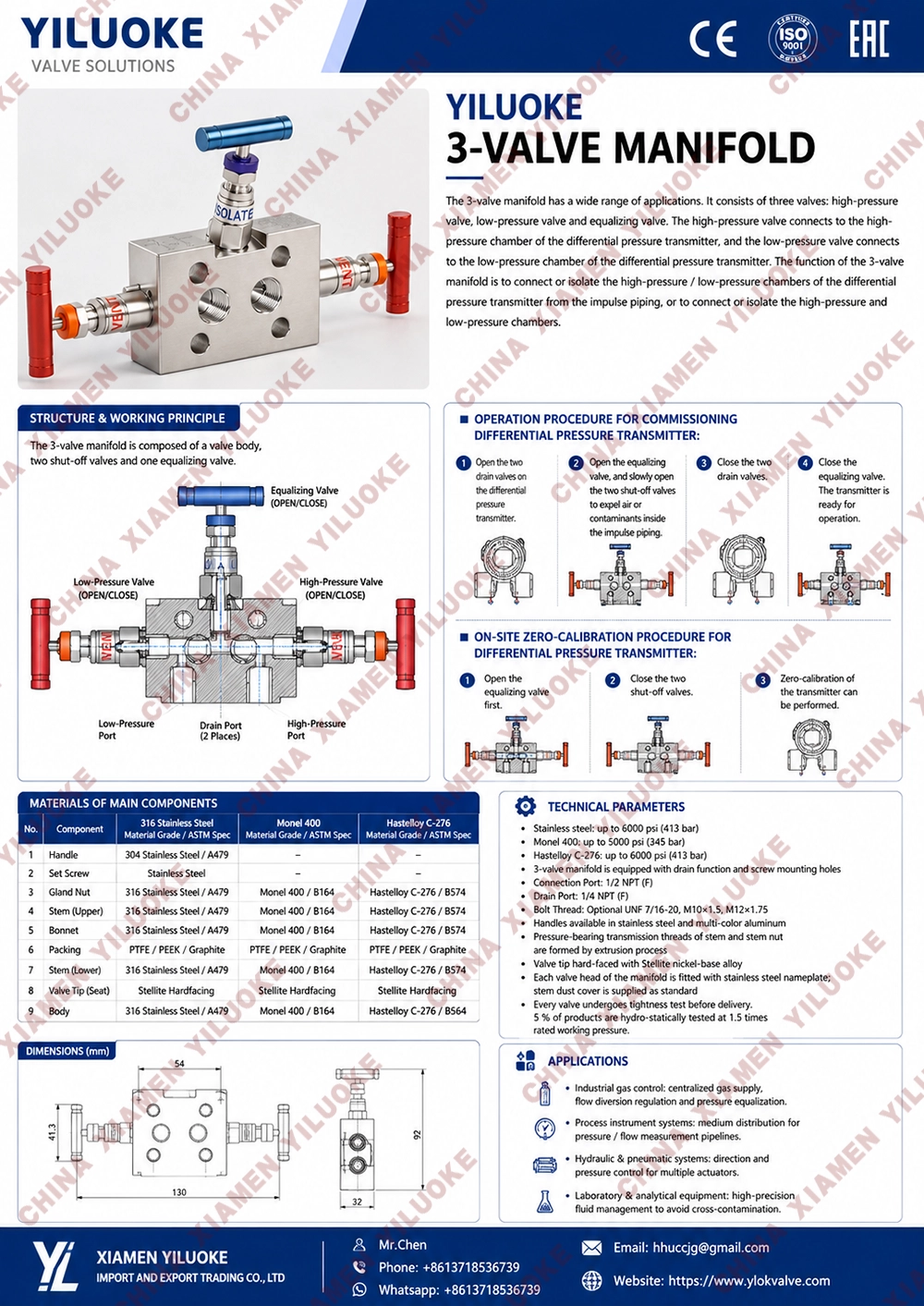
The 3‑Valve Manifold is composed of 3 interconnected valves. According to the function of each valve in the system, they can be classified as follows: the left one is the high‑pressure valve, the right one is the low‑pressure valve, and the middle one is the balance valve. The 3‑Valve Manifold is used in conjunction with differential pressure transmitters, and its function is to connect or disconnect the positive and negative pressure measurement chambers to/from the pressure tapping points, or to connect or disconnect the positive pressure measurement chamber from the negative pressure measurement chamber.
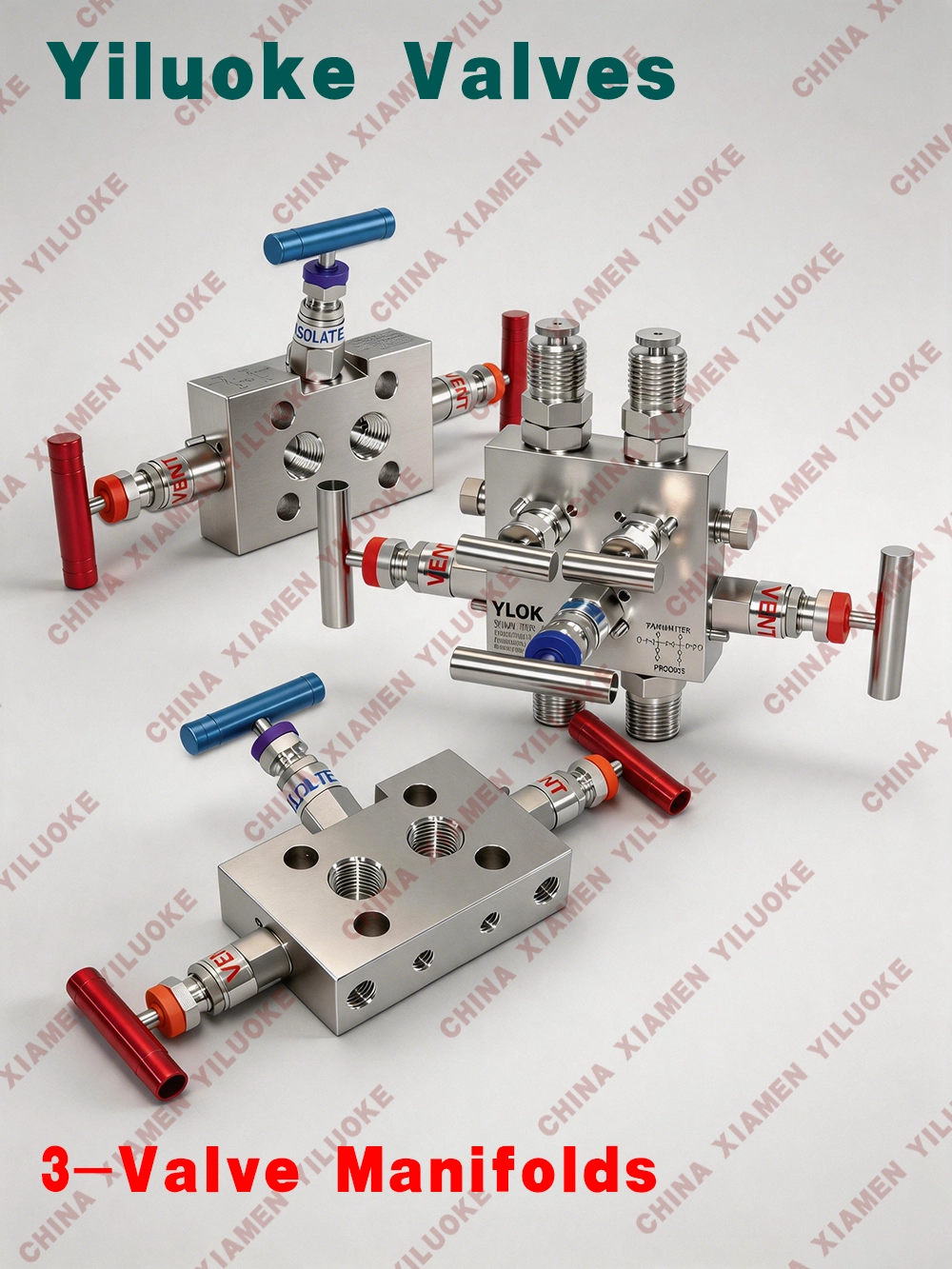
Working Principle of 3‑Valve Manifold
Connect or disconnect the positive and negative pressure measurement chambers of the differential pressure transmitter to/from the impulse pipes.
The balance valve is used to balance the pressure in the positive and negative pressure chambers, preventing damage to the transmitter diaphragm capsule due to excessive pressure difference.
Operating Characteristics of 3‑Valve Manifold
During commissioning, the operation sequence must be followed: "First open the high‑pressure valve → close the balance valve → then open the low‑pressure valve". During shutdown, the reverse sequence should be adopted.
Application Scenarios of 3‑Valve Manifold
The 3‑Valve Manifold is suitable for conventional differential pressure measurement scenarios, such as flow and liquid level monitoring (e.g., orifice flowmeters, tank level gauges). It features a simple structure and low cost, making it suitable for occasions with limited budgets or low maintenance requirements.
Maintenance of 3‑Valve Manifold
During maintenance, the high‑pressure and low‑pressure valves must be closed and the balance valve opened. However, it cannot directly handle contaminants in the impulse pipes, and relies on the blowdown screws of the transmitter itself.
Operation Sequence of 3‑Valve Manifold
Opening Sequence: First open the balance valve → then open the high‑pressure side → close the balance valve → finally open the low‑pressure side.
Closing Sequence: First close the high‑pressure side → then open the balance valve → finally close the low‑pressure side.
Technical Parameters of 3‑Valve Manifold
| Item | Parameter |
| Connection Type | Input pipe butt welding connection |
| Structural Feature | Tapered surface sealing |
| Valve Inspection and Testing | API 598‑1996 |
| Nominal Pressure | ≤6000Psi |
| Applicable Operating Temperature | -29℃~+538℃ |
| Applicable Medium | Corrosive and non‑corrosive media such as water, oil, gas, etc. |
| Material | Stainless steel (304, 304L, 316, 316L, 321) |
| Nominal Diameter | DN6 |
Application Fields of 3‑Valve Manifold
Industrial Gas Control: Centralized gas supply, flow distribution and regulation, and pressure balance.
Process Instrumentation Systems: Medium distribution in pressure/flow measurement pipelines.
Hydraulic and Pneumatic Systems: Direction and pressure control of multiple actuators.
Laboratory and Analytical Equipment: High‑precision fluid management to avoid cross‑contamination.
Product Features of 3‑Valve Manifold
Modular Design: Supports multi‑channel configurations (e.g., 2‑valve, 5‑valve, 8‑valve, etc.) and flexibly adapts to the needs of different process flows.
High‑Strength Materials: Usually made of 316 stainless steel, brass, or special alloys, suitable for high‑pressure, corrosive, or high‑purity medium environments.
Multi‑Functional Interfaces: Integrates functional ports such as Vent, Equalize, and Relief, facilitating system debugging and maintenance.
Low‑Leakage Sealing: Adopts metal sealing or high‑performance elastomers to ensure long‑term stable operation, complying with industry leakage standards.
Diversified Actuation Methods: Supports manual, pneumatic, or electric operation to meet the needs of automated control.