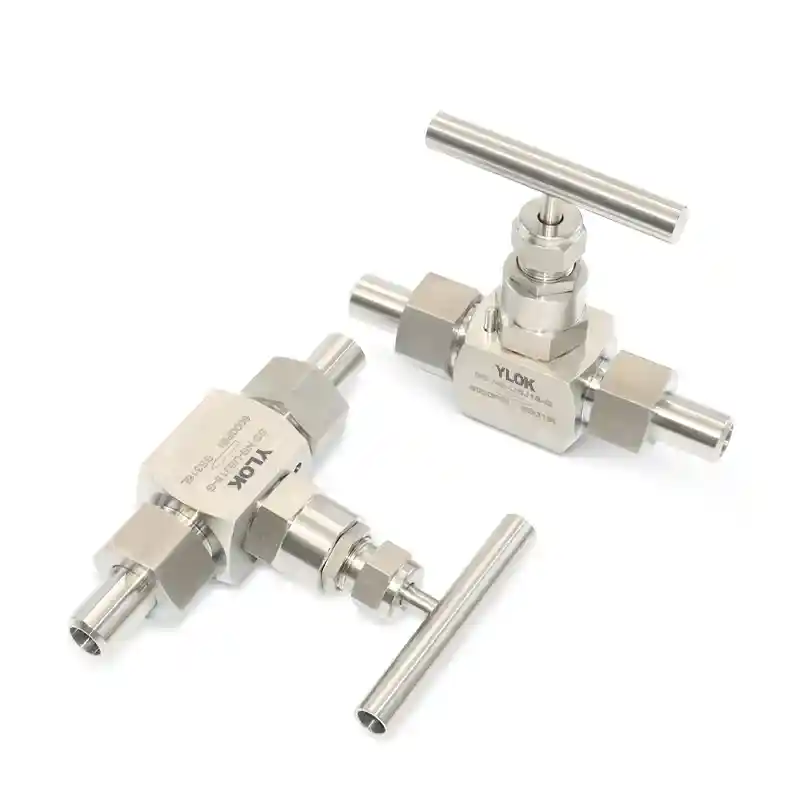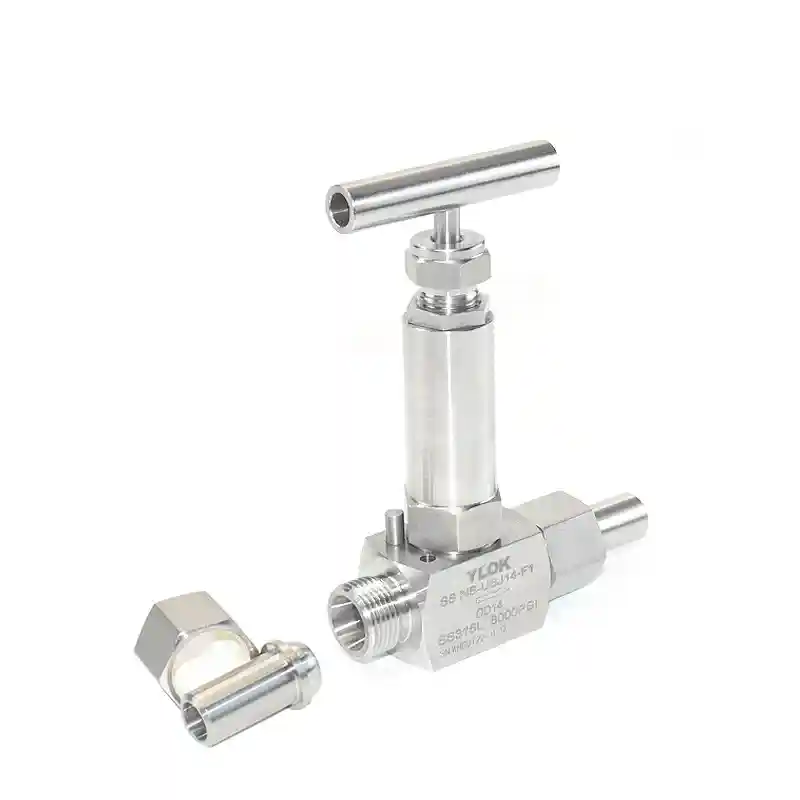


High-Pressure Needle Valves
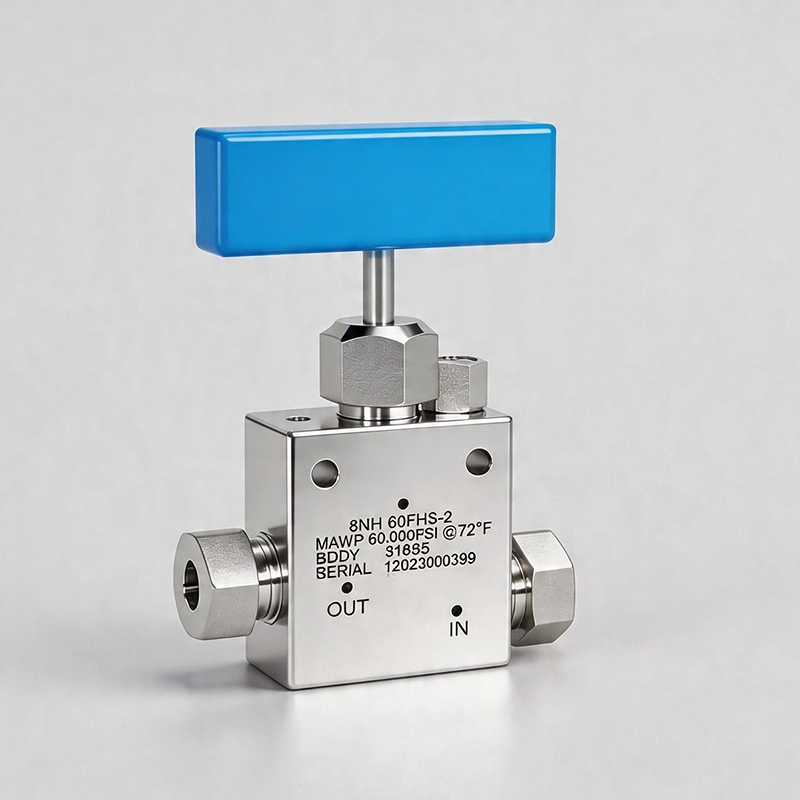
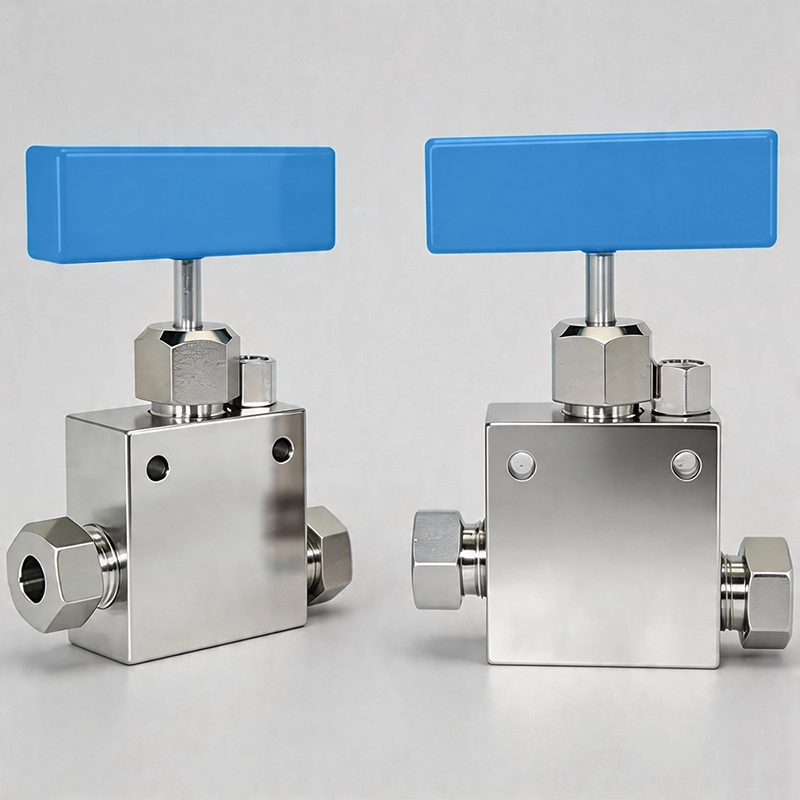
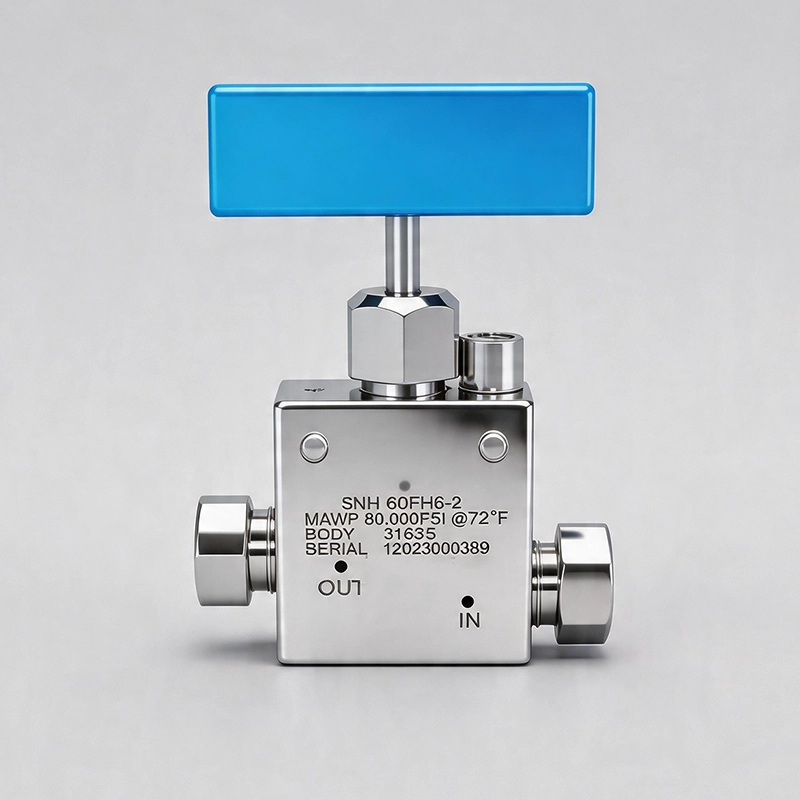
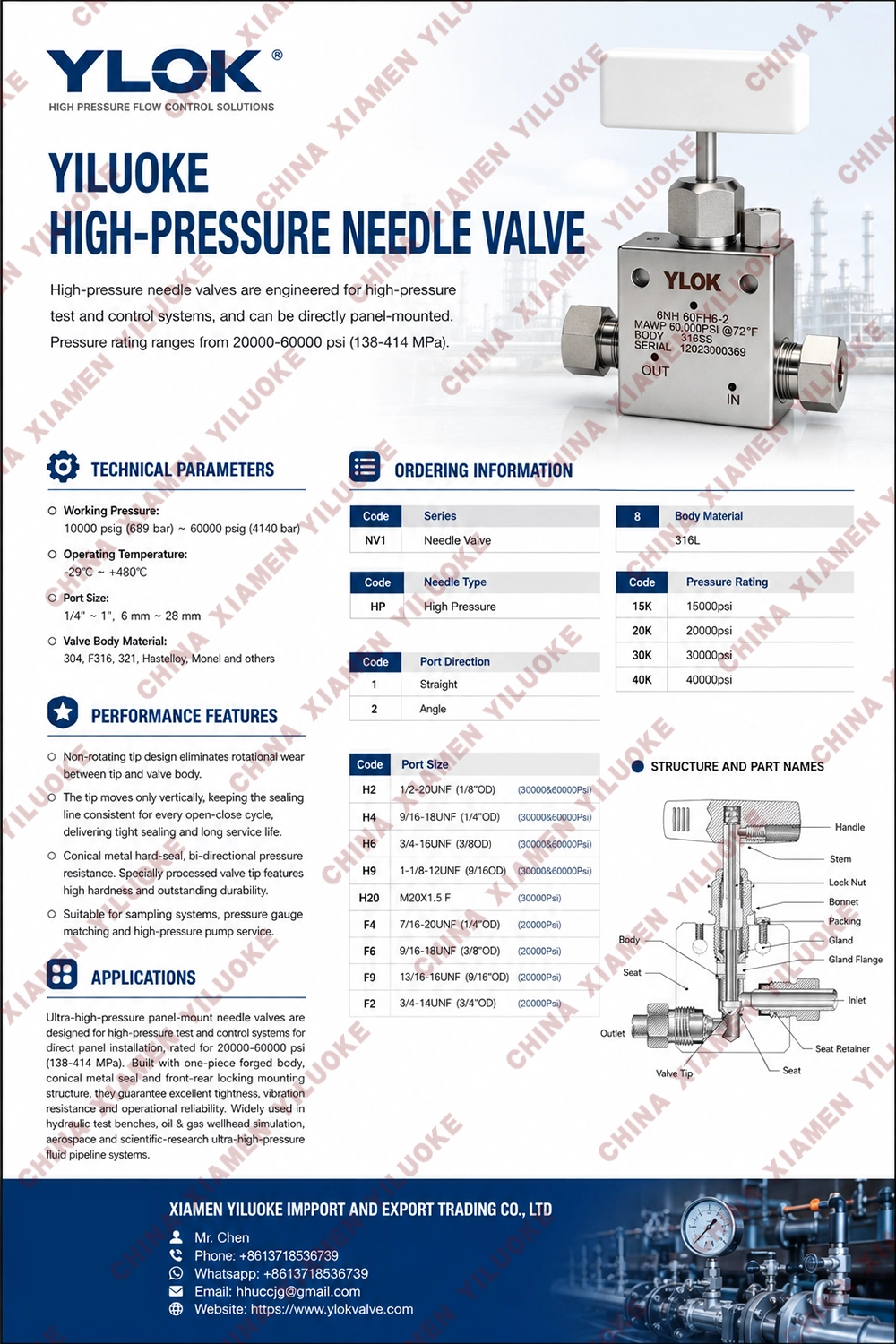
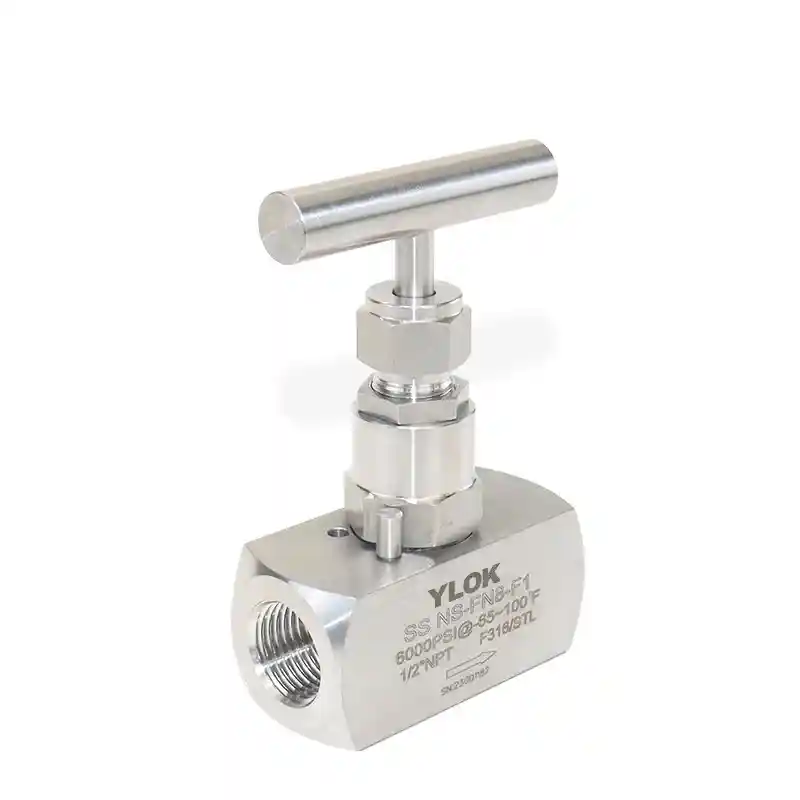
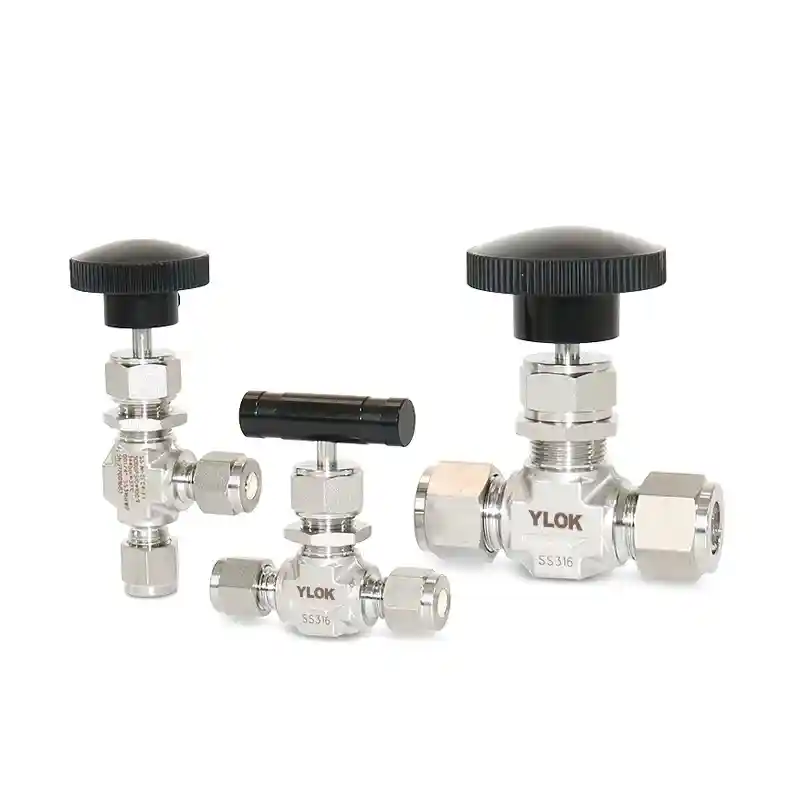
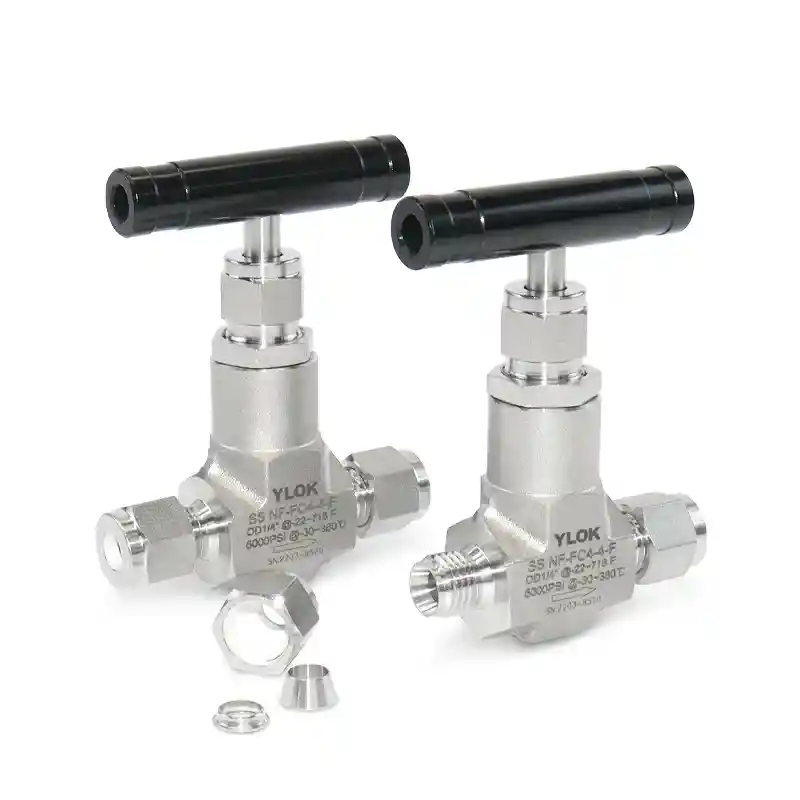
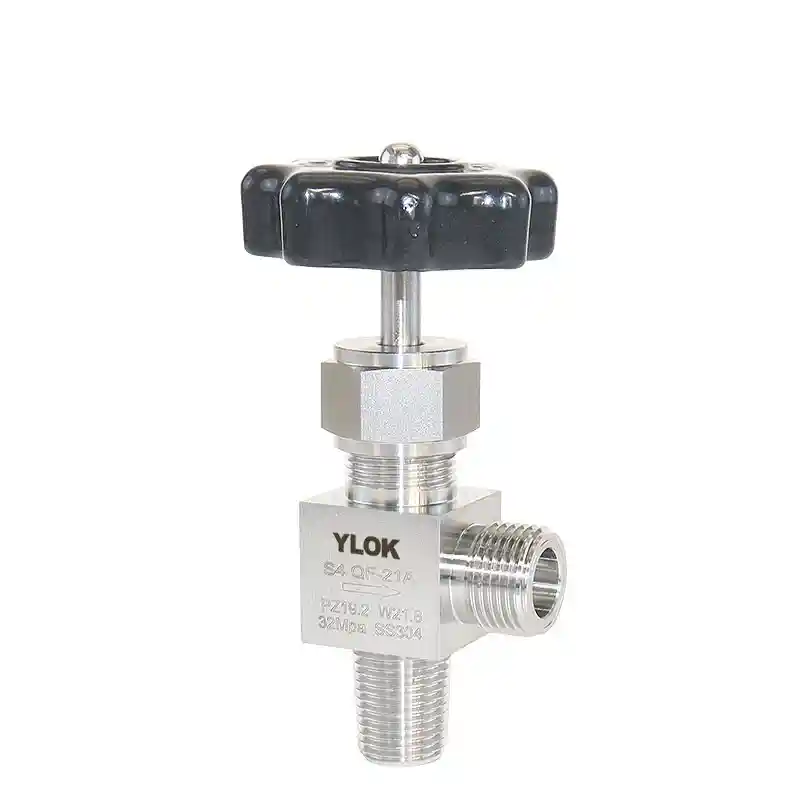
The high‑pressure needle valve adopts 316L stainless steel material, supporting pressure ratings from 10000psi to 60000psi. It features metal hard‑seal, non‑rotating valve core design and safety relief hole, suitable for high‑pressure testing, fluid control and hydrogen energy applications.
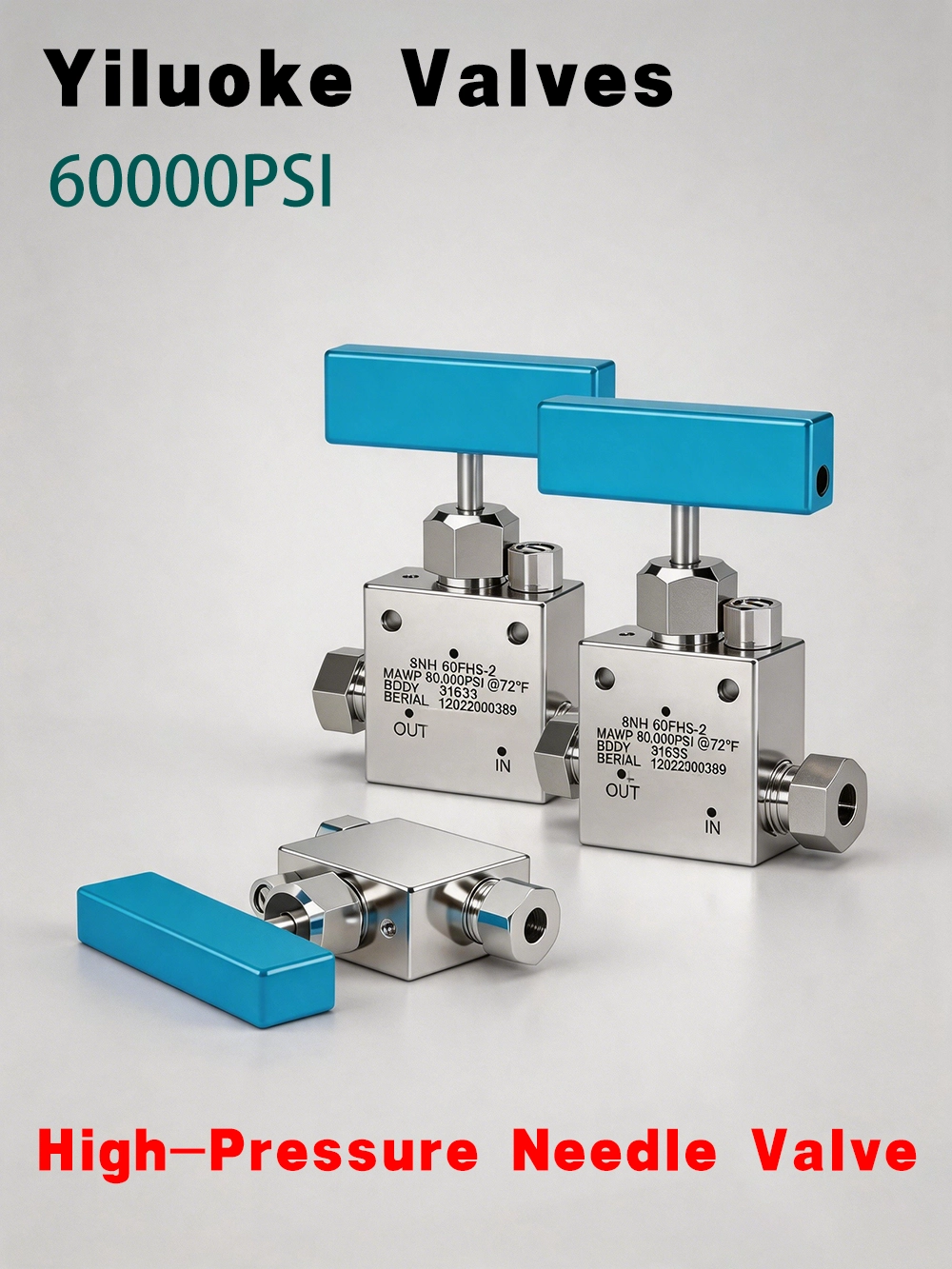
Structural Characteristics
Adopt high‑strength 316L stainless steel material with excellent pressure resistance and reliability.
Metal hard‑seal structure ensures reliable and stable sealing performance.
Non‑rotating valve core design effectively reduces wear on sealing surface and extends service life.
Safety leakage hole is arranged between connection port and sealing surface for convenient leakage detection.
Multiple pressure ratings including 15000psi, 20000psi, 30000psi and 60000psi are available to meet various working conditions.
Verified by years of field operation at multiple customer sites, it delivers long service life, high reliability and outstanding durability.
With strict manufacturing process and quality control, all valves undergo 100% pressure test before delivery to guarantee reliability.
Working Principle
The ultra‑high‑pressure needle valve is a forced‑sealing globe valve. Its core opening‑closing assembly consists of stem, needle‑shaped valve core, valve seat, valve body, sealing components and driving mechanism. It realizes sealing by mechanical extrusion without relying on elastic elements, adapting to extreme ultra‑high‑pressure environments.
Under normal closed status, rotating the handwheel or driving device pushes the stem downward. The conical needle‑shaped valve core closely fits against the seat sealing surface. Extrusion friction of metal hard‑seal blocks the flow of high‑pressure fluid. When opening, reverse rotation lifts the valve core, forming an annular flow passage between core and seat for high‑pressure fluid transmission. Fine adjustment of stem feed can precisely control flow rate.
Different from ordinary valves, the ultra‑high‑pressure needle valve applies combined line‑and‑face sealing structure. The precisely lapped valve core and seat achieve minimal fitting clearance to prevent internal leakage under ultra‑high‑pressure, corrosive, high‑low temperature conditions. Multi‑stage packing including flexible graphite, PTFE and metal spiral gasket is equipped on stem together with anti‑blow‑out design, eliminating external leakage risks under ultra‑high‑pressure working conditions and ensuring system safety.
Main Structure of High‑Pressure Needle Valve
| Component | Specification |
| Valve Body Material | 316ss, 316L, Hastelloy, Monel alloy |
| Needle‑Shaped Valve Core | Cemented carbide or stainless steel |
| Tapered Valve Seat | High sealing precision |
| Handwheel | Aluminum alloy or stainless steel |
| Sealing Element | PTFE or metal seal |
Technical Parameters of High‑Pressure Needle Valve
| Parameter | Details |
| Nominal Diameter | DN1~DN25 |
| Maximum Working Pressure | 60000psi |
| Operating Temperature | -30℃~+200℃ (Standard Type), -40℃~+600℃ (High‑Temperature Type) |
| Structure Type | Transmission thread is outside the packing, offering good high‑temperature and pollution resistance |
| Stem Seal | Dual protection of packing seal and fluororubber O‑ring seal |
| Valve Core Structure | Non‑rotating valve core made of super‑hard alloy, ensuring long service life |
| Valve Body Material (Wetted Part) | 316L stainless steel |
| Packing Seal | Graphite‑reinforced PTFE for standard type; graphite for high‑temperature type |
| Applications | Suitable for high‑temperature, high‑pressure, and frequent on‑off scenarios; applicable to corrosive gases and liquids compatible with the valve material |
Installation and Maintenance of High‑Pressure Needle Valve
1. Before installation, inspect the needle valve for appearance damage. Damaged products may result in abnormal operation, please consult technicians or suppliers for support.
2. Check valve ports, internal cavity and surface for dirt before installation. Clean with air gun if necessary. Note: Dump solid particles such as iron scraps first before blowing, to avoid damage to valve body and sealing surfaces.
3. Install the needle valve onto pipeline or system according to its structure. For valves with import‑export marks, connect strictly following the marks. For unmarked valves, follow the rule of low‑inlet and high‑outlet: the lower connection port is inlet and the upper one is outlet. Ensure pipelines and system are clean, and filters shall be installed in the system to protect components.
4. After installation, open and close the valve 2‑3 times to verify performance. Do not apply excessive force during operation, which may cause sealing failure. Close the valve until it holds system pressure, avoid violent rotation of handwheel.
Key Selection Points for High‑Pressure Needle Valve
1. Nominal pressure and pressure rating
2. Fluid medium and wetted material
3. Connection type and structural form
4. Sealing type and precision
5. Working temperature and installation environment