


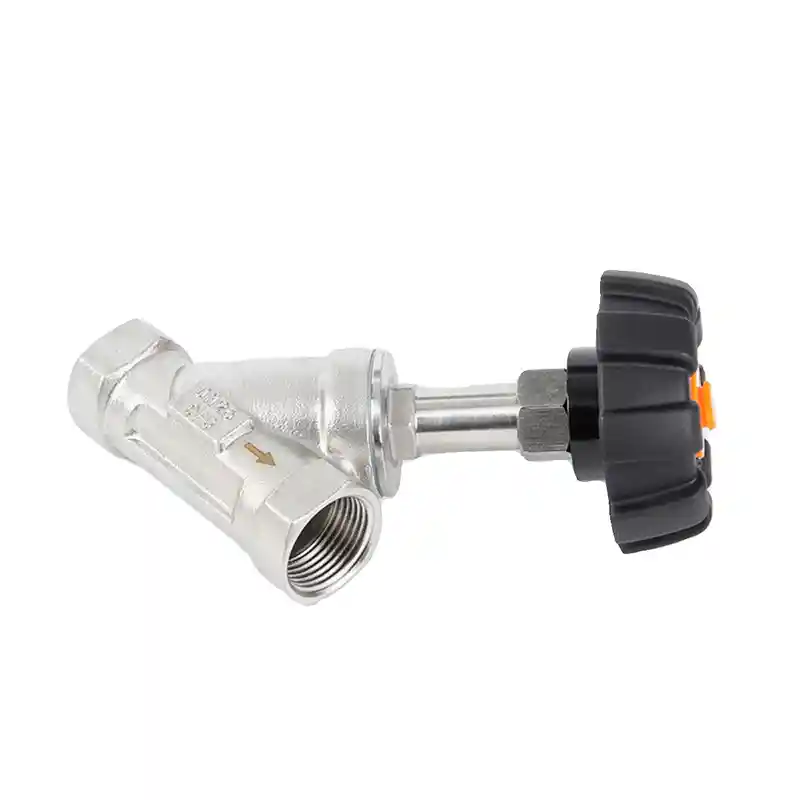
Internal Thread Manual Angle Seat Valves
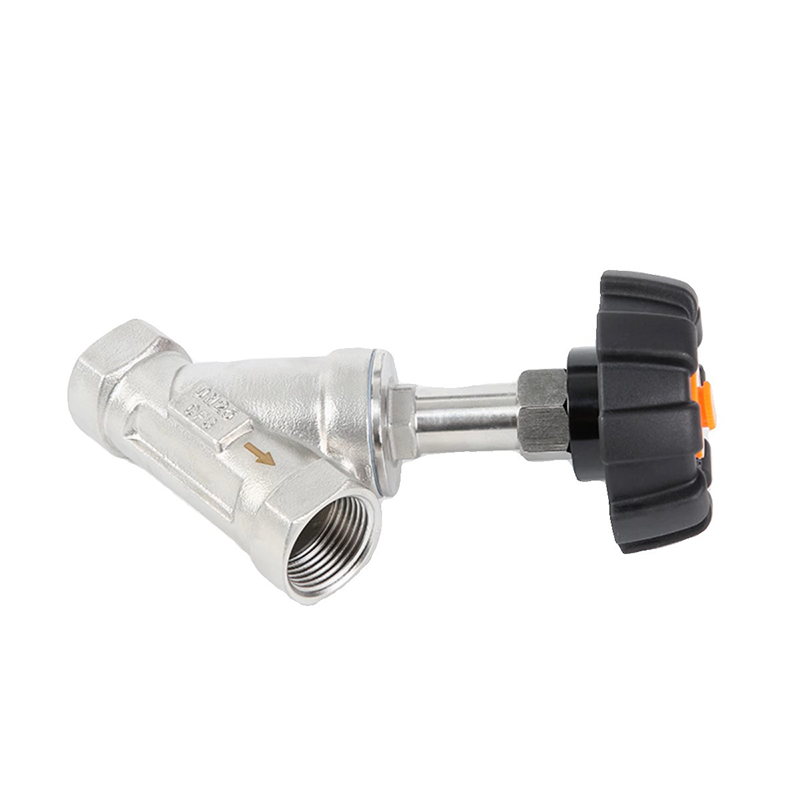
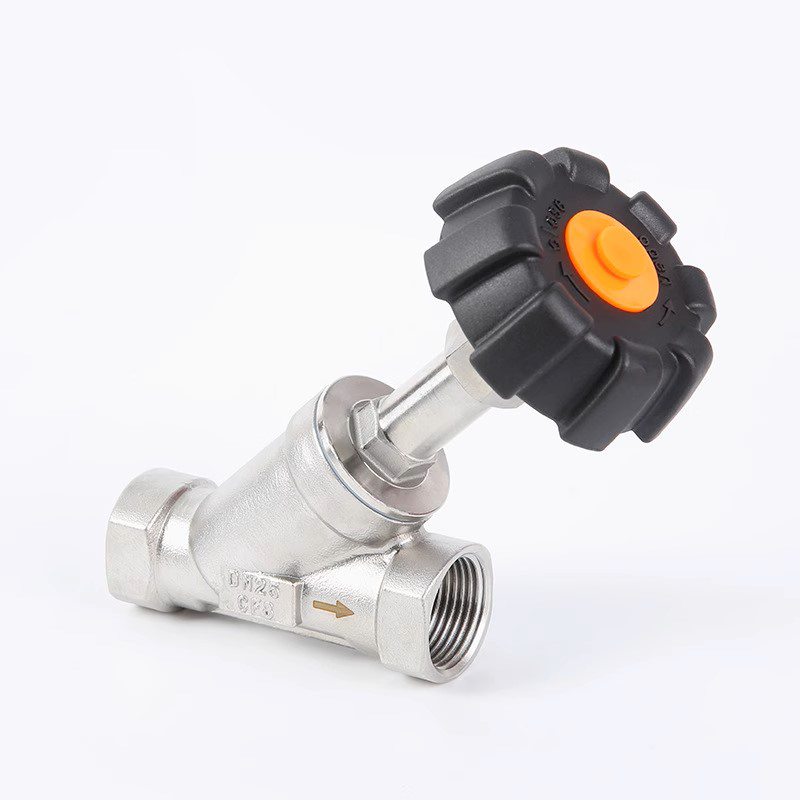
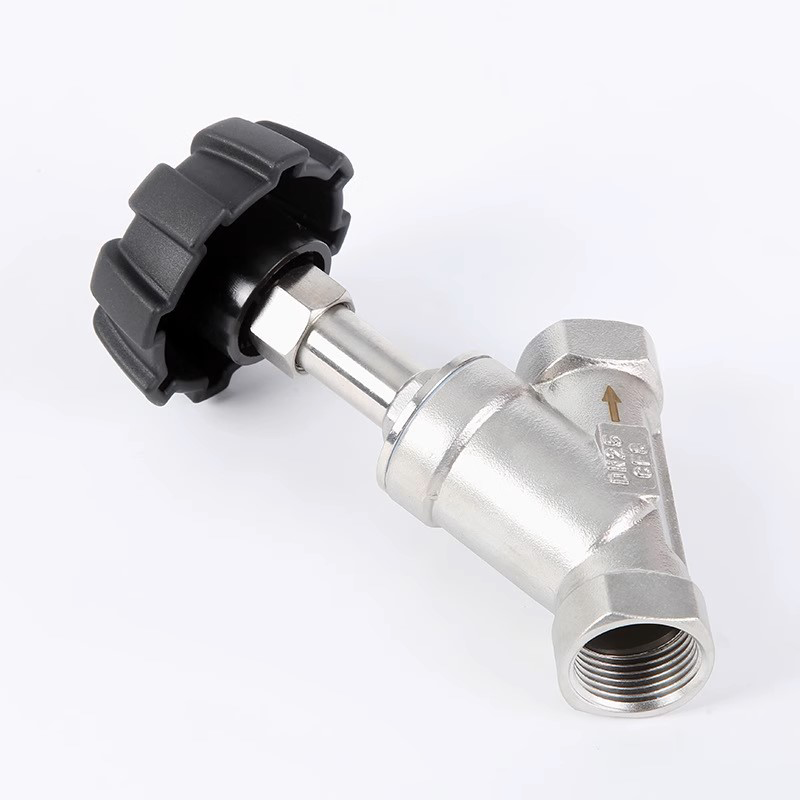
Internal Thread Manual Angle Seat Valve - Overview, Working Principle & Technical Parameters
The internal thread manual angle seat valve is a common pipeline switch in automatic control systems. It is widely used in various automatic mechanical equipment such as food and chemical processes, sterilizers, autoclaves, dry cleaners, dryers, printing and weaving, printing and dyeing, bleaching, and beer production. It has the characteristics of water hammer resistance, no noise, and reliable sealing performance, and is particularly suitable for steam pipeline systems.
Working Principle of Manual Angle Seat Valve
The working principle of the angle seat valve is the same as that of the globe valve, but the valve body adopts a Y-type structure matched with a pneumatic actuator. This expands the flow cross-section of the valve cavity, makes the fluid in the valve cavity more stable, and increases the flow rate by 30%. At the same time, the change of the medium inflow direction allows the configuration of a smaller actuator.
Technical Parameters
Specifications: From DN10-1/2" to DN80-3"
Valve Configuration: Manual, Pneumatic, Intelligent Controller
Electronic Remote Intelligent Controller
Connections: Welded, Clamp, Threaded (metric or inch)
Maximum Working Pressure: 10bar
Working Temperature: -20℃ to 120℃ (180℃ option with PTFE)
Compressed Air Pressure: 5bar-7bar
Air Supply Connection: R1/8" (BSP)
Parts in Contact with Materials: 1.4404/AISI 316L, 1.4301/AISI 304
Other Stainless Steel Parts: 1.4301/AISI 304
Product-Contact Surface: Ra≤0.8μm, Electropolished
External Surface Treatment: Polished, Sandblasted
Sealing Elements: EPDM, Compliant with FDA 17.2600
Leave Your Message
Products categories
-
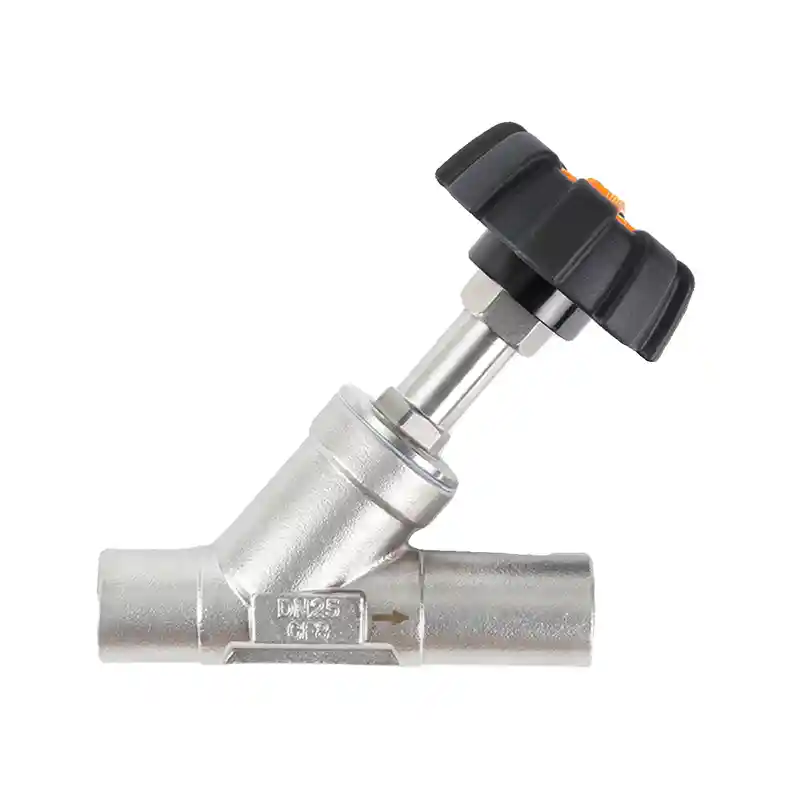
Welded Manual Angle Seat Valves
-
Internal Thread Manual Angle Seat Valves
-
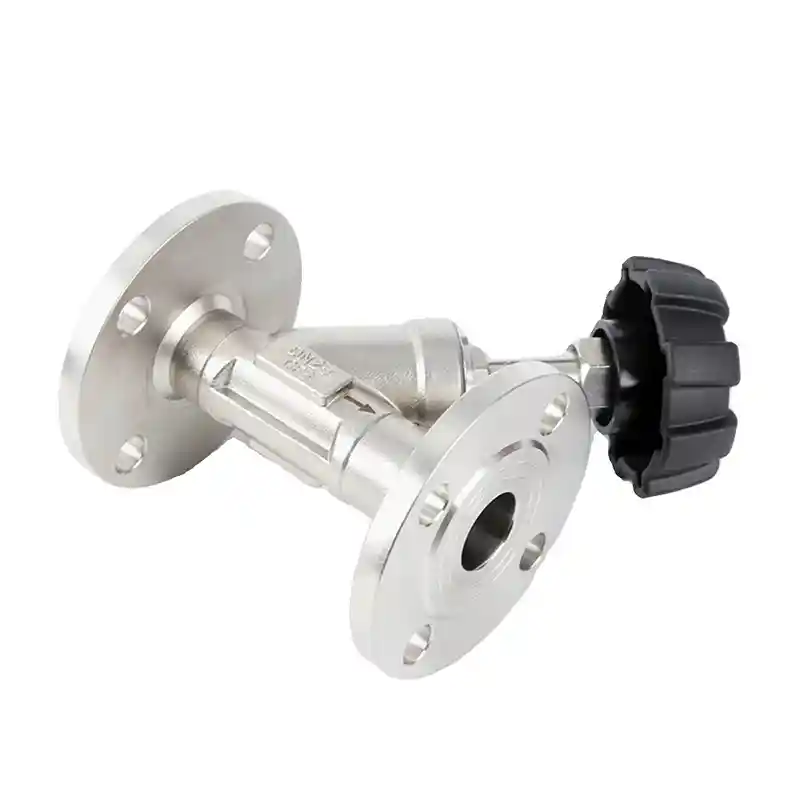
Flanged Manual Angle Seat Valves
-
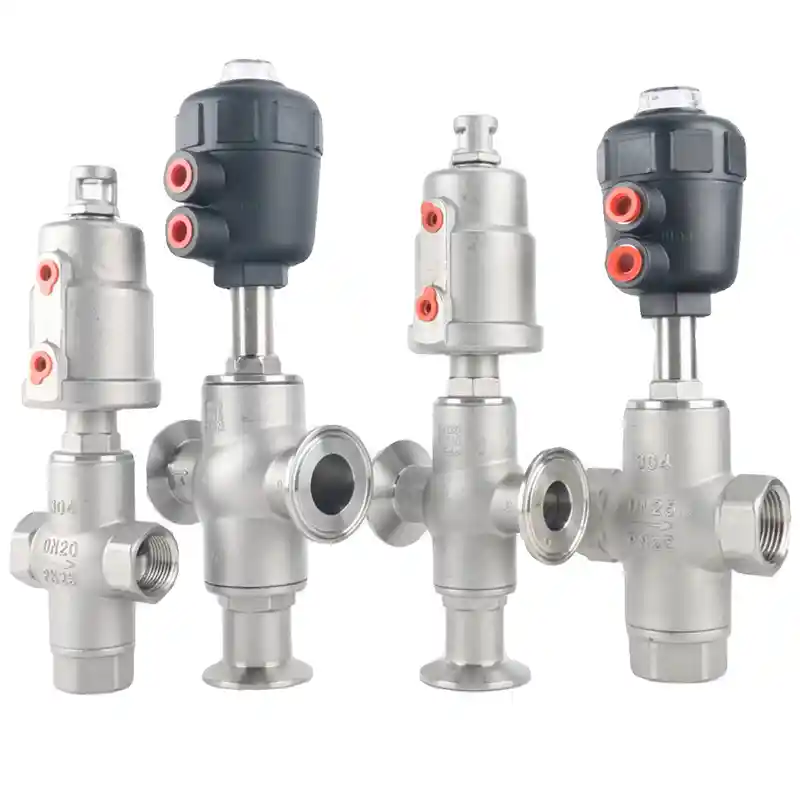
3-Way Pneumatic Angle Seat Valves
-
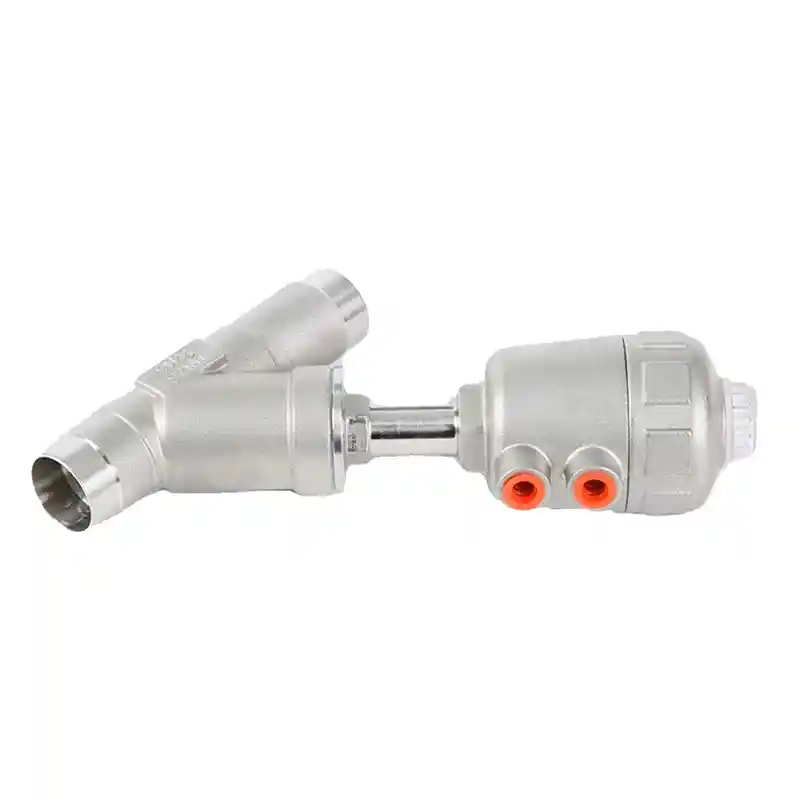
Welded Pneumatic Angle Seat Valves
-
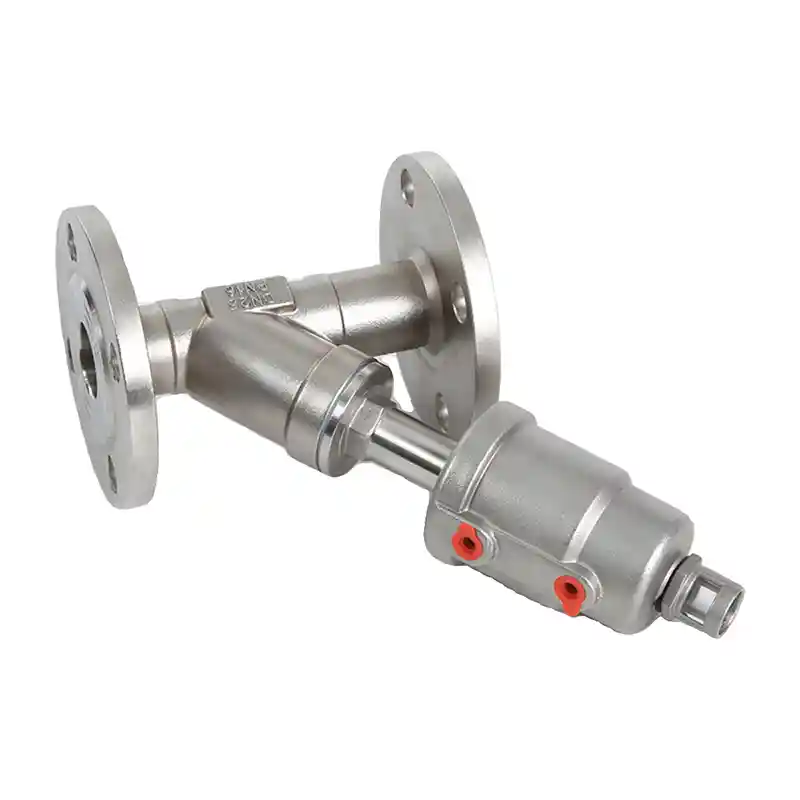
Flanged Pneumatic Angle Seat Valves
-
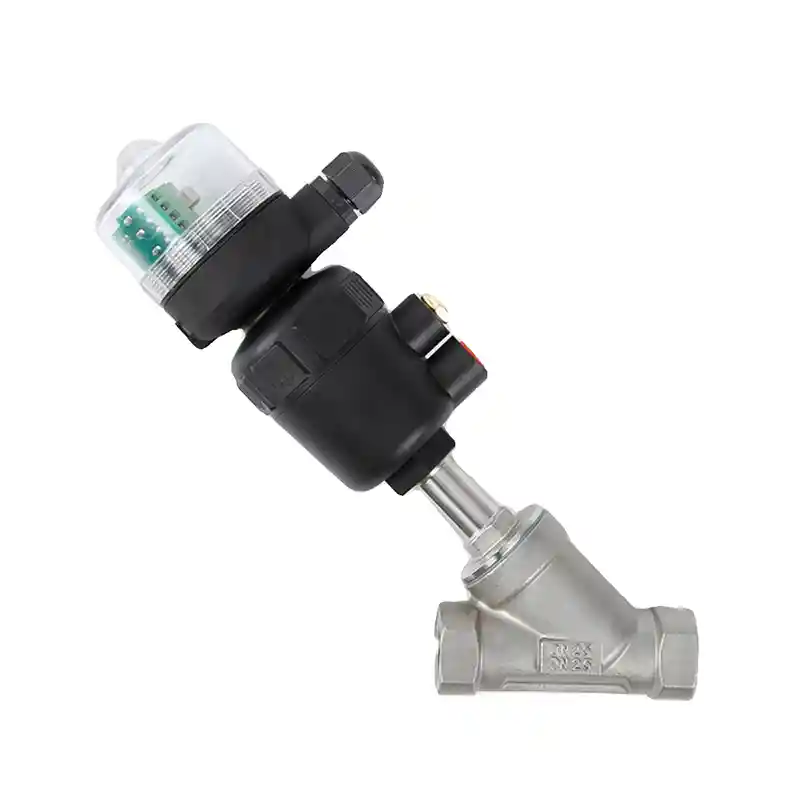
Pneumatic Angle Seat Valve with Signal Feedback
-
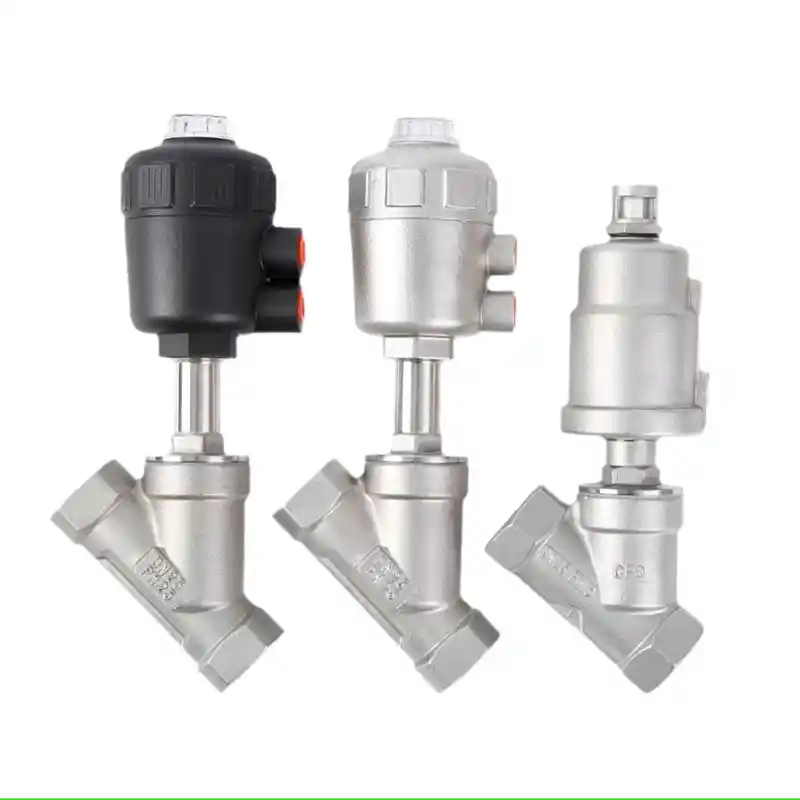
Internal Thread Pneumatic Angle Seat Valves
-
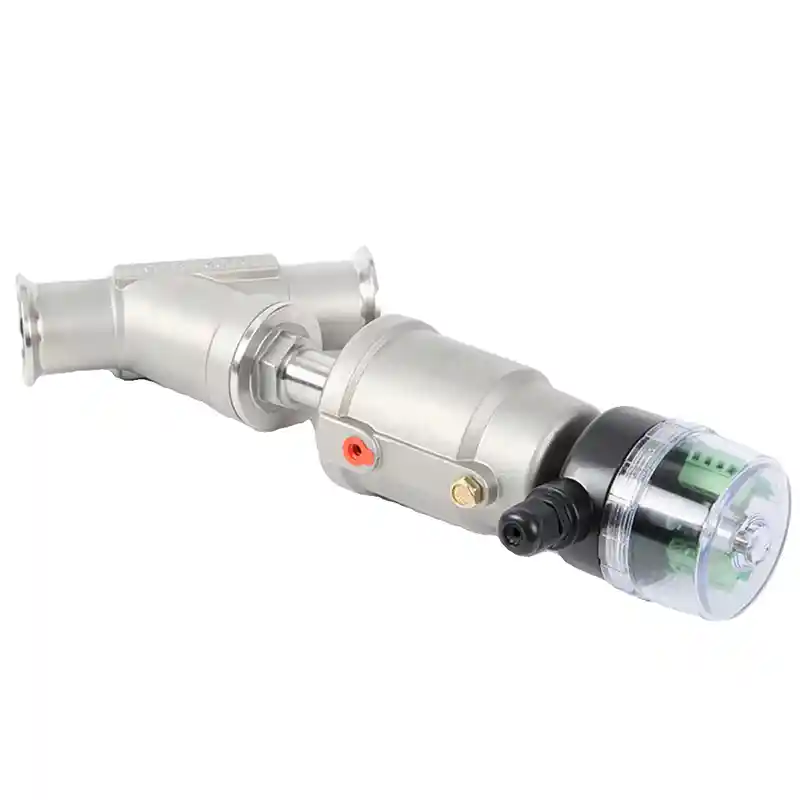
Pneumatic Angle Seat Valve with Magnetic Inductive Switch