


Ammonia Gas Pressure Regulator
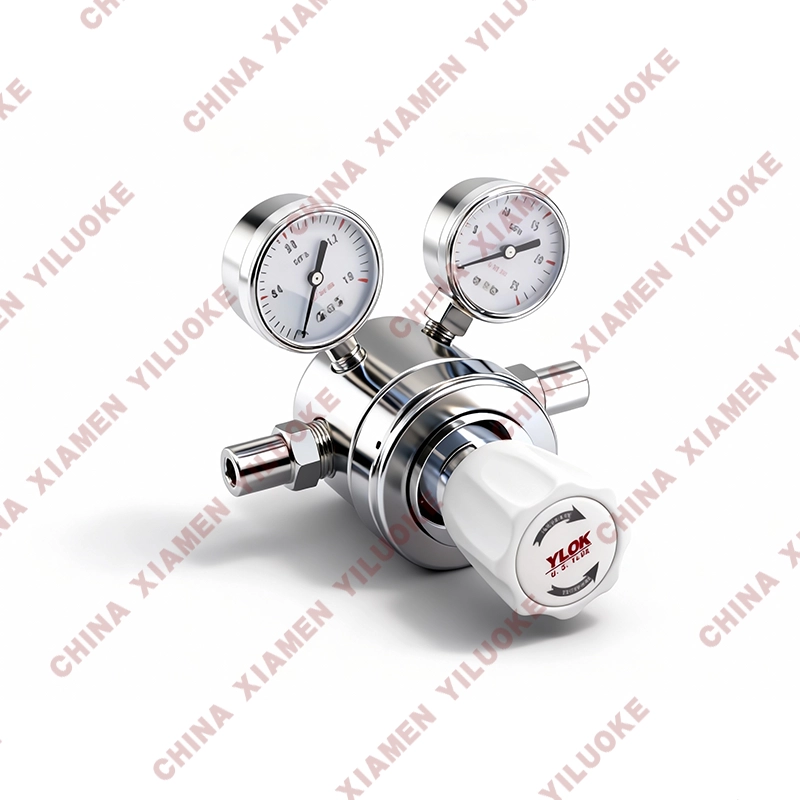
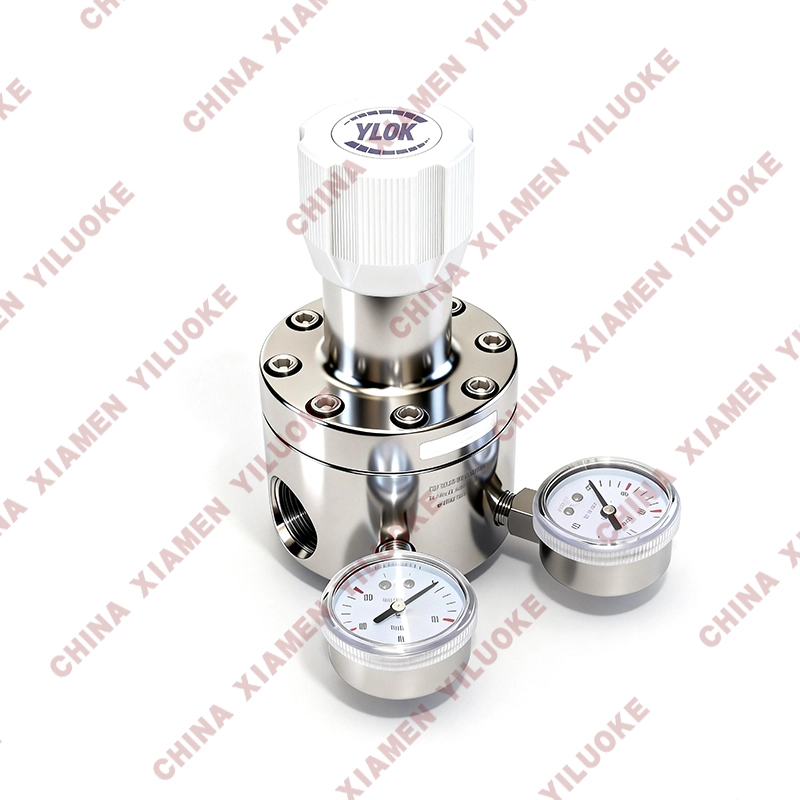
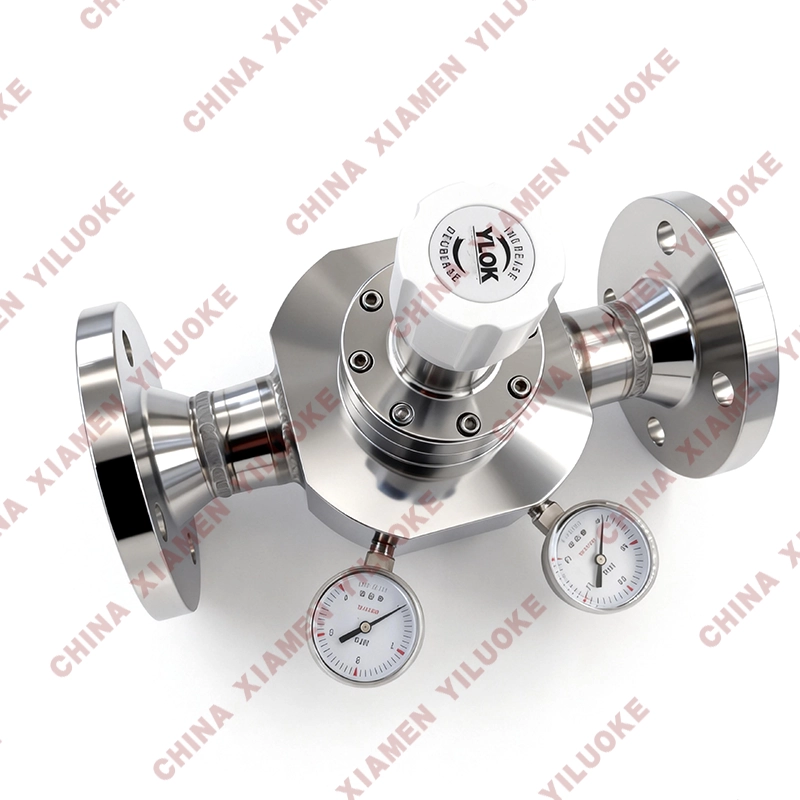
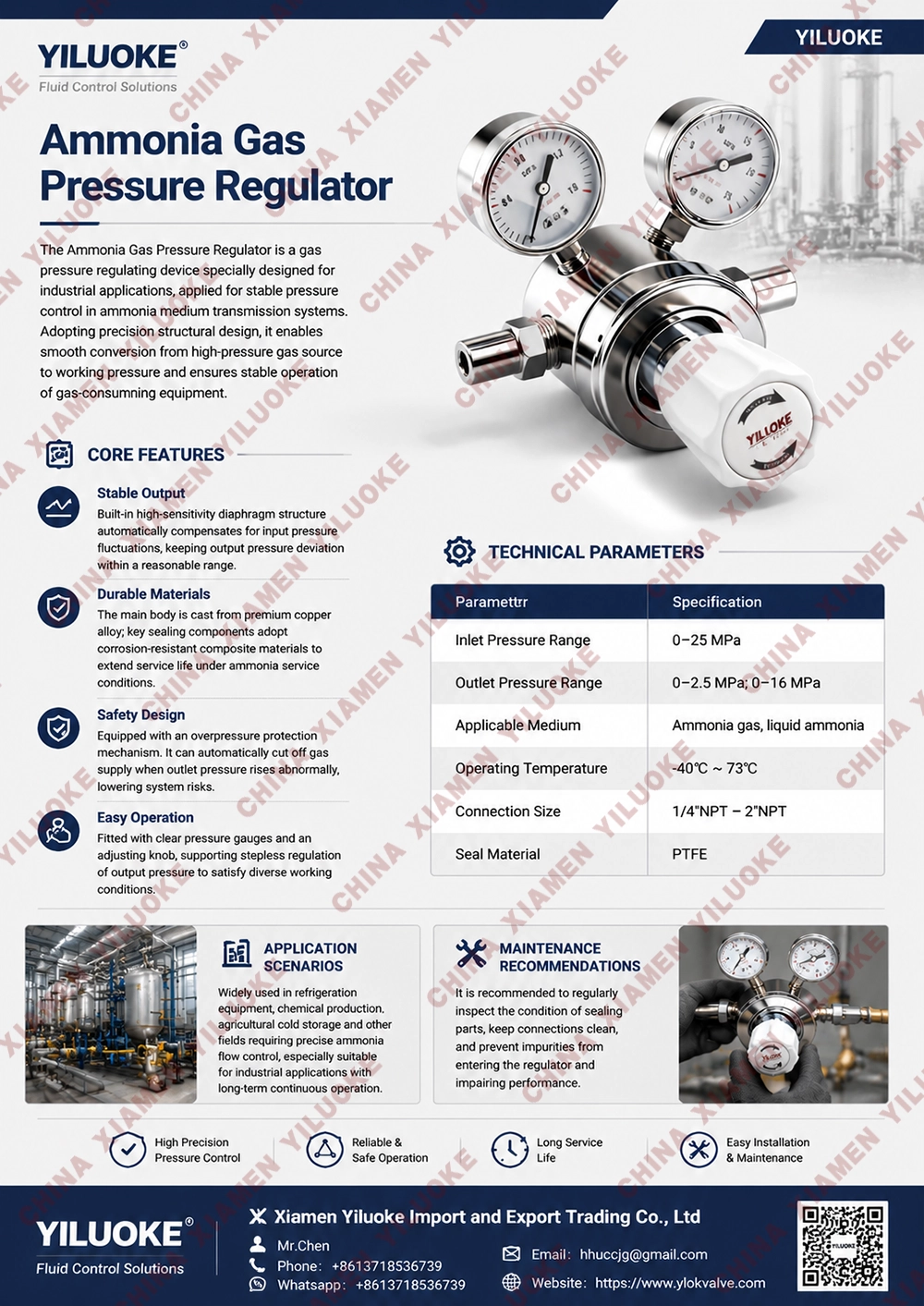
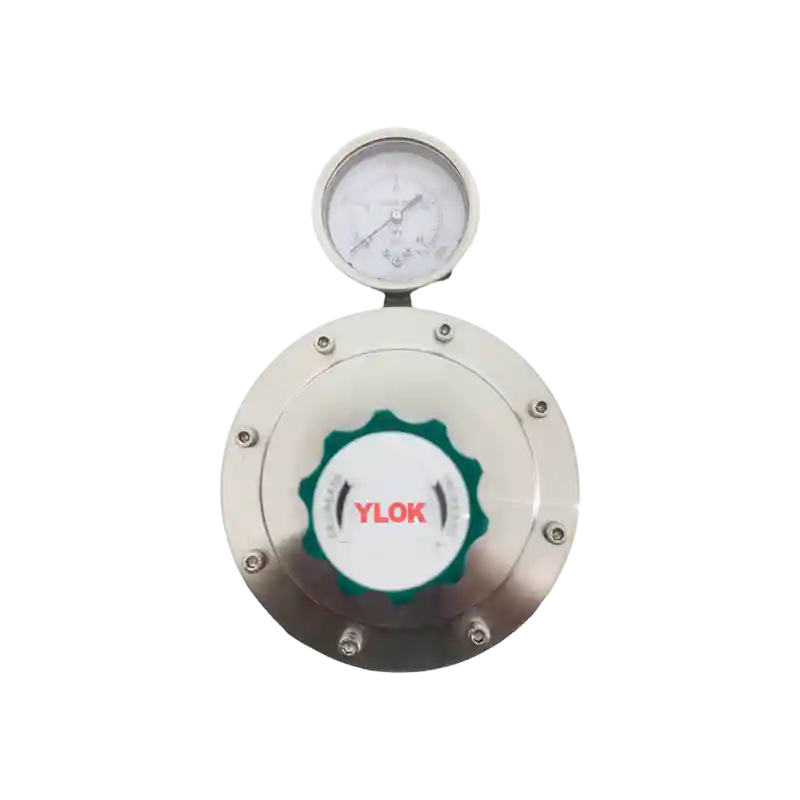
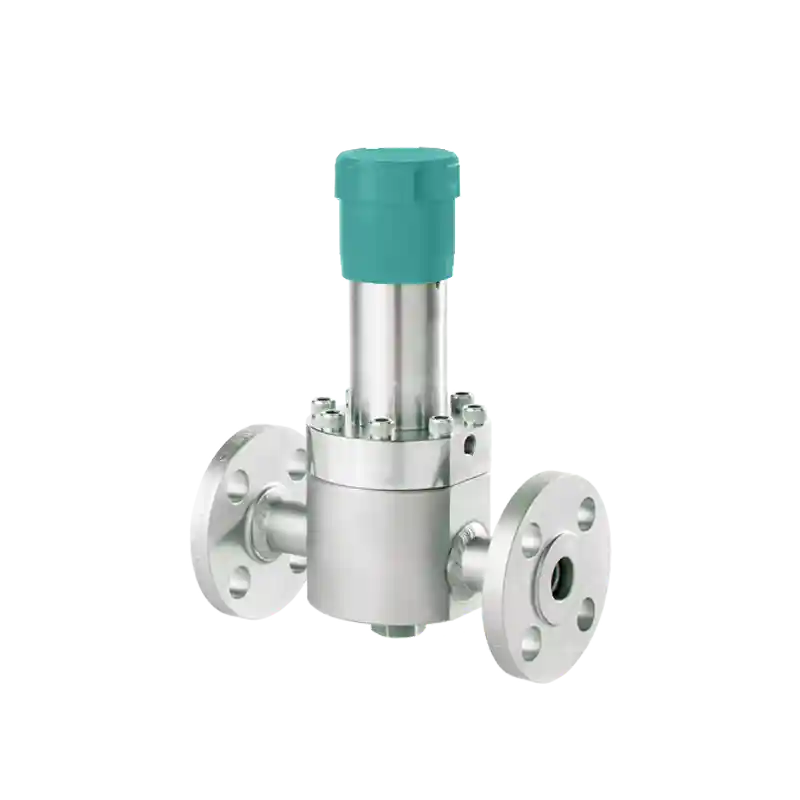
Ammonia Gas Pressure Regulator is fully machined from high-quality 316L stainless steel. It features exquisite appearance, reliable quality and stable performance, suitable for highly corrosive gas. It is used to reduce high-pressure gas from ammonia cylinders or pipelines to the required operating pressure range.
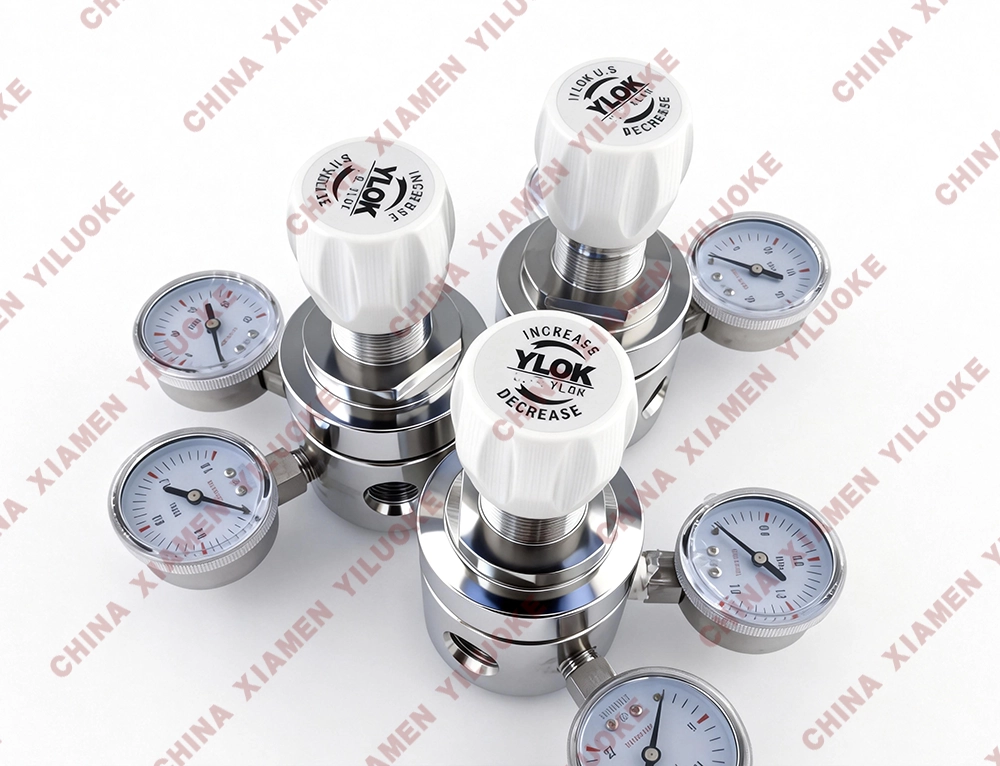
Technical Parameters of Ammonia Gas Pressure Regulator
Unit: mm
| Medium | Ammonia |
| Inlet Pressure | 0-25MPa |
| Adjustment Range | 0-1.0MPa, 0-1.6MPa, 0-2.5MPa, 0-10MPa, 0-16MPa |
| Nominal Flow Rate | 10m³/h-1200m³/h |
| Weight | 1.3kg-15kg |
| Port Size | 1/4”NPT-2”NPT |
| Material | 316L |
| Pressure Gauge | Dual pressure gauges |
Physical Properties of Ammonia
| Relative molecular mass | 17.031 |
| Density under standard condition | 0.7081g/L |
| Solubility in water | Extremely soluble, solubility ratio 1:700 |
| Odor | Pungent irritating odor |
Working Principle of Ammonia Gas Pressure Regulator
The high-pressure chamber of Ammonia Gas Pressure Regulator connects with the gas cylinder, and the low-pressure chamber serves as the gas outlet leading to the operating system. The reading on the high-pressure gauge indicates the gas pressure stored inside the cylinder. The outlet pressure shown on the low-pressure gauge can be controlled by the adjusting screw.
During operation, open the main valve of the gas cylinder first. Then turn the low-pressure pressure adjusting screw clockwise to compress the main spring, which transmits force to the diaphragm, spring pad and push rod to open the valve plug. High-pressure inlet gas passes through throttling and pressure reduction from the high-pressure chamber into the low-pressure chamber, then flows to the working system via the outlet. Rotate the adjusting screw to change the opening height of the valve plug, adjust the throughput of high-pressure gas and reach the required pressure value.
Operation Instructions for Ammonia Gas Pressure Regulator
(1) Ammonia Gas Pressure Regulator has multiple specifications for different application requirements. The inlet pressure is generally 3500psi, and various outlet pressure specifications are available.
(2) Before installing Ammonia Gas Pressure Regulator, confirm that its connection specification matches the connectors of the gas cylinder and application system. The regulator and cylinder adopt hemispherical surface connection, and the two surfaces fit tightly by tightening the nut. Keep both hemispherical surfaces clean to guarantee excellent air tightness. High-pressure gas can be used to blow off dust before installation. PTFE or other materials can be used as gaskets when necessary.
(3) Ammonia valves must not come into contact with grease to avoid fire accidents.
(4) After stopping operation, exhaust residual gas inside the regulator, then loosen the adjusting screw to prevent permanent deformation of elastic components under long-term compression.
(5) Ammonia Gas Pressure Regulator shall avoid impact and vibration, and must not be exposed to corrosive substances.
The operation methods and precautions for these ammonia valves are basically consistent. It should be noted that special ammonia valves are generally not applicable to other gases. To prevent misuse, some ammonia valves adopt special connectors for gas cylinders. For example, hydrogen and propane cylinders use left-hand threads (reverse threads). Special attention shall be paid during installation.
Leave Your Message
Products categories
-
High Pressure Regulator
-
Ammonia Gas Pressure Regulator
-
Micro-Pressure Back-Pressure Regulators
-
Stainless Steel Back-Pressure Regulators
-
Low-Pressure Back-Pressure Regulators
-
Hydrogen Back-Pressure Regulators
-
Gas Back-Pressure Regulators
-
Liquid backpressure regulators
-
High-Flow Backpressure Valves