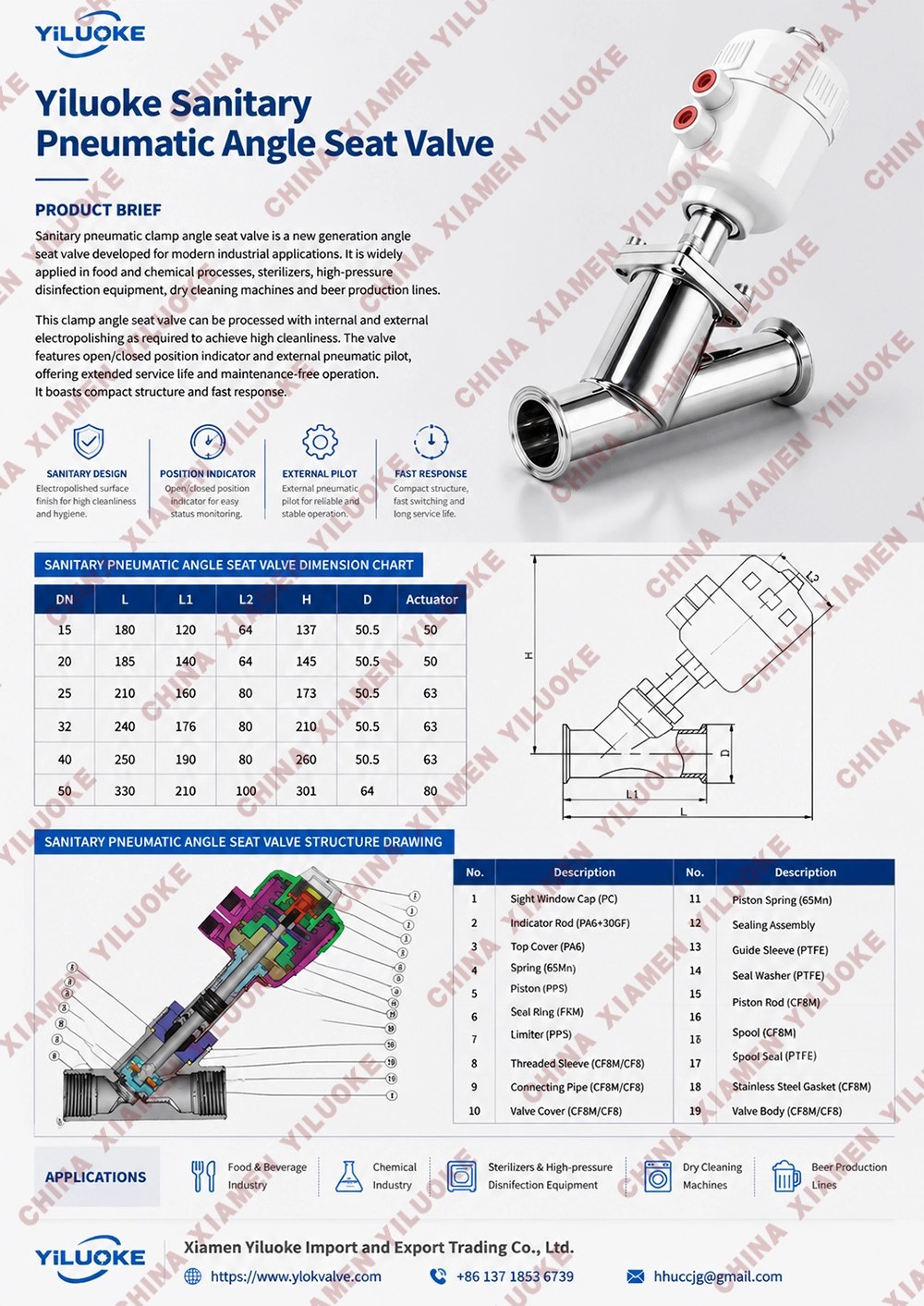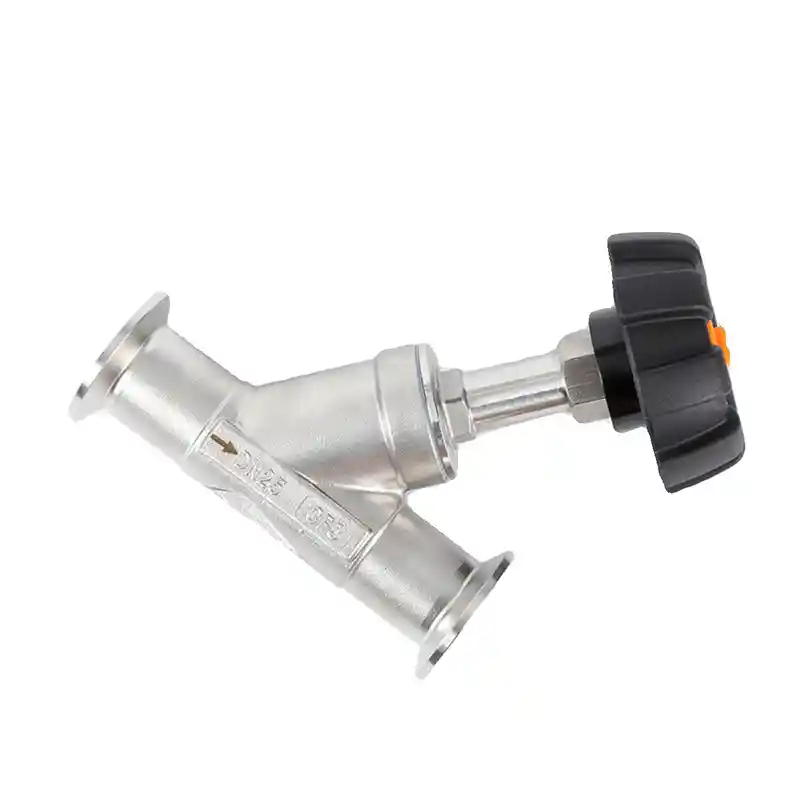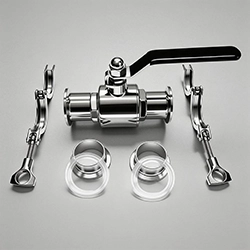


Sanitary Pneumatic Angle Seat Valve
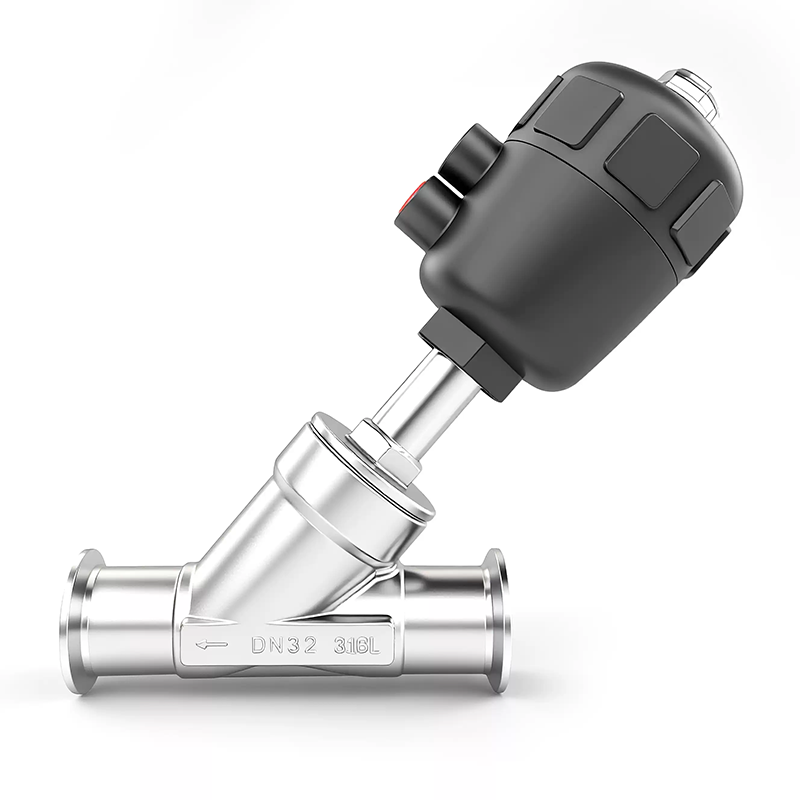
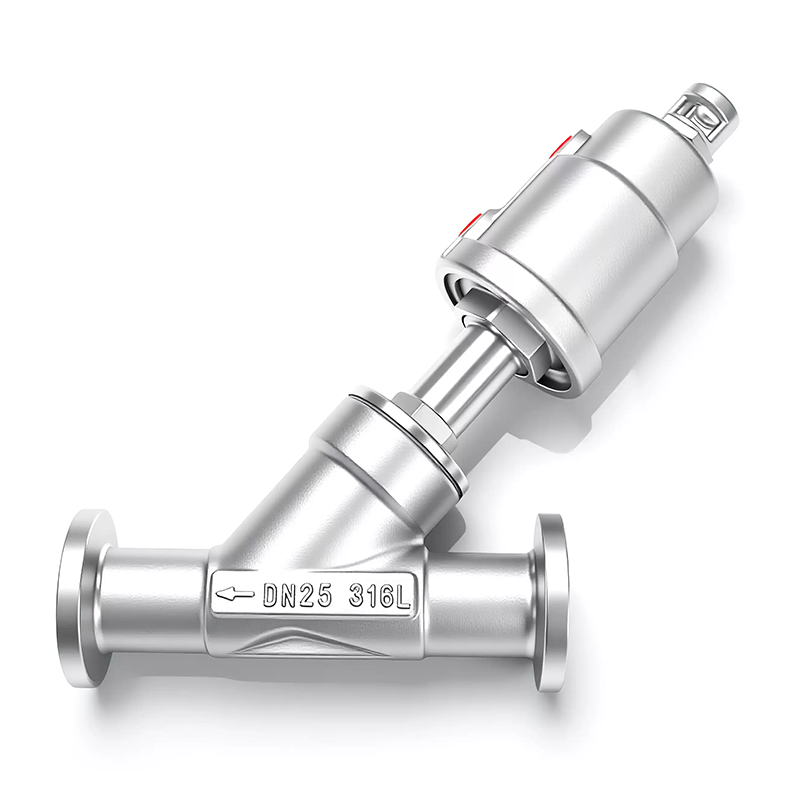
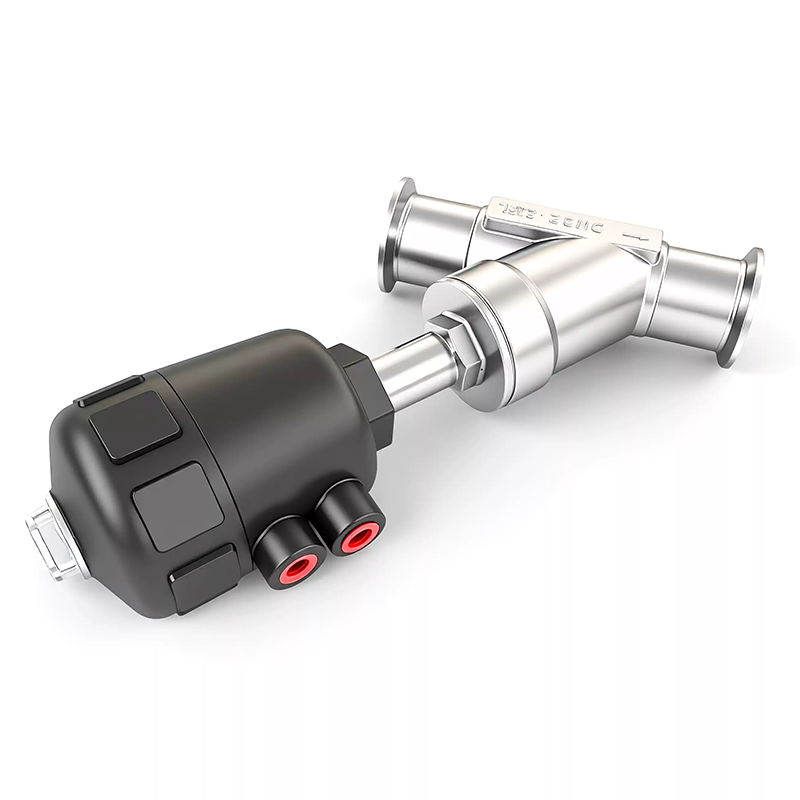
The sanitary pneumatic angle seat valve adopts clamp chuck connection and is made of 304 or 316L full stainless steel. Both internal and external surfaces of the valve body are processed with mirror clean polishing. The pneumatic actuator of this series angle seat valve can be selected with PA material or full stainless steel material. The function can be equipped with single-acting or double-acting normally closed and normally open types. The sealing assembly is made of imported RPTFE material, which is suitable for sanitary pipeline media such as liquid and gas under vacuum, normal pressure and medium pressure.
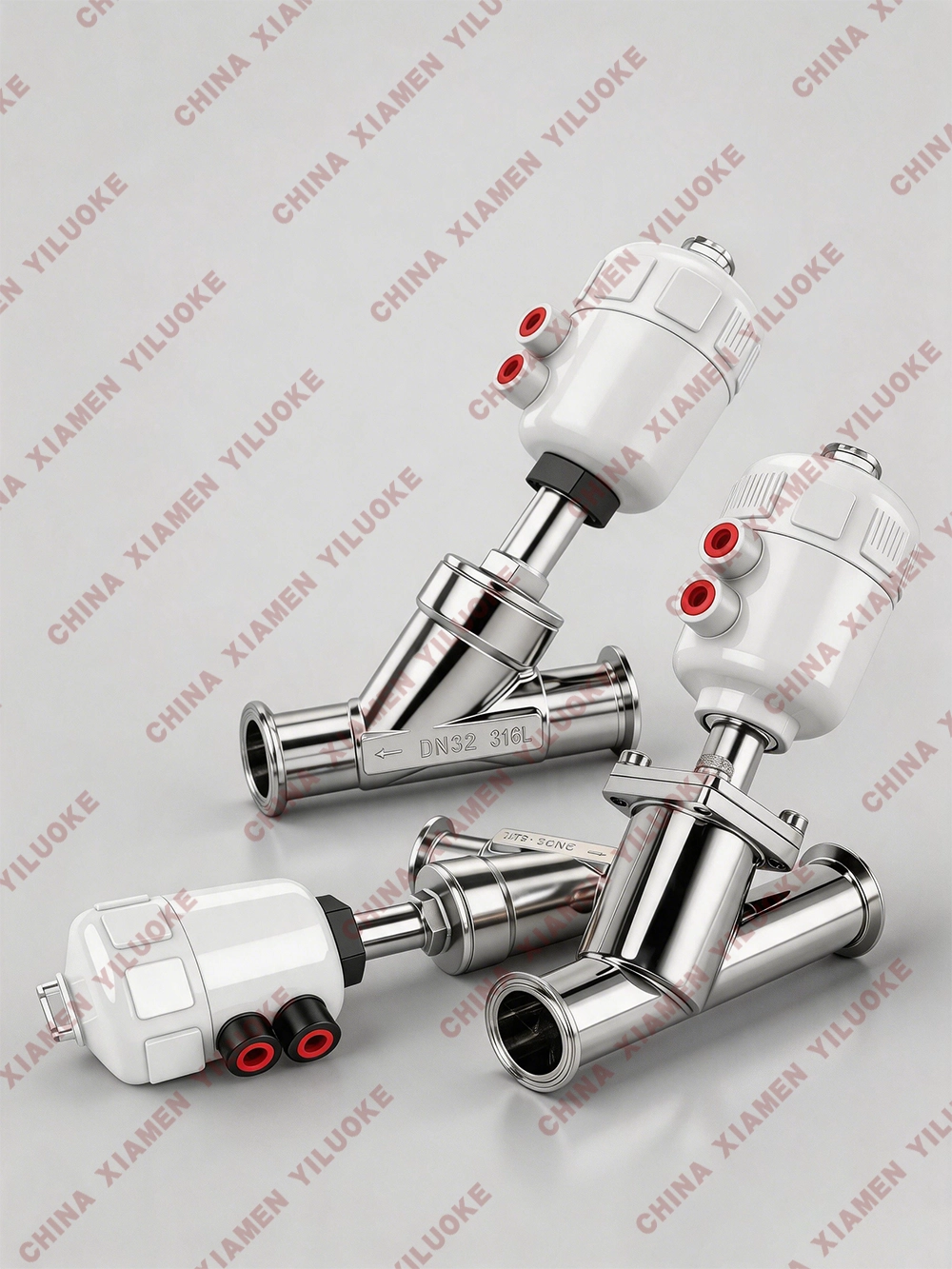
Product Features
Sensitive response and quick opening and closing;
Working mode can be selected as normally closed or normally open;
Large flow rate, small flow resistance and no water hammer;
Y-type design, increasing flow rate by 30%;
Ultra-long service life of the sanitary angle seat valve;
Valve stem with automatic correction, self-lubrication and maintenance-free.
Technical Parameters
| Nominal Diameter of Interface | DN8-DN100 (1/4"-4") |
| Connection Mode | Threaded, Welded, Quick-Install, Flanged; Consult for other customized modes |
| Valve Body | CF8, CF8M, SS316L, 2205 |
| Valve Seat Sealing | PTFE, RPTFE, PEEK |
| Valve Stem Sealing | PTFE, FKM, RPTFE |
| Nominal Pressure (Working Pressure) | 0-16bar (0-232Psi); Optional vacuum as low as -0.9bar |
| Ambient Temperature | -10°C-80°C |
| Applicable Media | Water, neutral gases or liquids, alcohol, oil, fuel, steam, organic solvents, acid-base solutions, etc. |
| Medium Temperature | -10°C-180°C (PTFE Normal Temperature Type); 25°C-220°C (RPTFE High Temperature Type) |
| Maximum Viscosity | 600cst (mm²/s) |
| Valve Leakage Class | DIN EN 12266 Class A |
Product Applications
The sanitary pneumatic angle seat valve can also be matched with switch signal feedback devices and intelligent regulating positioners, suitable for fully automated production line control. It is mainly used in beverage processing, brewing, oil refining, cosmetics, biopharmaceuticals and chemical industries.
Installation Instructions for Sanitary Pneumatic Angle Seat Valve
1. The pipeline must be clean and free of contaminants.
2. Install as required. It is recommended to mount the actuator upward. Pay attention to the medium flow direction.
3. Align the valve precisely with the pipeline during connection. Do not remove the actuator unless specially requested by customers.
4. Cut off the fluid supply and control air source, and release pressure inside the pipeline system before opening or maintaining the angle seat valve.