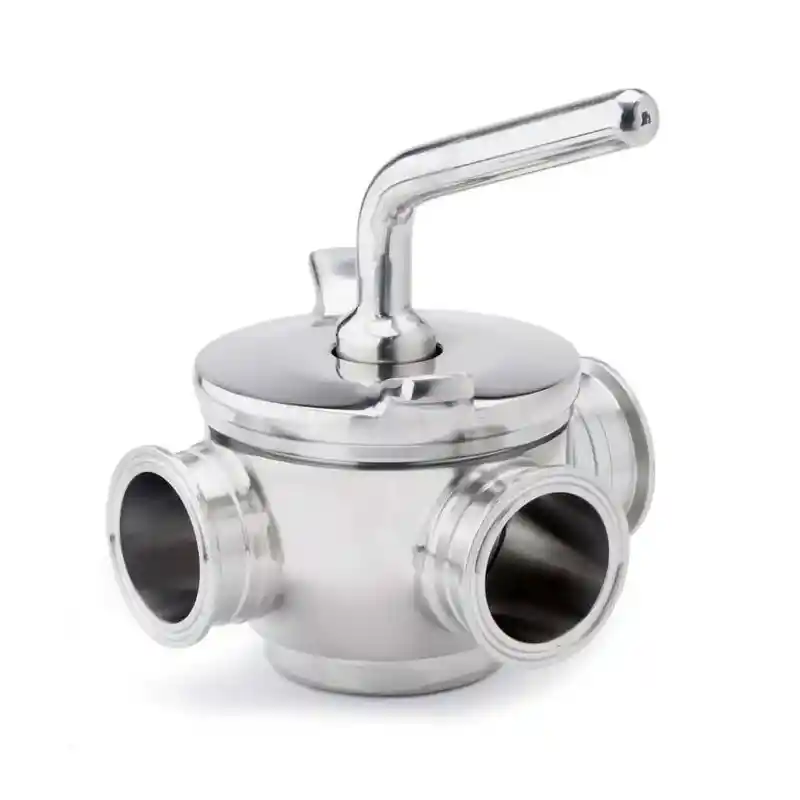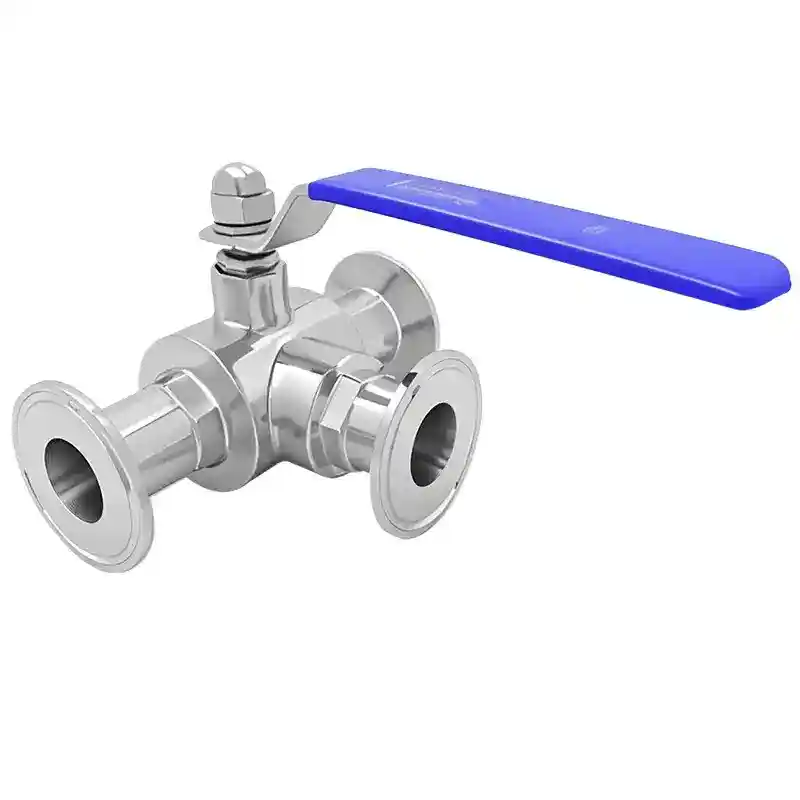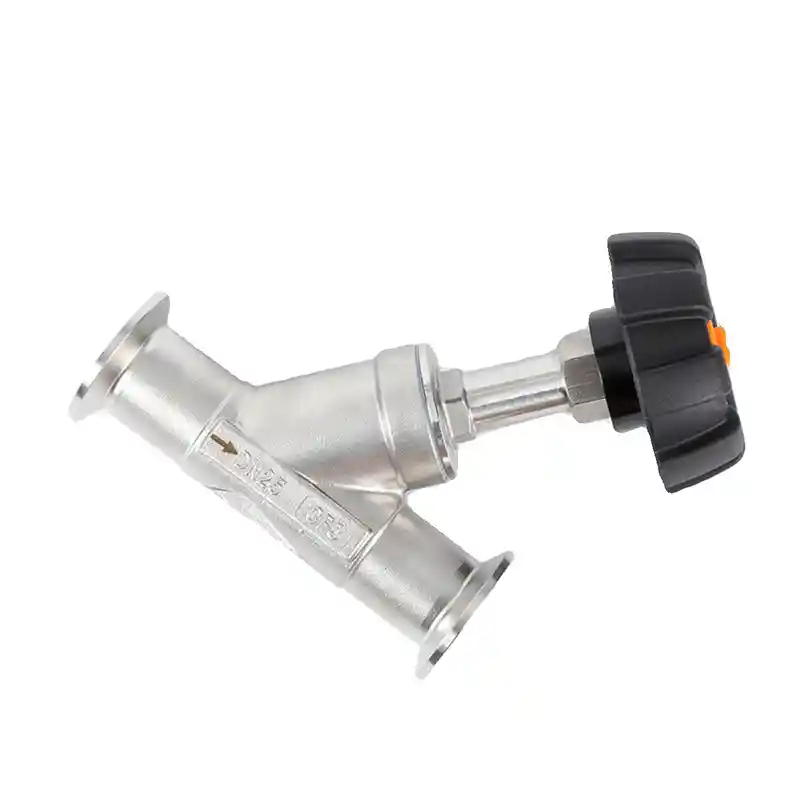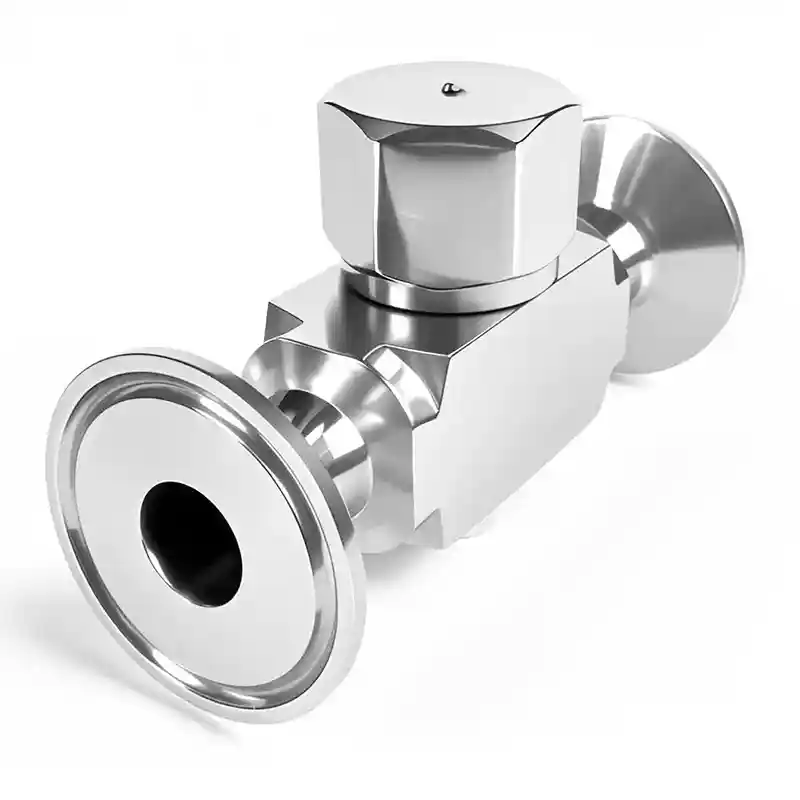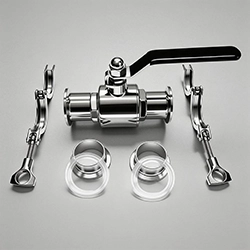


Sanitary solenoid valves with clamp connections
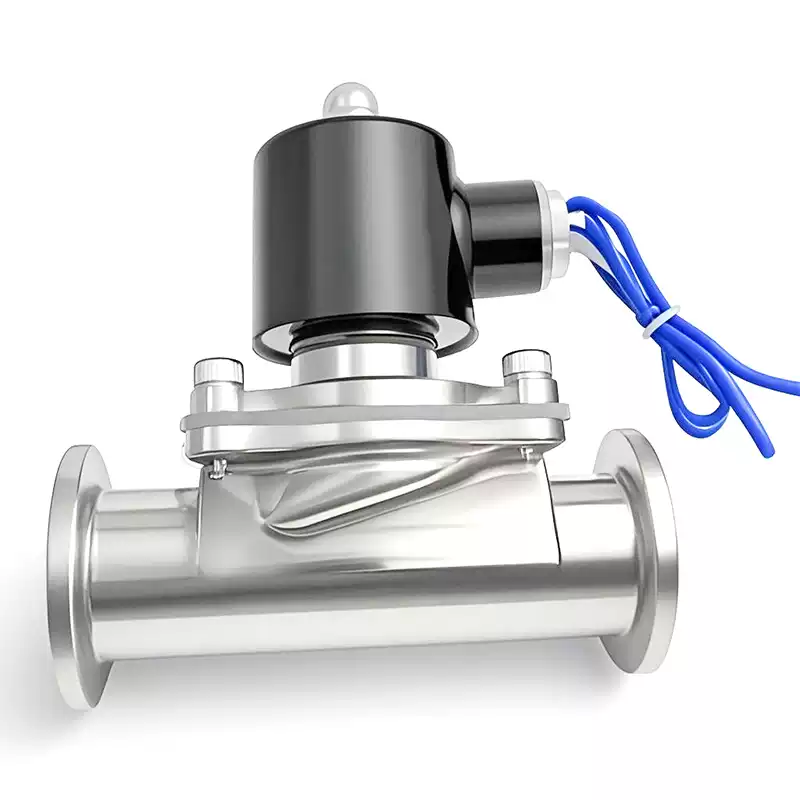
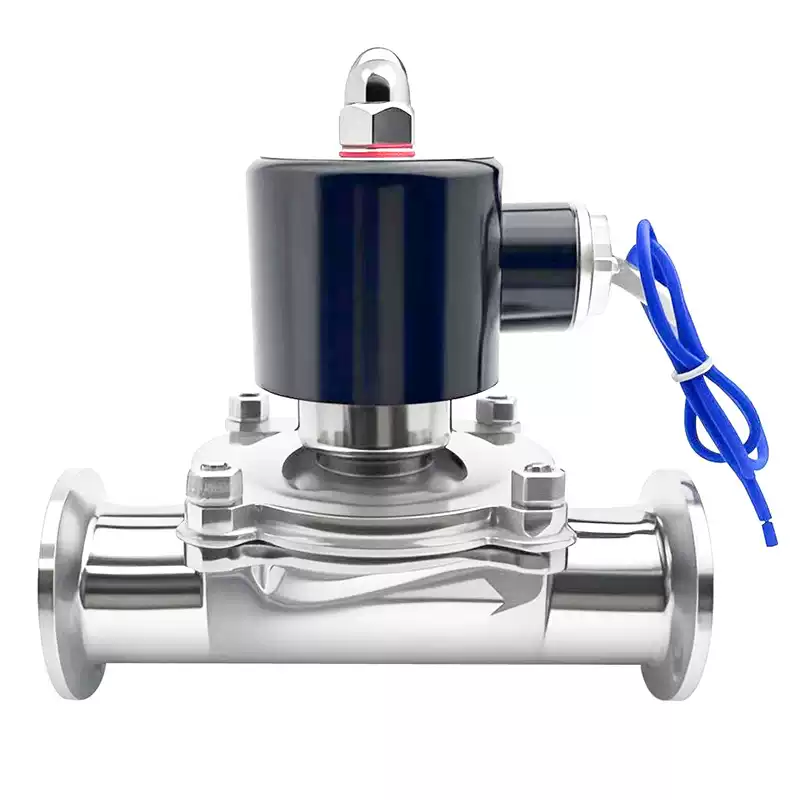
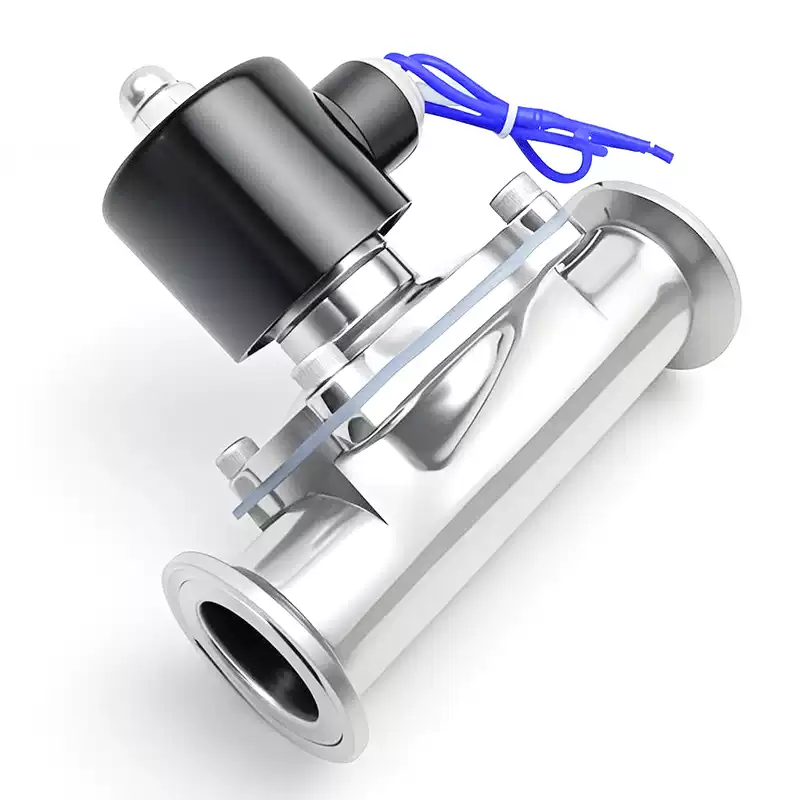
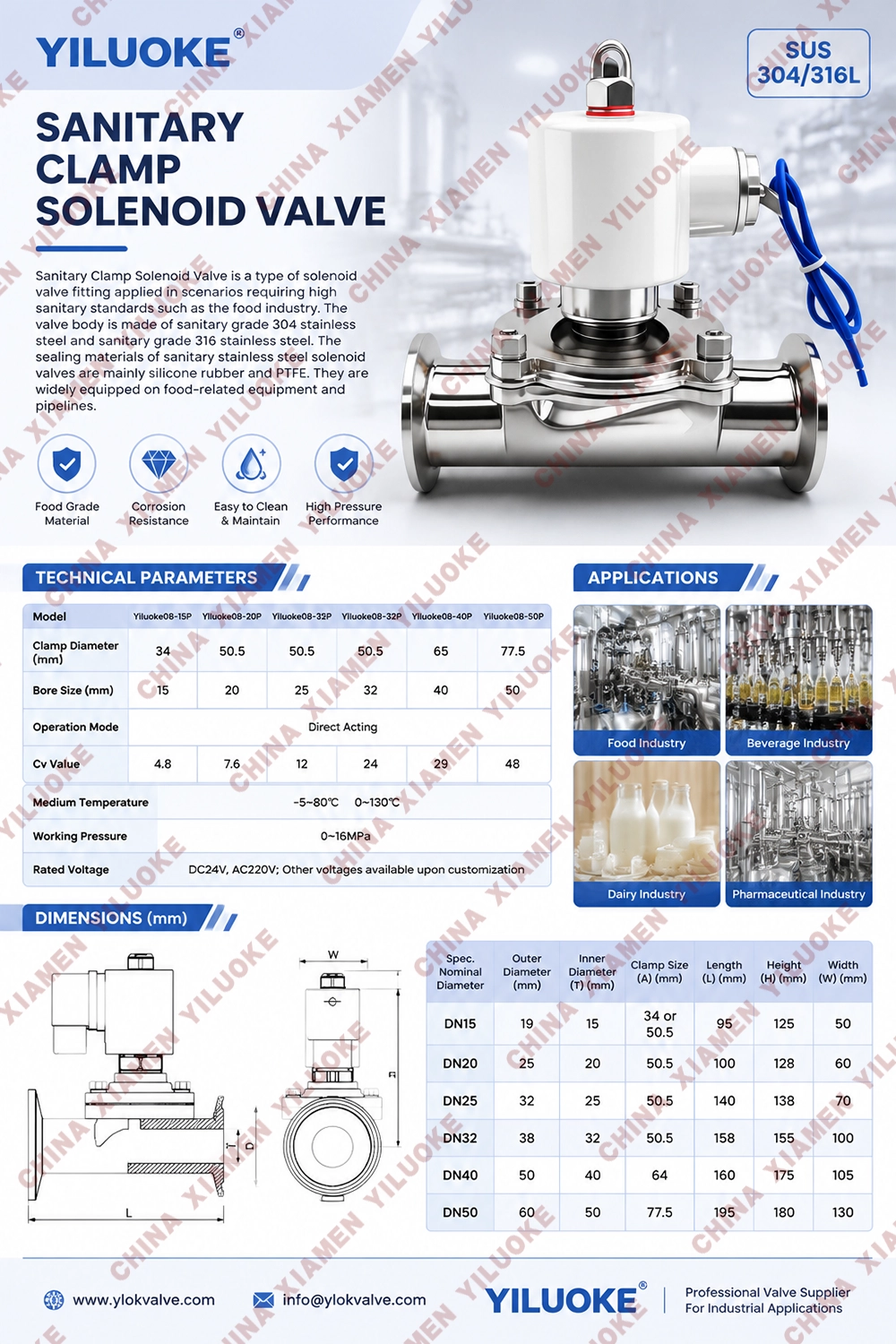
Sanitary solenoid valves with clamp connections refer to valve fittings used in places with high hygiene level requirements such as pharmaceutical and food industries. The sanitary solenoid valve with clamp connections adopts a non-heating coil with small power, undergoes internal and external polishing and sterilization treatment, and is a quick assembly-disassembly valve, making valve opening and maintenance fast and easy. It has strong oxidation resistance and corrosion resistance. The valve body material used for the sanitary solenoid valve with clamp connections is 304 stainless steel and 316 stainless steel, and its sealing material mainly adopts silicone rubber and polytetrafluoroethylene (PTFE), which is sturdy and durable, suitable for working in harsh environments.
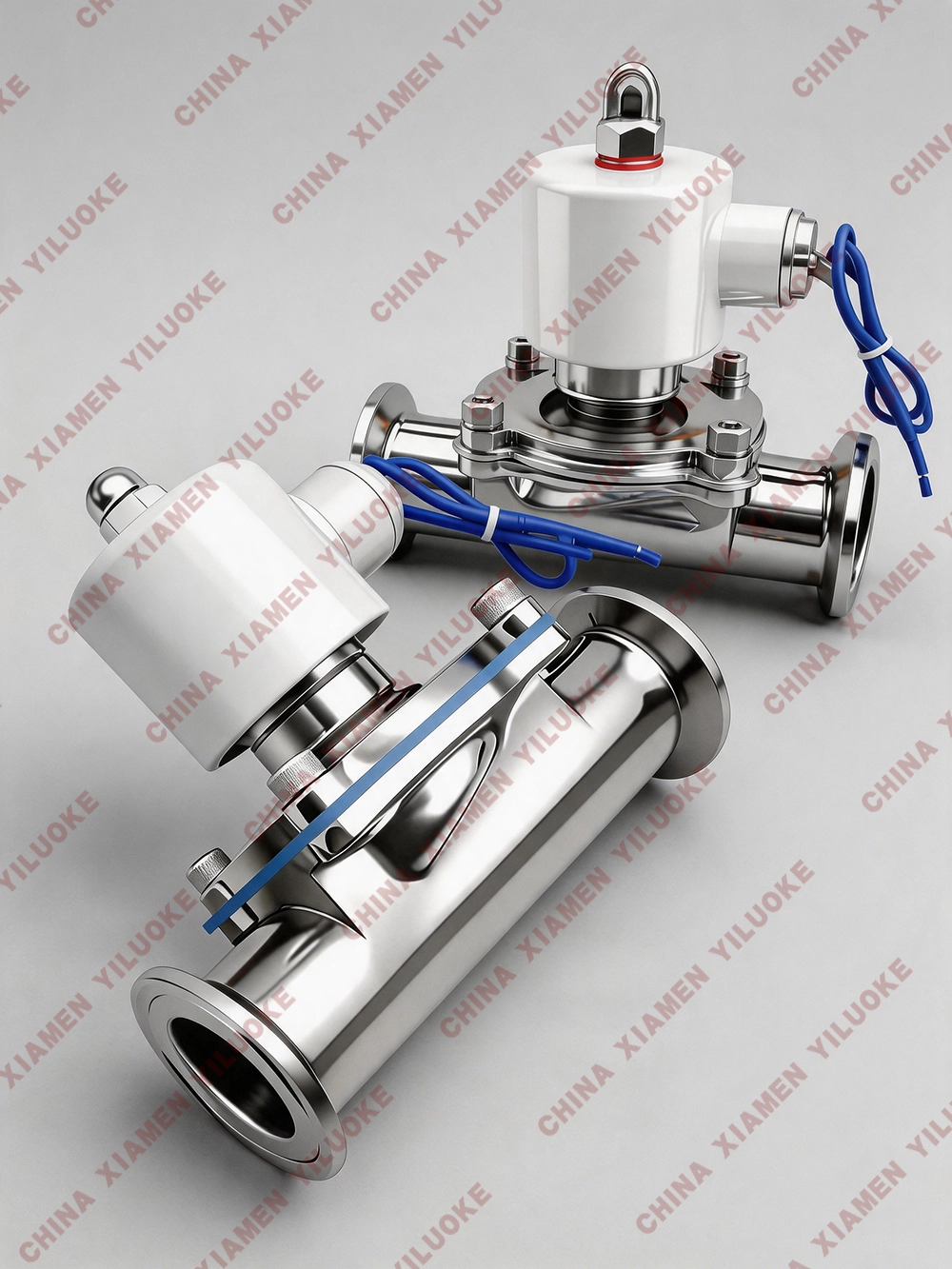
Technical Parameters of Sanitary Clamp Solenoid Valve
| Nominal Diameter | DN15-DN50 |
| Principle Structure | Step-by-Step Direct-Acting Type |
| Valve Body Material | SS304, SS316 |
| Sealing Material | NBR, FKM, PTFE |
| Applicable Fluids | Gas, liquid; applied in food and pharmaceutical industries |
| Power Supply Voltage | AC220V, DC24V, DC12V; other voltages can be customized |
| Fluid Viscosity | ≤22mm²/S (can be customized for below 50mm²/S) |
| Connection Mode | Clamp |
| Installation Mode | Horizontal, coil upward (vertical installation is prohibited) |
Working Principle of Sanitary Clamp Solenoid Valve
The sanitary solenoid valve with clamp connections adopts a combined principle of direct-acting and pilot-operated. When there is no pressure difference between the inlet and outlet, after energization, the electromagnetic force directly lifts the pilot valve and the main valve closing part upward in sequence, and the valve opens. When the pneumatic pressure difference is reached between the inlet and outlet, after energization, the electromagnetic force acts on the pilot valve, the pressure in the lower chamber of the main valve rises, and the pressure in the upper chamber drops, thereby pushing the main valve upward by using the pressure difference; when de-energized, the pilot valve pushes the closing part downward by using spring force or medium pressure to close the valve.
Normally Closed Type: Opens when energized, closes when de-energized; Normally Open Type: Closes when energized, opens when de-energized
Sanitary Clamp Solenoid Valve Installation and Maintenance
1. On-site installation shall comply with relevant provisions of "Electrical Safety Regulations" for explosive hazardous areas.
2. The solenoid coil shall be installed firmly. The coil is equipped with a 3-pin plug; the upper terminal is for ground wire, and the left and right terminals are for working wires.
3. Clean the pipeline thoroughly before installing the solenoid valve.
4. When installing the valve, ensure the arrow marked on the valve body is consistent with medium flow direction.
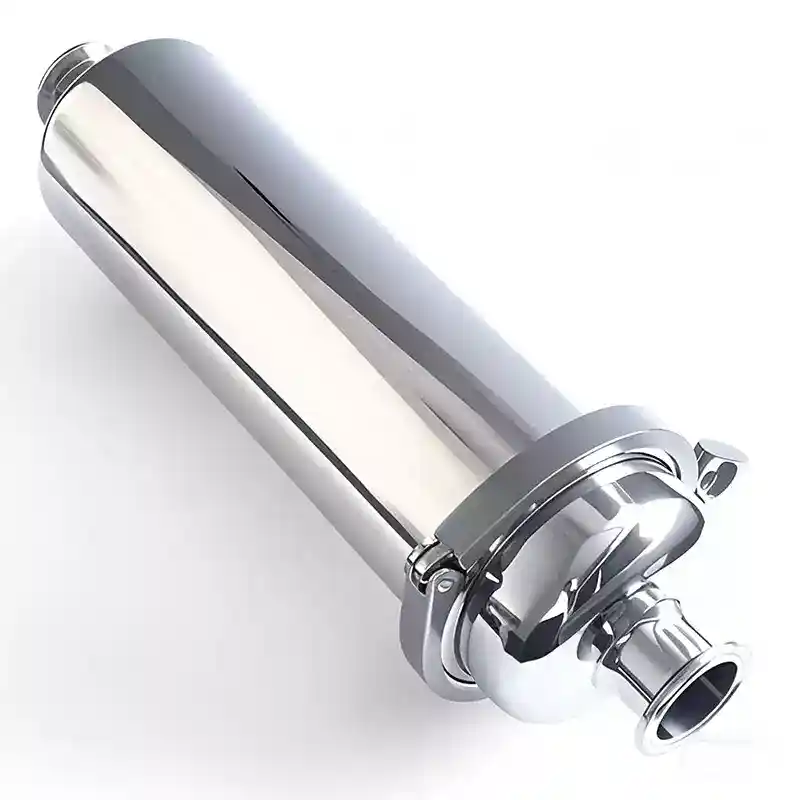
5. If impurities exist in the medium, install a filter with mesh ≥80 mesh at the upstream of the valve inlet.
6. Vertical installation is recommended (coil facing upward).
7. Electrical components of the solenoid valve shall not be disassembled by non-electrical personnel.
8. Check carefully whether valve specifications match site requirements before installation, including voltage, temperature, medium, pressure and other parameters.
Troubleshooting for Sanitary Clamp Solenoid Valve
1. Solenoid valve fails to work after power-on
a Coil burnout or short circuit — Replace the coil
b Low supply voltage — Adjust voltage within the range of -10%~+10%
c Medium pressure beyond operating range — Adjust pressure or select valve with suitable pressure rating
2. Solenoid valve cannot work normally after power-off
The spool is stuck by impurities and fails to reset — Disassemble, clean and reassemble by professional technicians.
3. Excessive leakage
a Damaged or aging sealing parts — Replace sealing elements
b Foreign matters inside valve body — Remove impurities