


Triple Offset Butterfly Valve
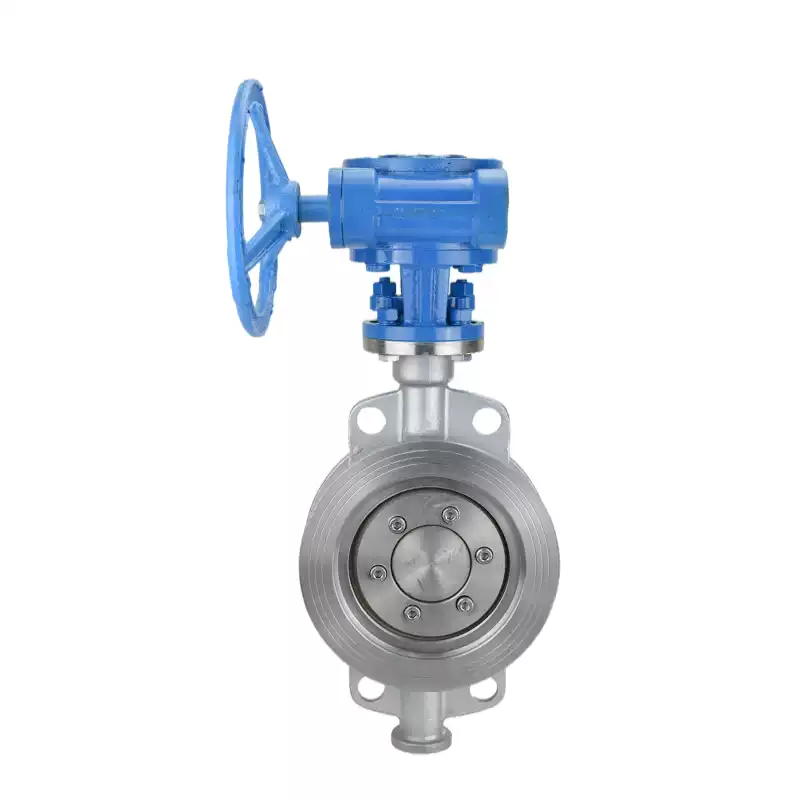
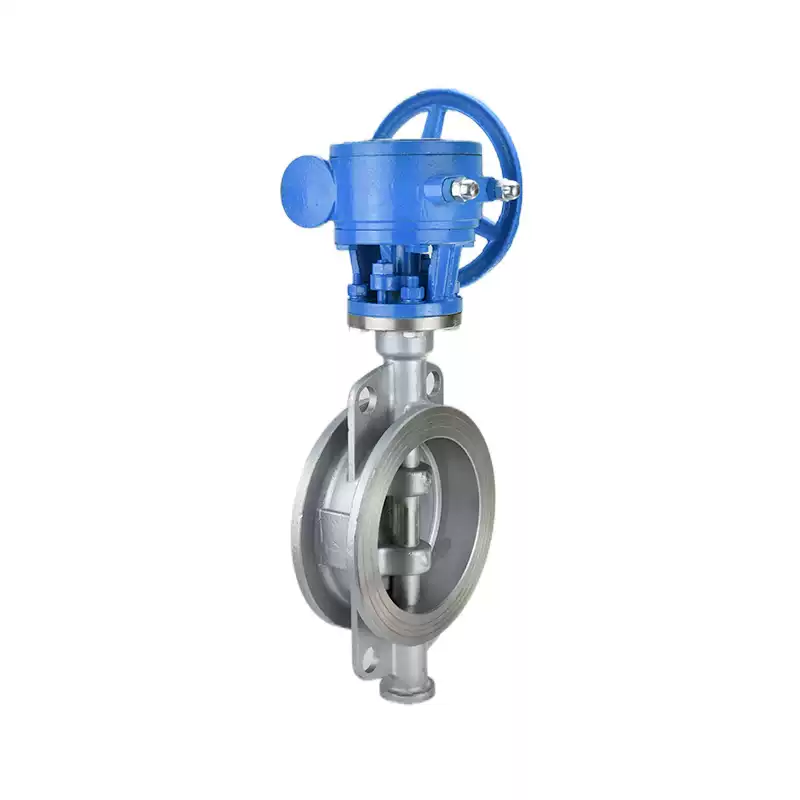
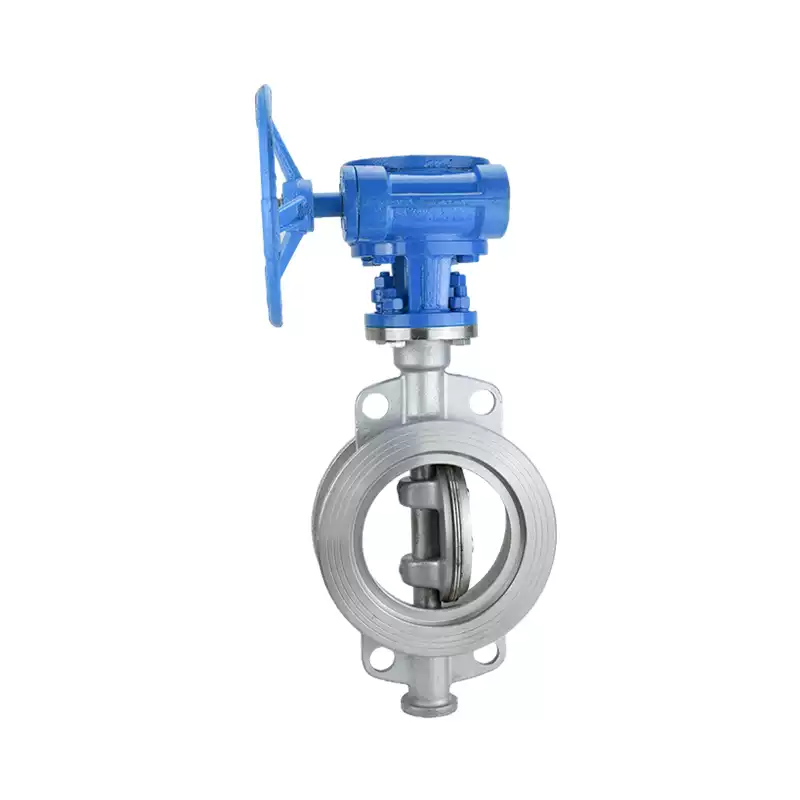
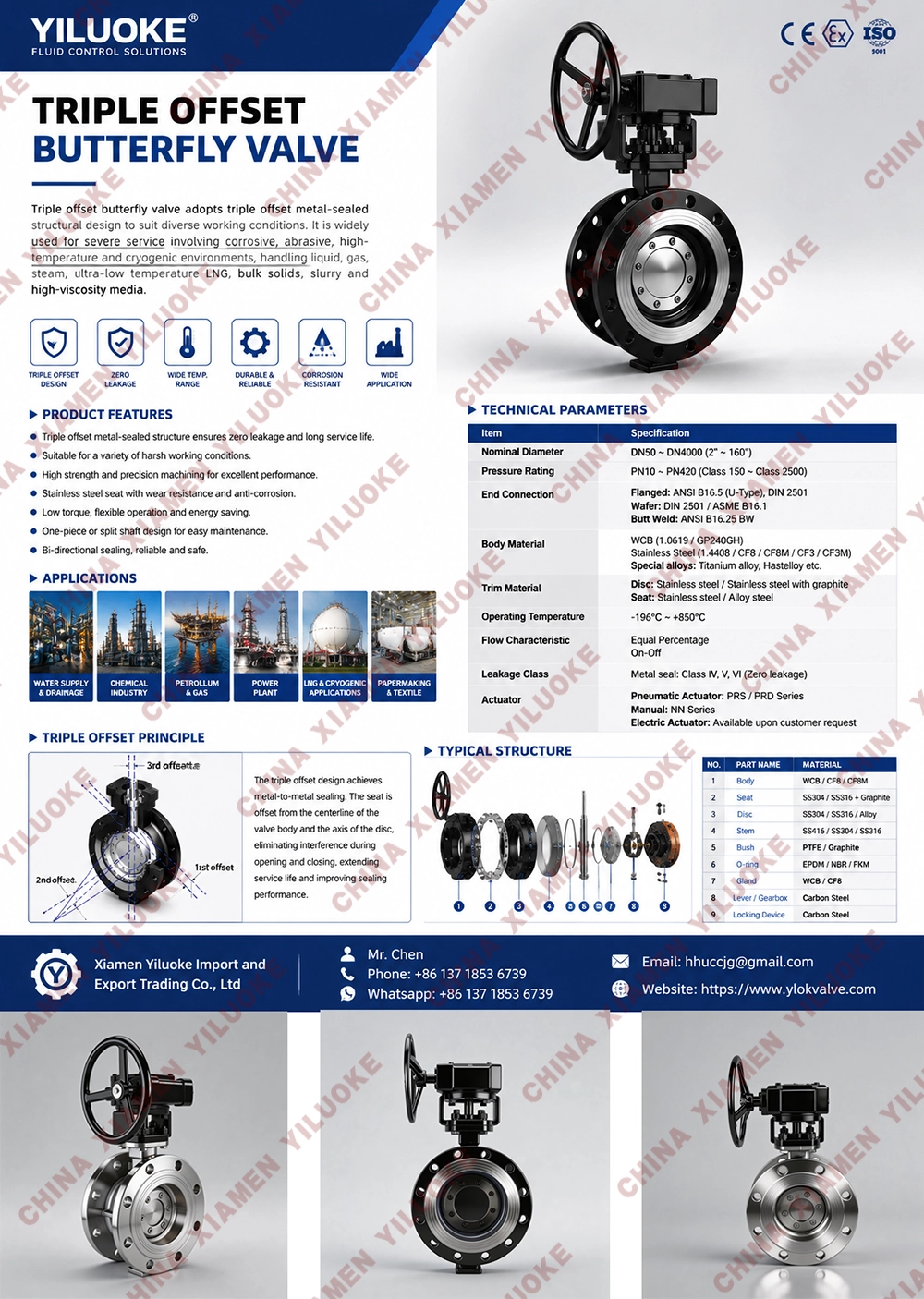
Triple Offset Butterfly Valve is a metal hard-sealed butterfly valve adopting a triple-eccentric structural design. It features three core eccentric structures: eccentric valve shaft, eccentric conical disc and eccentric valve seat. This unique structure enables the valve to adapt to high-temperature, high-pressure and harsh working conditions, delivering stable and reliable sealing performance far superior to conventional concentric butterfly valves.
Different from ordinary concentric butterfly valves, the triple offset structural design abandons the traditional concentric matching mode of disc and valve seat, effectively eliminating friction between sealing surfaces and adapting to more complex industrial pipeline operating environments.
Sealing Principle
When the valve is fully closed, the disc and valve seat form a non-concentric matching structure relying on the triple-eccentric design. The sealing surfaces only make contact and produce compression force at the final closing stage, avoiding continuous sliding friction during opening and closing. This geometric compression sealing method ensures ultra-tight and reliable sealing effect.
High-Temperature and High-Pressure Applications
Due to their metal-to-metal sealing, Triple Offset Butterfly Valves are usually used in demanding high-temperature and high-pressure working conditions — temperature ranging from -196℃ to 650℃, pressure ranging from PN10 to PN160 (ANSI CL 150~CL900), such as in the chemical, petroleum and natural gas industries.
Technical Parameters
| Item | Specification |
|---|---|
| Product Name | Triple Offset Butterfly Valve |
| Actuation Methods | Worm Gear, Pneumatic, Electric Actuated, Manual |
| Connection Type | Wafer Type, Flanged Type |
| Structure Type | Triple Offset |
| Sealing Structure | Metal Hard Seal |
| Pressure Range | 1.6MPa - 4.0MPa |
| Nominal Diameter | DN50 - DN1400 |
| Common Materials | WCB, A105, 304, 316, CF8, CF8M, etc. |
Design Standards
| Item | Specification |
|---|---|
| Structure Type | Triple Offset |
| Actuation Mode | Manual, Worm Gear Transmission, Electric |
| Design Standards | GB/T 12238, API 609, MSS SP-68 |
| Face-to-Face Dimension | GB/T 12221, ASME B16.10, API 609, MSS SP-68 |
| Flange Standard | JB/T 79, JB/T 82, GB/T 9115; ASME B16.5, ASME B16.47 |
| Test & Inspection | JB/T 9092, API 598 |
Note: Dimensions of valve connecting flanges and butt-weld ends can be customized according to customer requirements.
Working Principle
The working principle of the Triple Offset Butterfly Valve is based on its unique three-eccentric geometric structure, which realizes friction-free switching and zero-leakage sealing during operation. Structural Design: Triple Offset Construction The valve stem axis deviates from both the disc center and the valve body channel center, and the sealing surface presents a conical inclined geometric relationship. This structural feature forms a wedge-shaped compression sealing mechanism between the disc and the seat. The outer edge of the valve disc is processed into an inclined conical surface, matching the inner conical surface of the valve seat to form an elliptical sealing contact band. When the valve is closed, asymmetric vertical compression force is generated to achieve tight sealing, and the sealing performance is further improved with the increase of medium pressure.
Operation Mechanism
- Open Position: The disc separates from the seat for fluid passage. Thanks to the eccentric design, the disc lifts away from the seat during opening to reduce friction and operating torque.
- Closed Position: The disc rotates 90° to contact the seat, forming a wedge structure and completing sealing under torque.
- Flow Regulation: As the disc rotates open, the flow area gradually expands to lower fluid resistance and increase flow coefficient, realizing flow adjustment.
Technical Advantages
- Superior Sealing Performance: The metal-to-metal hard seal maintains stable tightness under high temperature and high pressure.
- Low Friction Operation: Eccentric structure greatly reduces operating torque and extends service life.
- Self-locking Feature: The disc is pressed tighter under medium pressure when closed to prevent over-travel.
Structural Design of Three Offsets
1. 1st Offset: Axis offset from sealing surface center
The valve stem is positioned behind the sealing surface centerline. This enables the disc to quickly disengage from the seat upon opening and eliminates unnecessary friction.
2. 2nd Offset: Axis offset from pipeline centerline
The valve stem axis slightly deviates from the pipeline center. This generates a cam effect during disc rotation and further optimizes the opening track.
3. 3rd Offset: Unique conical sealing surface (geometric eccentricity)
This is the core feature of triple offset butterfly valves. The cross-section of the sealing pair is inclined conical instead of cylindrical or spherical. The sealing surfaces only make contact at the final moment of closing. The disc engages the seat via compression rather than sliding friction.
Product Advantages
- True Zero Leakage: Sealing is achieved by geometric compression instead of rubber elastic deformation. It can reach bubble-tight shutoff even under high pressure.
- Long Service Life with Minimal Friction: The tri-eccentric design prevents continuous mechanical friction between disc and seat during opening and closing, extending service life and cutting maintenance costs.
- Wide Range of Operating Conditions: Metal hard seal structure supports service from cryogenic -29°C up to temperatures exceeding 600°C.
Application Fields
Benefiting from the sophisticated conical structural design, triple offset butterfly valves break the performance limitations of traditional butterfly valves under high temperature and high pressure. The tri-eccentric design achieves both friction-free movement and zero leakage, and reduces spare parts and shutdown costs during long-term operation.
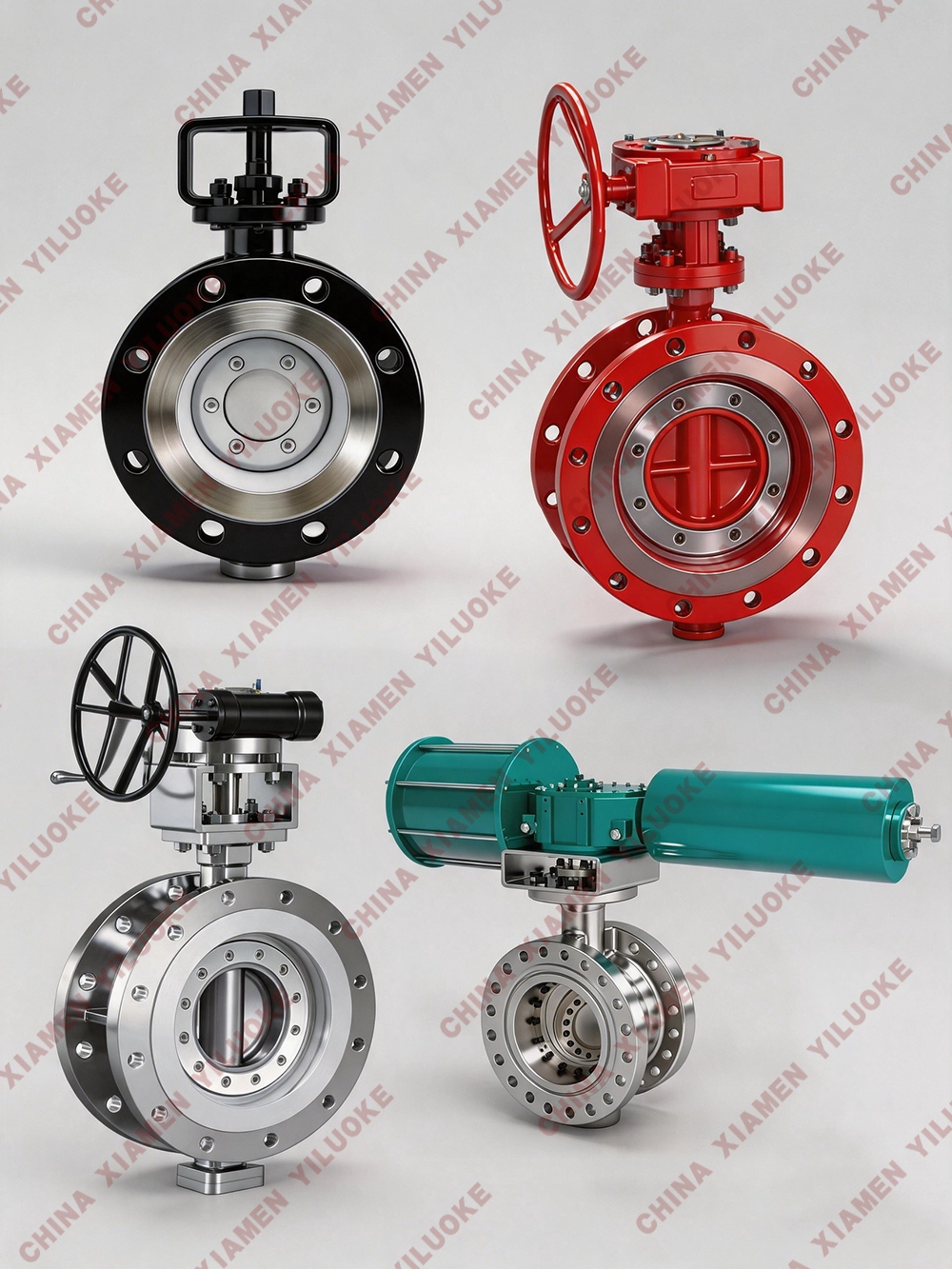
When selecting fluid control solutions, it is critical to distinguish structural and appearance differences among concentric, double-eccentric and triple offset butterfly valves to guarantee safe and efficient pipeline operation.
Main Component Materials
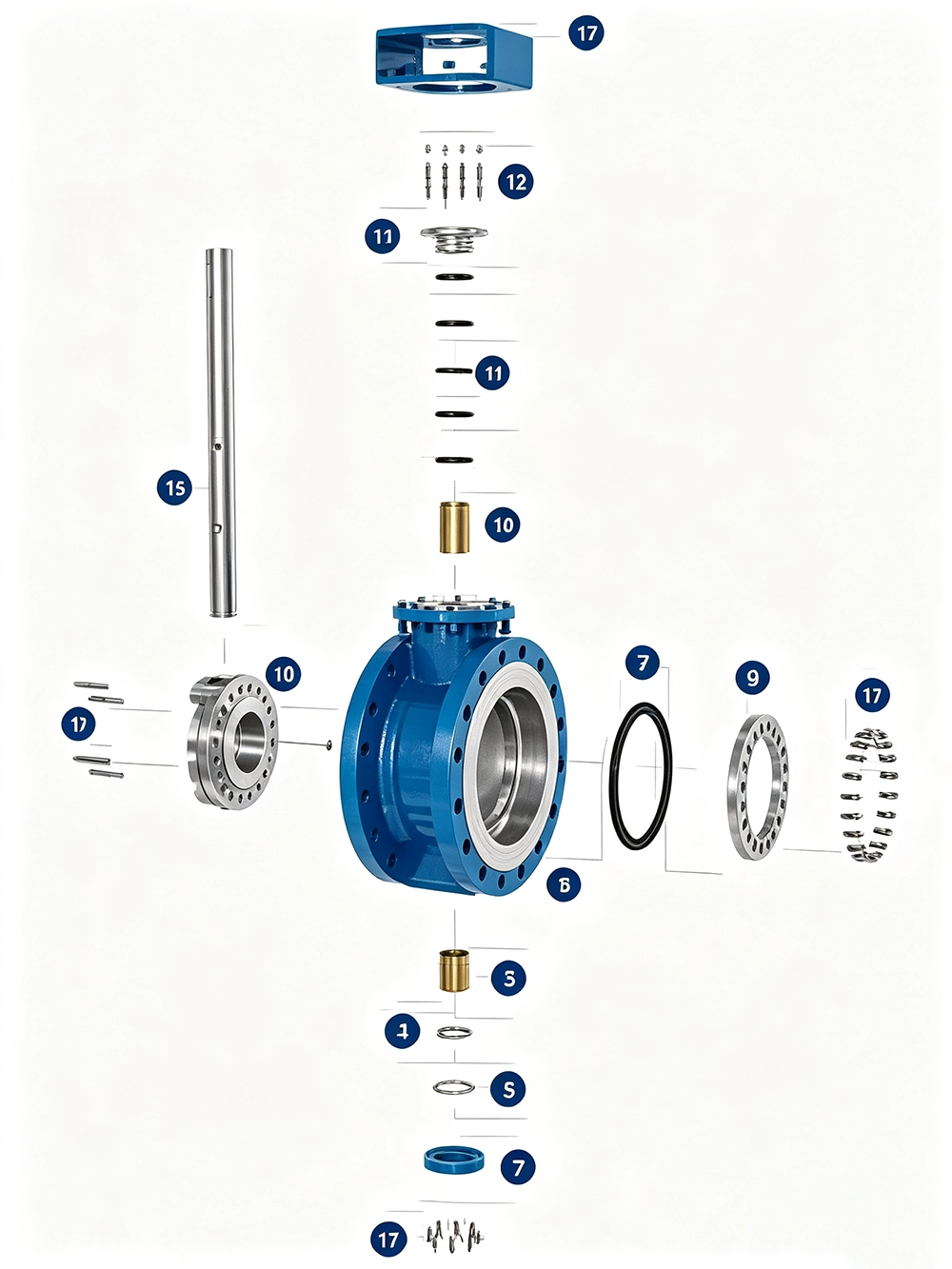
| No. | Part Name | Carbon Steel | Stainless Steel | Low Temperature Steel |
|---|---|---|---|---|
| 1 | Bottom Cover Screw | 8.8/B7 | B8 | B8/L7 |
| 2 | Bottom Cover | A105 | 304 | 304/LF2 |
| 3 | Gasket | 304+Graphite | 304+Graphite | 304+Graphite |
| 4 | Retaining Ring | 1035 | 304 | 304 |
| 5 | Lower Bushing | SF-1 | SF-1S/C95200 | SF-1S/C95200 |
| 6 | Valve Body | WCB | CF8 | LCB/LC1 |
| 7 | Sealing Ring | 304+Graphite | 304+Graphite | 304+Graphite |
| 8 | Pressing Plate | A105 | 304 | 304/LF2 |
| 9 | Pressing Plate Screw | 8.8/B7 | B8 | B8/L7 |
| 10 | Upper Bushing | SF-1 | SF-1S/C95200 | SF-1S/C95200 |
| 11 | Packing | Flexible Graphite | Flexible Graphite | Flexible Graphite |
| 12 | Gland Stud | 8.8/B7 | B8 | B8/L7 |
| 13 | Packing Gland | WCB | CF8 | CF8/LF2 |
| 14 | Bracket | WCB | WCB/CF8 | WCB/CF8 |
| 15 | Valve Stem | 410/420 | 304/17-4PH | 410/17-4PH |
| 16 | Butterfly Disc | WCB | CF8 | LCB/LC1 |
| 17 | Pin Shaft | 410/420 | 304/17-4PH | 410/17-4PH |
Leave Your Message
Products categories
-
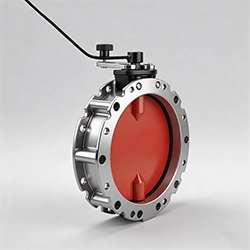
Powder Butterfly Valve
-
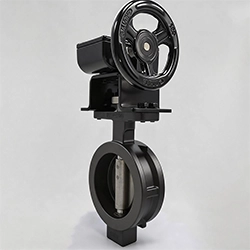
Double Eccentric High‑Performance Butterfly Valve
-
UPVC Plastic Butterfly Valve
-
Aluminum Alloy Anti‑Condensation Butterfly Valve
-
Stainless Steel Metal Hard Seal Butterfly Valves
-
Rubber Lined Butterfly Valves
-
Stainless Steel Flanged Butterfly Valves
-
PTFE-Lined Butterfly Valves
-
Wafer Type Butterfly Valves