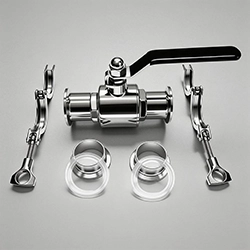


Sanitary Ball Valves
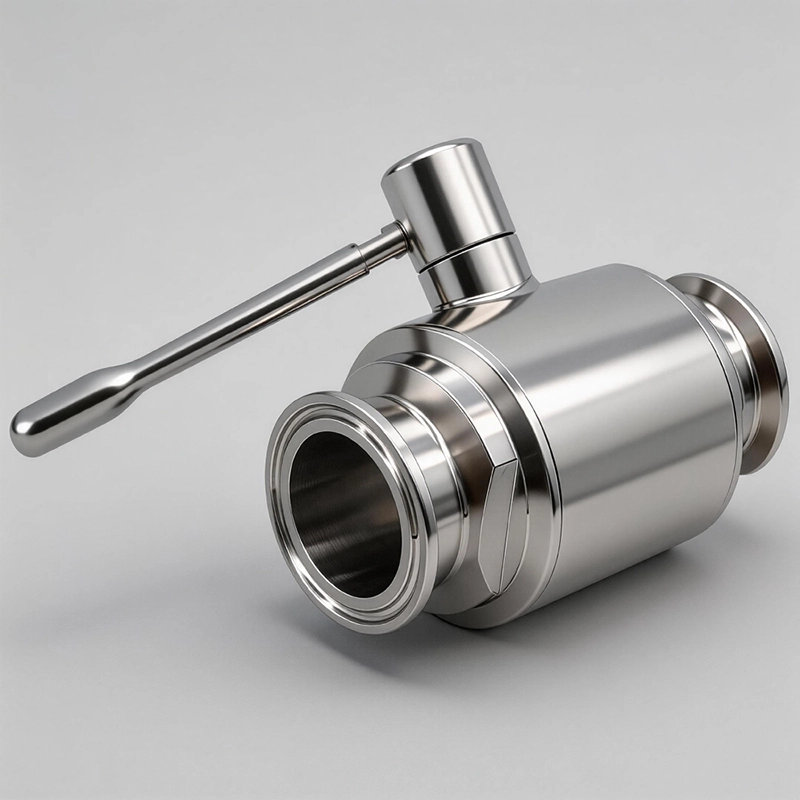
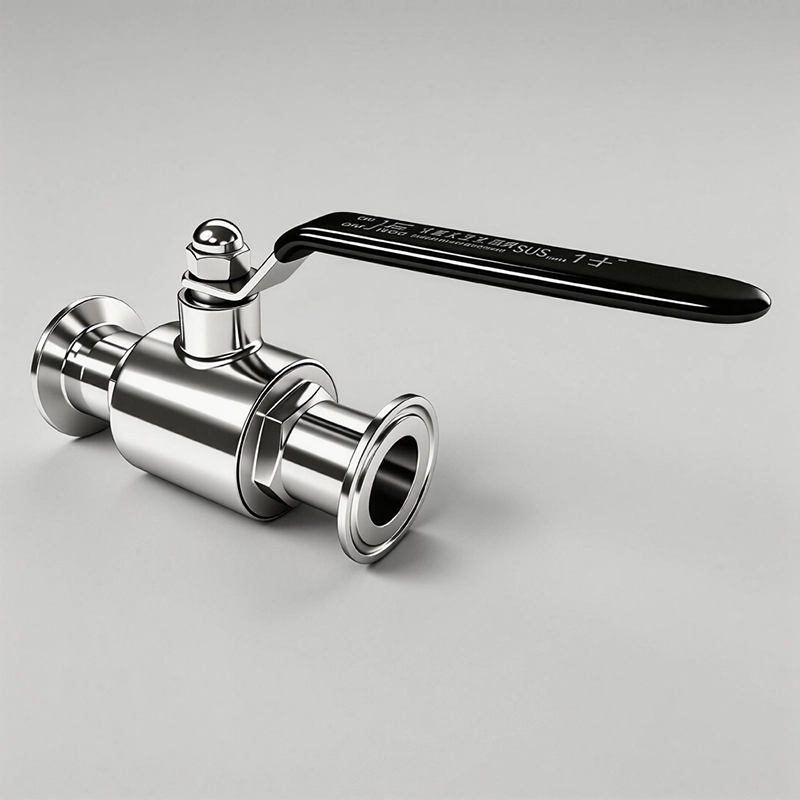
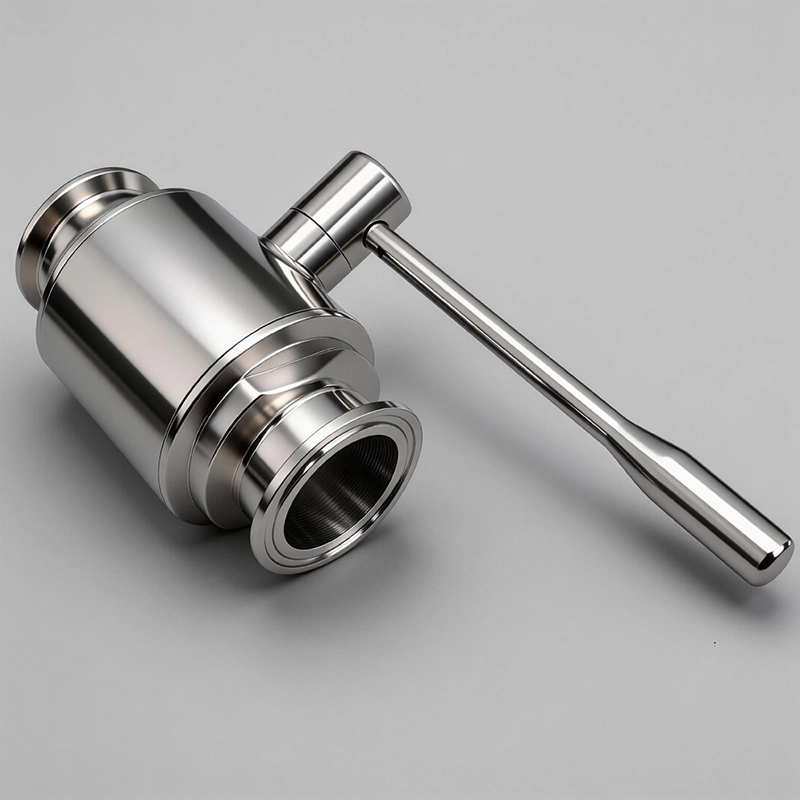
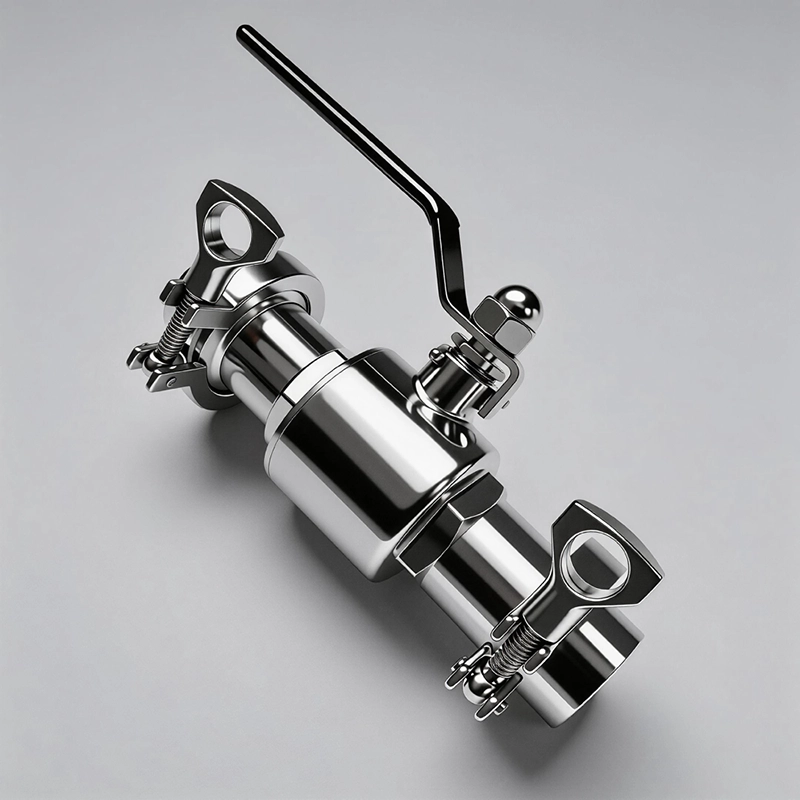
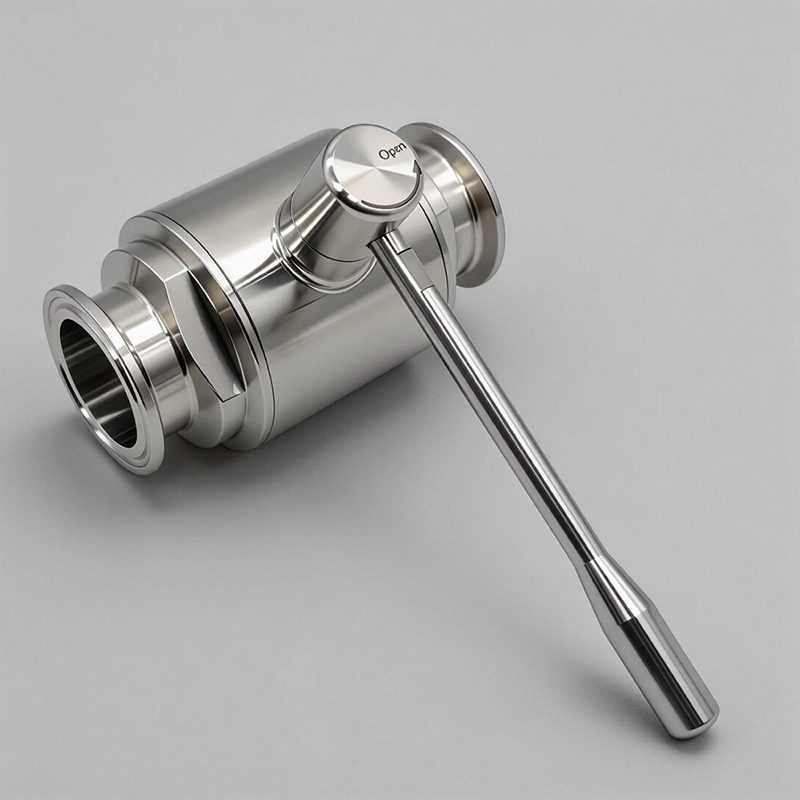
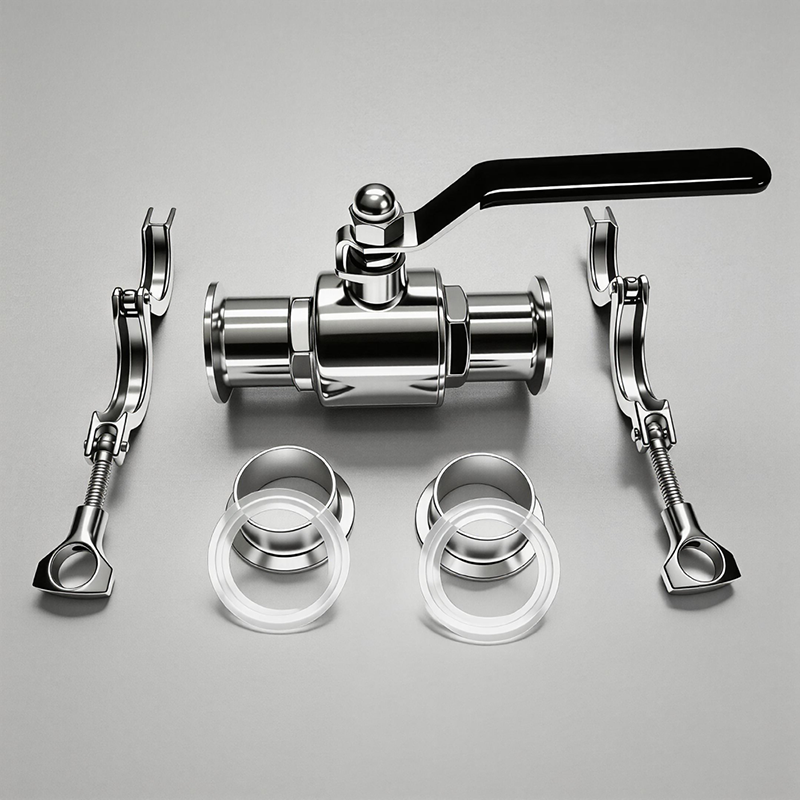
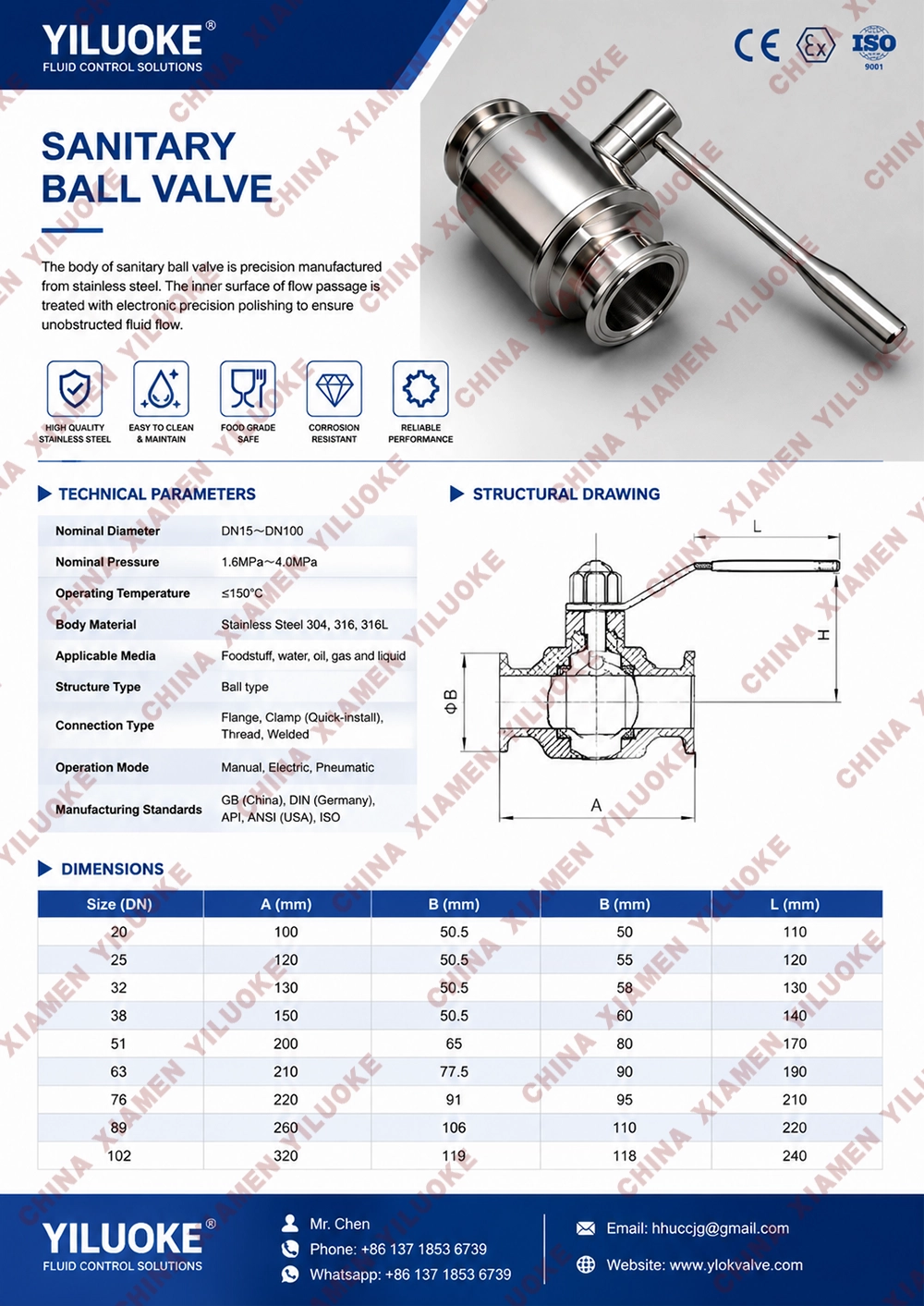
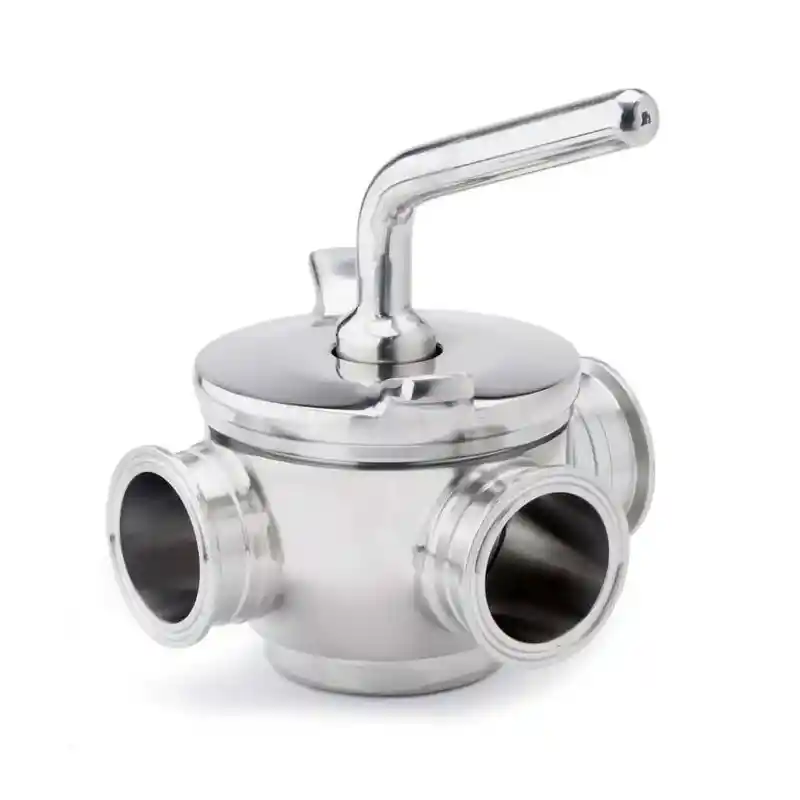
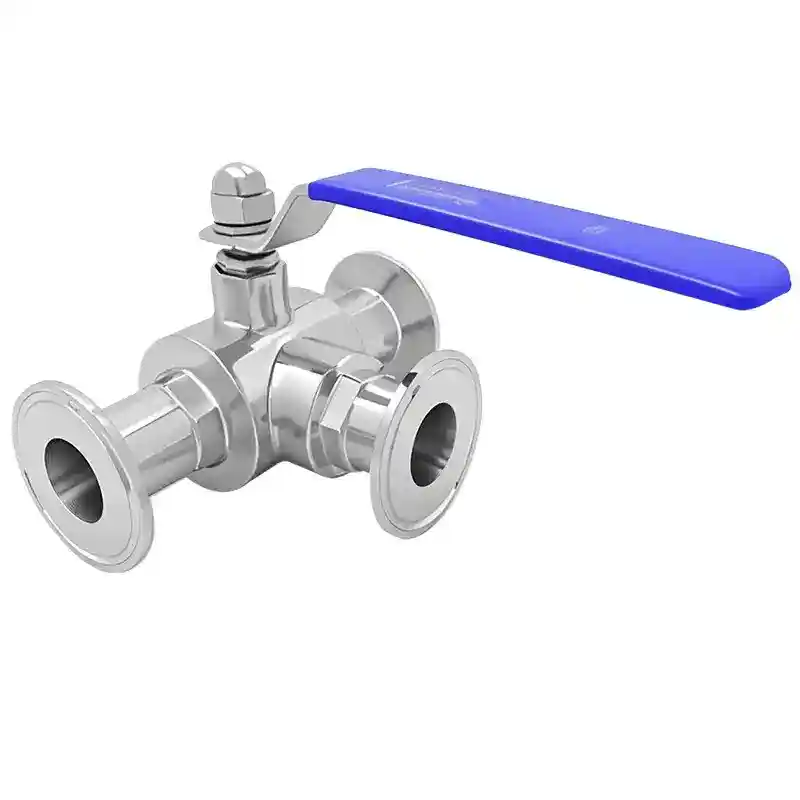
Sanitary ball valves are specially designed for demanding industries such as food, pharmaceuticals, and chemicals, fully covering the needs of high-purity and industrial scenarios. The core material is 316/304 stainless steel, which is corrosion-resistant and pressure-resistant. This stainless steel ball valve features a mirror-polished surface and a dead-end free design to ensure zero medium residue.
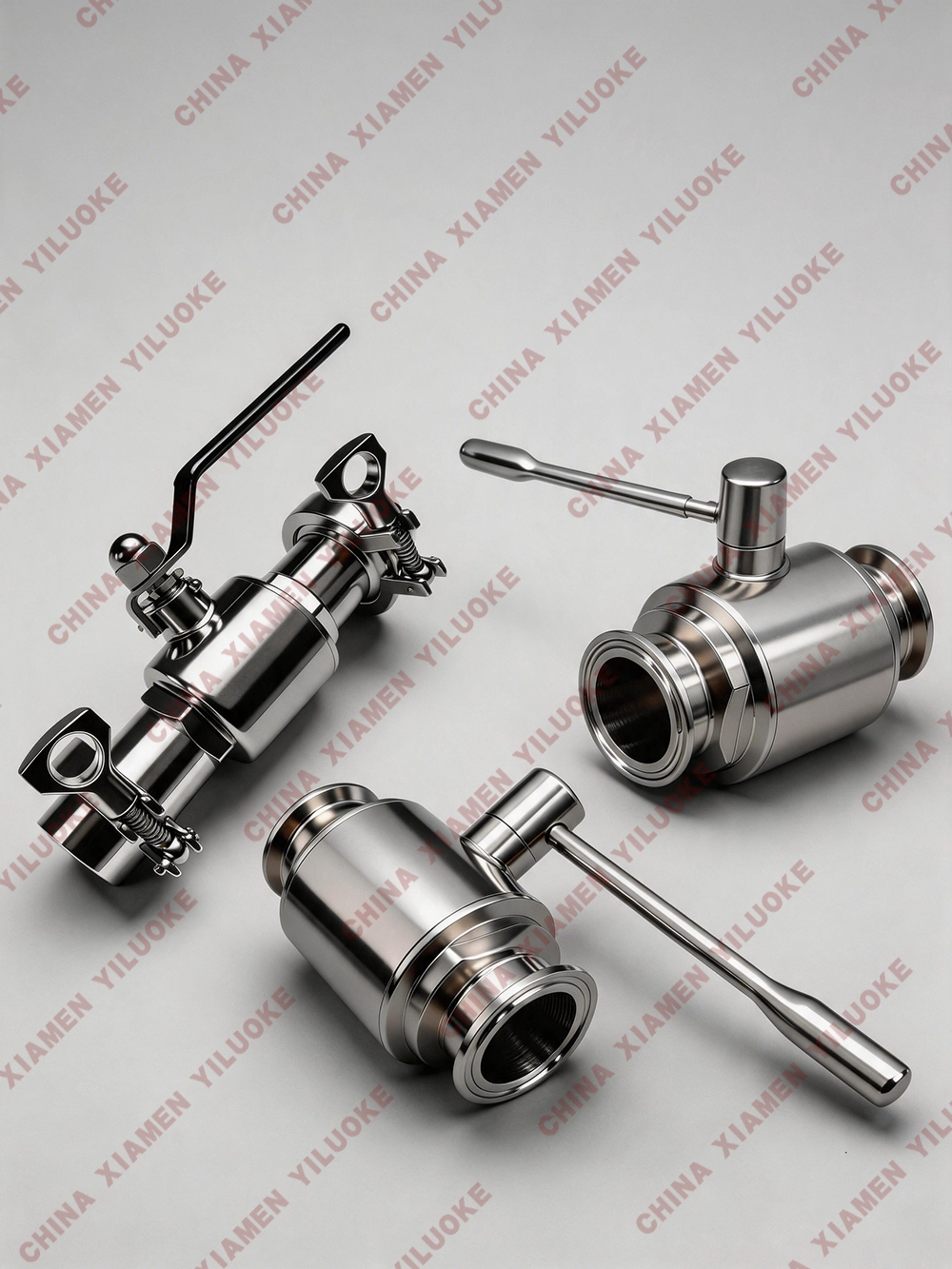
Structural Features
Sanitary Design
Feature: The valve body is made of stainless steel (304 or 316L). It features smooth and seamless surfaces for easy cleaning and complies with sanitary standards.
Advantage: Ideal for fluids requiring high cleanliness to avoid contamination and medium retention.
Manual Operation
Feature: Equipped with a handle for easy opening and closing. Handles are normally blue for easy identification.
Advantage: Simple operation without electricity or pneumatic supply, suitable for flow control in small-scale systems.
Clamp Connection for Quick Installation
Feature: Clamp ends on both sides enable convenient installation and disassembly.
Advantage: Perfect for applications requiring frequent cleaning and improves system maintenance efficiency.
Corrosion Resistance
Feature: Stainless steel construction delivers outstanding corrosion resistance for weakly acidic and weakly alkaline media.
Advantage: Robust durability with long service life, adaptable to various fluid conditions.
Technical Parameters
| Item | Specification |
|---|---|
| Metallic Materials | Product-wetted parts: 304/304L/316/316L Non-wetted parts: 304/304L/316/316L EN 10204 3.1B certification available |
| Seal Materials | Standard: EPDM/PTFE Optional: FPM/PTFE, HNBR/PTFE, Silicone/PTFE |
| Temperature | Continuous operating temperature: -20~+135℃ (EPDM) Sterilization temperature: Max 150℃ (max 20 minutes) |
| Pressure | Operating pressure: 0~5 bar (standard) Control air supply pressure: 5~8 bar |
| Surface Finish | Internal surface: Ra≤0.8μm External surface: Matte finish |
| Connection | Connection standards: Weld end: DIN 11850 Series 2 Weld end: Inch pipe standard Connection types: Welded, clamp, threaded and other common ends |
Application Fields
Food & Beverage Industry: Controls flow and volume of milk, fruit juice, beer and other fluids to maintain sanitary conditions throughout production.
Pharmaceutical Industry: Suitable for high-purity media such as sterile water and purified water, compliant with GMP standards.
Cosmetics & Biotechnology: Applies to precise chemical fluid transfer to guarantee product purity and quality.
Chemical Industry: Used for low-corrosive fluid transportation, ensuring fluid cleanliness and operational safety.
Differences Between Sanitary Ball Valves and Ordinary Ball Valves
1. Material
Sanitary ball valves are strictly manufactured from 304SS, 304L, 316 or 316L stainless steel with special post-processing. Ordinary industrial valves adopt a wider range of materials including cast iron, cast steel, ductile iron and stainless steel.
Sanitary valves serve food, pharmaceutical and daily chemical industries where products are edible or in direct human contact, demanding strict hygienic requirements. Ordinary steel, iron or copper valves cannot meet such standards. Steel and iron tend to rust in humid liquid environments and contaminate media. Copper valves produce toxic copper rust, making them unfit for sanitary service.
2. Surface Treatment
Sanitary ball valves undergo standardized electropolishing. Smooth surfaces eliminate medium retention zones and potential contamination risks. Industrial valves are designed prioritizing service life and flexible operation under high temperature and high pressure. Their internal and external surfaces are less smooth, yet they possess irreplaceable advantages in certain working conditions.
3. Connection Type
Sanitary valves mostly adopt clamp and threaded connections. Industrial valves support flanged, threaded, clamp and welded connections.
How to Select Sanitary Ball Valves?
- Working medium and working temperature
- Inlet pressure and outlet pressure
- Connection type
- Operation mode and fail-safe position
- Pipe size / Nominal Diameter
- Nominal Pressure
- Actuator type (Pneumatic, Electric, Manual, etc.