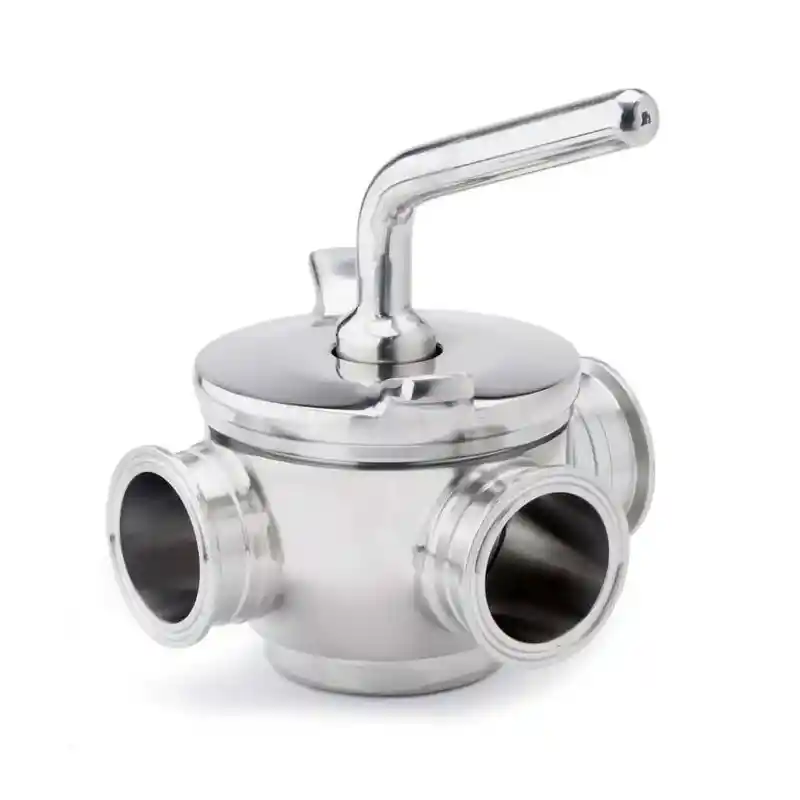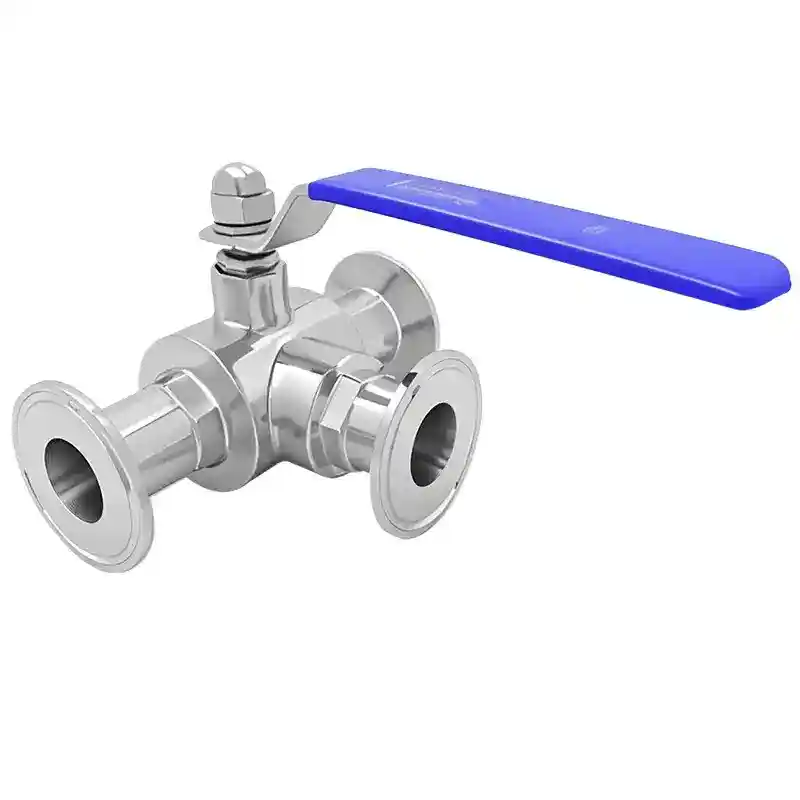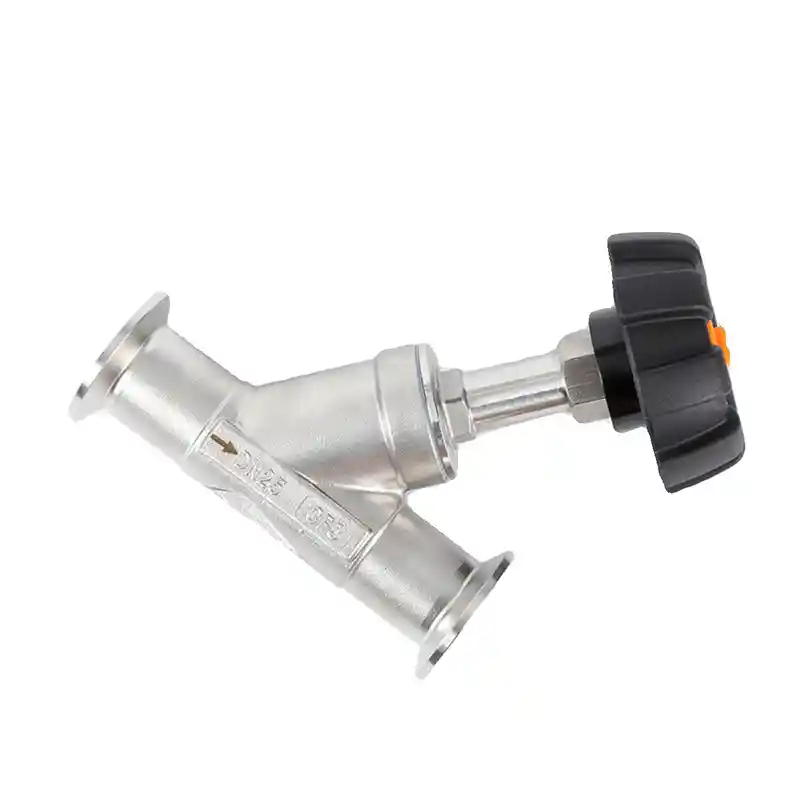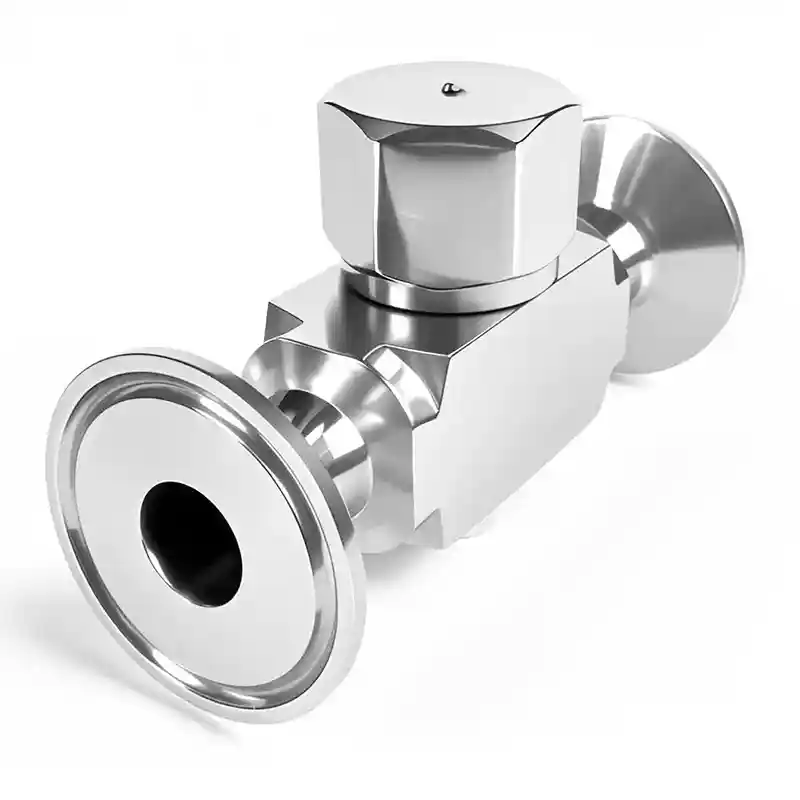


Sanitary Pressure Regulators
Product Introduction
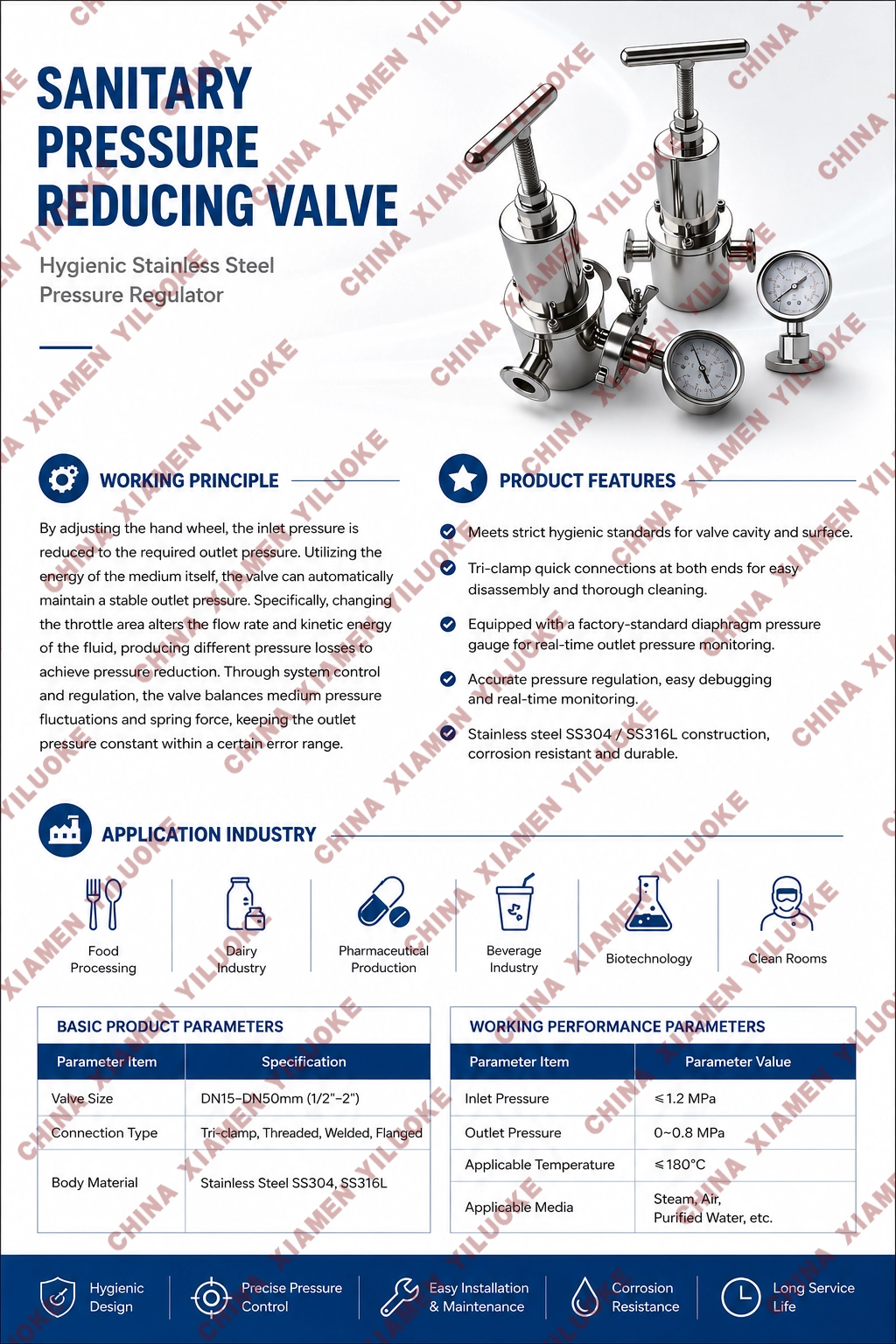
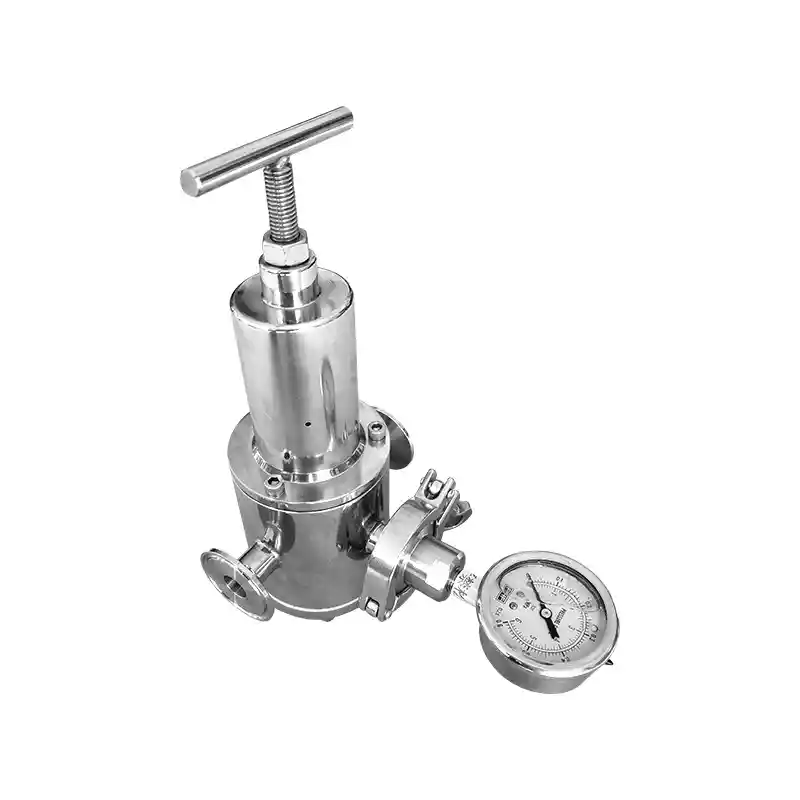
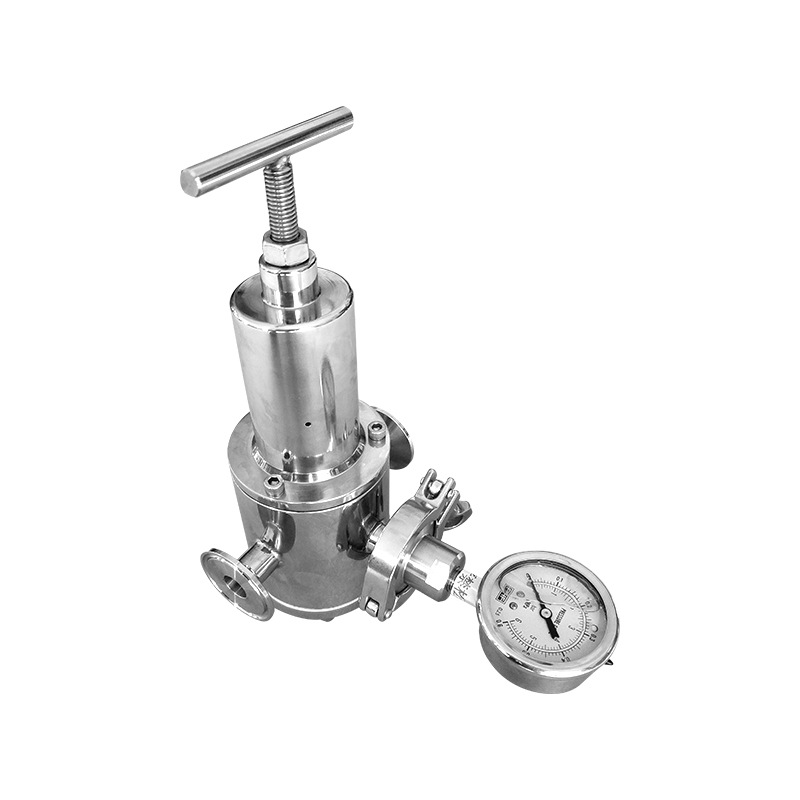
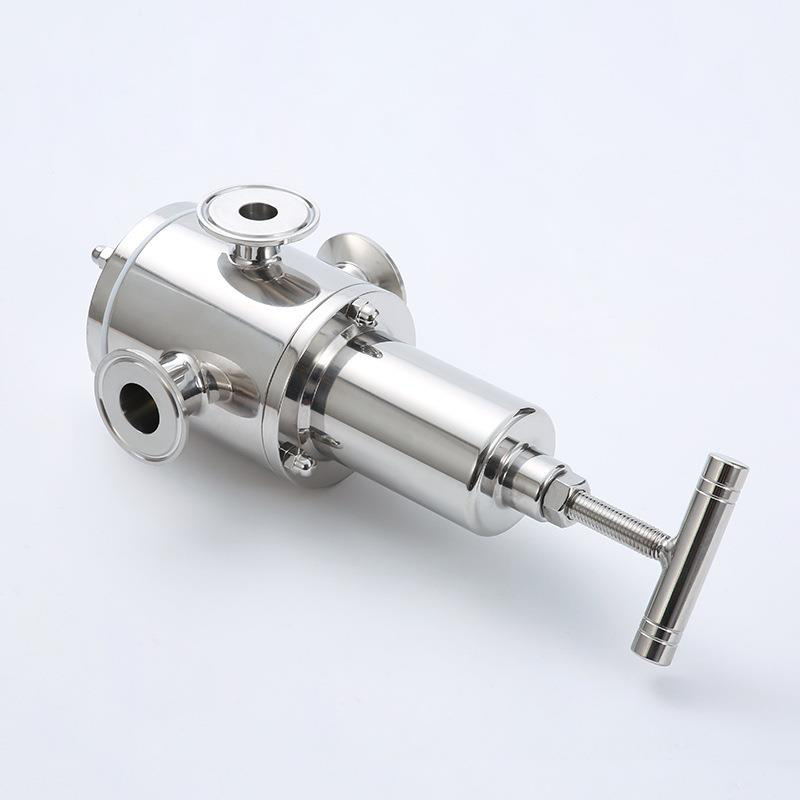
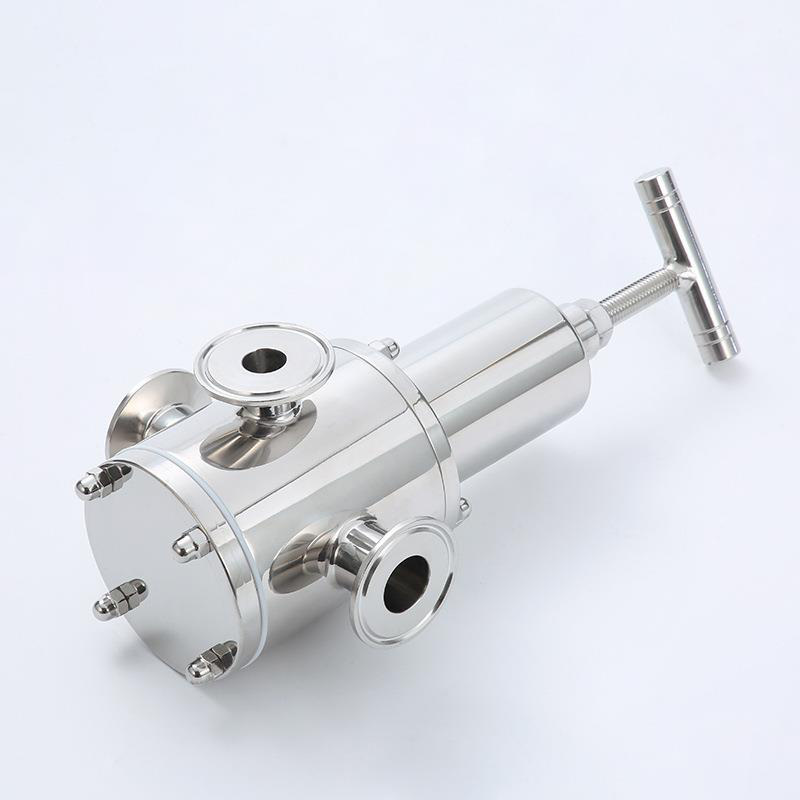
A Sanitary Pressure Regulator is a valve that reduces the inlet pressure to a required outlet pressure through adjustment and automatically maintains the outlet pressure stable by relying on the energy of the medium itself. Specifically, it changes the throttling area to alter the flow rate and fluid kinetic energy, resulting in different pressure losses, thereby achieving the purpose of pressure reduction. Then, relying on the adjustment of the control and regulation system, the fluctuation of the pressure after the valve is balanced with the spring force, so that the pressure after the valve is kept constant within a certain error range.
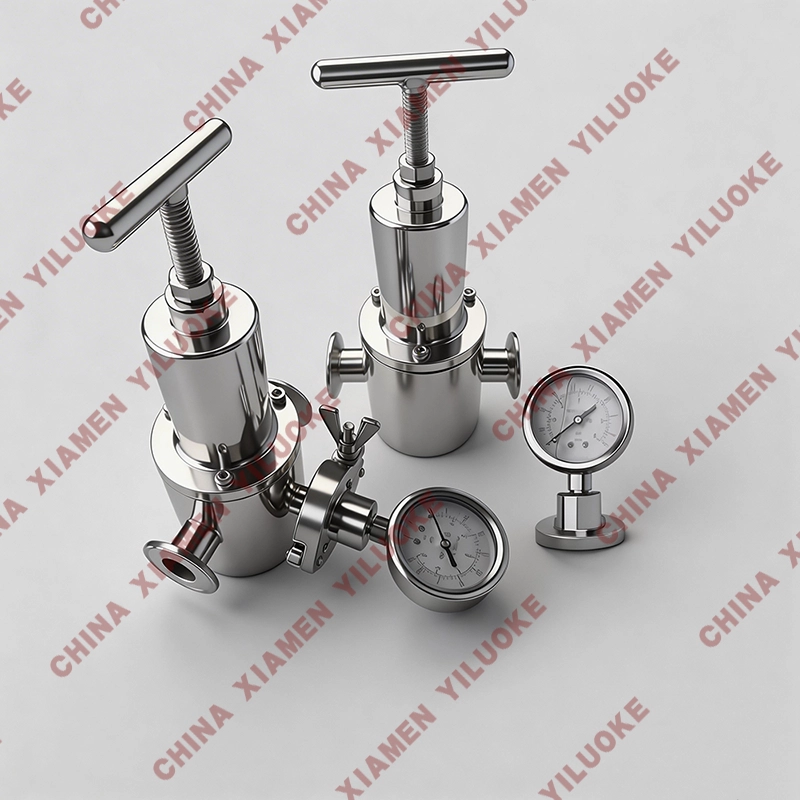
Equipped with a safety pressure relief hole in case of diaphragm wear or rupture.
Locknut can control the setting of the adjusting screw.
Standard operating temperature range: -20℃ ~ 60℃
Standard product weight: 5.2KG
Rated flow rate: 200m³/h
All components are cleaned in accordance with HG20202 requirements
The internal and external surfaces of the valve body are mirror polished, meeting GMP cleanliness requirements and suitable for use in pure oxygen environments
100% factory tested before delivery
Main Technical Parameters
Item | Technical Data |
|---|---|
Specification | DN15-DN80, 1/2'' - 4'' |
Execution Standard | ISO, IDF, DIN, 3A, SMS |
Applicable Temperature | -20℃ ~ 180℃ |
Max Inlet Pressure | 2.5MPa |
Adjustable Outlet Pressure | 0 ~ 1.0MPa |
Valve Body Material | SUS304, SUS316L |
Connection Type | Threaded, Tri-clamp (Quick-install), Welded, Flange |
Sealing Material | EPDM, FPM, SI |
Applicable Medium | Steam, Nitrogen, Carbon Dioxide, Water, etc. |
Applicable Industry | Dairy products, Beer, Food, Beverages |
Key Sanitary Advantages
High-precision Polished Flow Channel: Mirror electropolished SS316L flow channel with roughness Ra0.4~1.6μm, no material residue and no bacteria growth
Food-grade Sealing Parts: Adopts EPDM, FKM and PTFE non-toxic sealing materials, no precipitation, compliant with sanitary standards
Quick-disconnect Structure: Tri-clamp design enables full disassembly without tools for thorough cleaning and maintenance
Low-leakage Performance: ISO 5208 Class A soft sealing, ensuring ultra-low leakage for sterile pipeline systems
Real-time Pressure Monitoring: Equipped with built-in pressure gauge to observe downstream pressure changes intuitively in real time
Application Scope
Suitable for purified water, sterile steam, dairy, beverage, medicine, biological culture and high-purity inert gas pipelines in pharmaceutical factories, food plants, cosmetic workshops and clean laboratories.
Selection Tips
Liquid Medium: Choose standard diaphragm model
Steam Medium: Choose high-temperature resistant FKM seal version
Sterile Pharmaceutical Production: Adopt electropolished surface with Ra0.4μm roughness
Frequent Cleaning Scenarios: Prioritize tri-clamp quick-install connection
Installation & Maintenance Tips
Install the valve strictly following the medium flow arrow mark on the valve body. Adjust the outlet pressure by rotating the top handwheel, and tighten the lock nut after reaching the required pressure value. To ensure long-term stable operation, it is recommended to inspect and replace the aging sealing parts every six months.